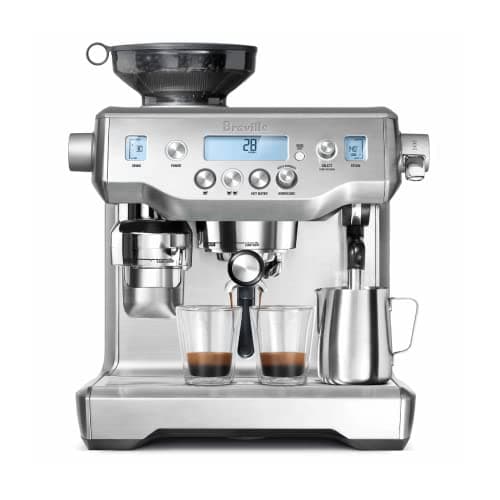
The Breville Oracle is an unusual machine, and the only honest way to review it is to be clear about the strange middle ground it occupies. Breville lists it with a real 58mm portafilter and dual boilers — genuine prosumer hardware — but then bolts on automatic grinding, dosing, and tamping and an automatic milk-texturing wand, so the machine does the fiddly parts for you. It is the closest thing Breville sells to a super-automatic that still pulls a proper portafilter shot. The question this review answers is not whether it makes good coffee — it plainly does — but whether that rare combination is worth a very large premium, and who is genuinely served by paying it.
Start with what the Oracle actually does, because the pitch is real. On a normal semi-automatic you grind, you dose the right amount into the basket, you distribute and tamp it level, and only then do you pull the shot — and each of those steps is a skill you can get wrong. The Oracle automates them. Breville rates it to grind and dose straight into the portafilter and then tamp automatically, so the prep that trips up beginners is handled by the machine. Underneath, it's a dual boiler, which means it can extract a shot and steam milk at the same time with no temperature compromise — the same architecture that defines the prosumer tier. You get a near-hands-off workflow sitting on top of hardware that pulls a serious shot, which almost nothing else on the market offers.
The milk is the other half of the story. The Oracle's automatic milk texturing steams to a set temperature and texture on its own — you attach the jug, choose a setting, and it stops itself — so you get microfoam-grade milk without learning the hardest skill in home espresso. Paired with the dual boiler, that means you can start a shot and let the machine texture milk in parallel, which is genuinely fast and genuinely consistent. If milk drinks every morning with no technique are the goal, the Oracle delivers them from a real machine rather than a pod or a bean-to-cup box, and it ranks well in our best machines for lattes.
Now the honesty this machine demands, because it is the whole review. The Oracle is very expensive and very large. It costs more than most true prosumer machines, and it is a big, heavy object that commands serious counter space. What the money buys is automation, not a better shot than a comparable manual dual boiler would pull. And all that automation is more to go wrong: the auto grind-and-tamp assembly and the auto milk system are electromechanical systems that a manual machine simply doesn't have, so over years there is more that can eventually need service. This is a premium convenience machine wearing prosumer hardware, and you pay for both.
There's a deeper tension, too, and it's the one enthusiasts will feel most. The Oracle automates precisely the skills a purist wants to learn. Dialing in a grind, distributing and tamping a level puck, texturing milk by hand — those are the craft of espresso, and the Oracle takes them off your hands by design. For a beginner who wants a great drink and no hobby, that's a feature. For someone who bought into espresso to doespresso, it's a ceiling: the machine makes the decisions you came to make yourself. If that's you, the same dual-boiler shot from a manual machine, plus a good grinder, is the more rewarding and far cheaper path — which is exactly what the prosumer tier is for.
So who is the Oracle genuinely right for? A specific person: someone who wants prosumer shot quality and simultaneous extract-and-steam, but does not want to learn the manual steps and can comfortably afford to pay for that. Think of the buyer who values their time over the craft, wants a cafe-grade milk drink in a couple of minutes with no practice, and has both the counter space and the budget to treat convenience as the point. For that person the Oracle is close to unique — nothing else pairs a real 58mm dual-boiler shot with this much automation — and it delivers exactly what it promises.
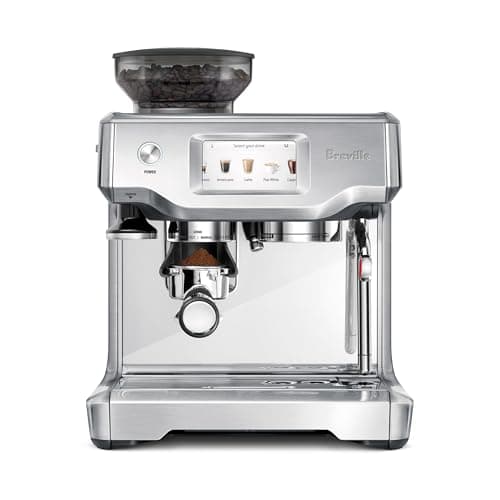
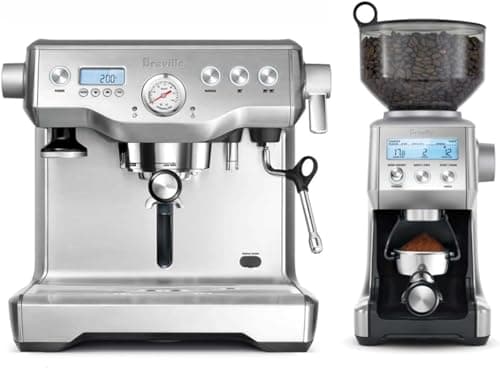
Who should skip it? Almost everyone shopping on value, and anyone who enjoys the process. If you want the cheapest path to good espresso, a budget machine or the Breville Barista Touch gives you guided, automatic milk for a fraction of the price. If you want the same dual-boiler shot but would rather steam and tamp yourself, the manual Breville Dual Boileris the enthusiast's choice and costs far less. And if pure hands-off convenience is all you're after, a bean-to-cup super-automaticis cheaper still. The Oracle only makes sense when you want both the prosumer shot and the automation, and you're willing to pay a premium for the overlap.
As with everything on this site, the Oracle was not in our hands. We worked from Breville's published specifications, the well-documented behavior of dual-boiler machines and automatic versus manual prep, and priced it live. Where a claim is Breville's — the automatic grind, dose, and tamp, the automatic milk texturing, the dual-boiler design — we report it as the manufacturer's rating rather than a measurement of our own, in line with our research method.
Is the Breville Oracle worth it? The decision in detail
Because the Oracle sits between two cheaper categories, buying it well means understanding exactly what its premium buys and whether that matches how you want to make coffee — in the order that changes what ends up in the cup and in your wallet.
1. Convenience or craft — decide this first
Everything about the Oracle flows from one question: do you want the machine to do the skilled steps, or do you want to do them? If you want a cafe-style milk drink with no technique and no learning curve, the automation is the whole point and worth real money. If you enjoy dialing in a grind, tamping a level puck, and texturing milk by hand — the reason people buy a Gaggia Classic Pro — the Oracle removes exactly what you came for. Be honest about which person you are before anything else; the wrong match is the most expensive regret with this machine.
2. What the premium actually buys
The Oracle costs more than most true prosumer machines, and the difference is automation, not a fundamentally better shot. A manual dual boiler pulls a comparable espresso for less; what you pay extra for on the Oracle is the auto grind-and-tamp and the auto milk. Decide honestly whether hands-off prep is worth that premium to you. For a time-pressed household that wants consistency with no practice it often is; for a value-minded buyer or an enthusiast it usually isn't, and that's the right answer.
3. The dual boiler is the part worth the hardware
Two independent boilers let the Oracle extract and steam at the same time with no temperature trade-off, which is the jump that separates a serious machine from a single boiler that makes you wait between shot and steam. If you make several milk drinks back to back, that matters, and it's the Oracle's most defensible bit of premium engineering. It's also shared with the cheaper manual Breville Dual Boiler — so if the boiler is what you value, note you can get it without paying for the automation.
4. Milk: automatic is convenient, not the ceiling
The Oracle's automatic wand textures milk to a set temperature and texture hands-free, which is the closest thing to cafe microfoam with no skill. But automatic milk is a convenience, not the top of the craft: a manual wand rewards practice with denser microfoam and latte art the machine won't pour for you. If one-touch milk is what you want, the Oracle does it beautifully; if you want to learn milk properly, our guide to steaming milk explains the ceiling you would be trading away.
5. Size and counter space are real constraints
The Oracle is a large, heavy machine, and it needs the counter and the clearance to match. Before you buy on features, measure where it will live — including the height for the hopper and the room to slide the portafilter in and out. If space is tight, this is the wrong machine regardless of budget, and a compact option like the Bambino line is a far better physical fit. The Oracle rewards a kitchen with room to give it.
6. Account for the whole cost, including service
More automation means more systems that can eventually need attention — the auto grind-and-tamp and the milk system are moving parts a manual machine doesn't have. Factor long-term upkeep into the decision, not just the sticker. If maintenance and repairability matter more to you than hands-off prep, a simpler manual machine plus a standalone grinder is the more durable spend; the Oracle is for the buyer who values the convenience enough to accept the added complexity.
7. Where the last dollars go
The Oracle is already a complete grind-to-cup machine, so the highest-impact money left over is simply fresh coffee — a great machine fed by stale beans is the most common and most expensive mistake in this hobby. Keep good beans for espressoon hand and dial the machine to them. If you ever outgrow the automation and want more control, the skills you'd learn on a manual machine are covered in our dialing-in guide.