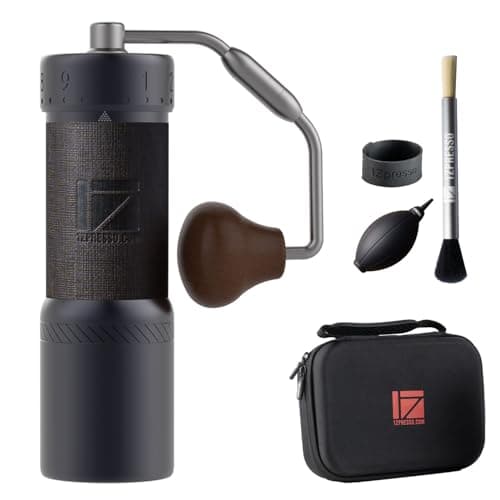
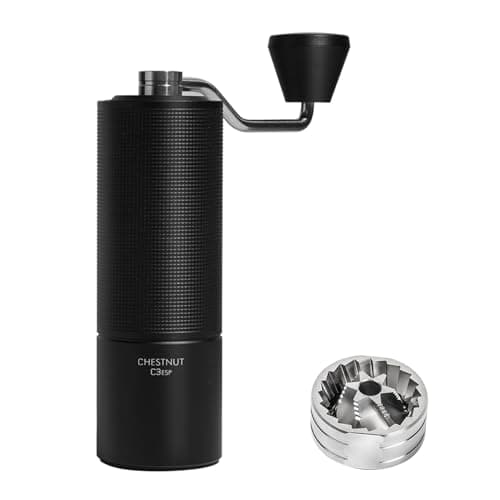
The TIMEMORE Chestnut C3 and the 1Zpresso J-Ultra sit at opposite ends of the hand-grinder range, and choosing between them is really a question about how seriously you take espresso. The C3 is the value all-rounder — astonishing consistency for the money, espresso-capable in its ESP trim, and a superb travel grinder that does filter and espresso both. The J-Ultra is the premium specialist — built around an external numbered dial and fine, repeatable steps that make dialing in a shot fast and precise, in a machined body meant to last for years. Both grind well; they are priced and purposed for different buyers. This comparison weighs them on the three things that actually decide it — price, espresso fineness and adjustment, and build — and gives a verdict by budget and use.
Start with price, because it frames everything else. The C3 is the value play in this pairing by a wide margin: it delivers a level of grind consistency that shames electric grinders costing far more, and it does it at a fraction of the J-Ultra's outlay. The J-Ultra is a genuine premium purchase for a manual grinder, and the whole question is whether what that money buys — the external dial, the fine espresso resolution, the machined refinement — is worth it to you. If you mostly brew filter and want espresso as an occasional bonus, the C3's value is almost impossible to argue with. If espresso is the point of the purchase and you will use its fine range daily, the J-Ultra's premium starts to make sense. We never quote prices that go stale here; check both live and weigh the gap against how much you will use the espresso capability.
The heart of the comparison is espresso fineness and adjustment. Espresso lives in a razor-thin band of fineness where one step too coarse gushes and one too fine chokes, so a grinder for it must reach a genuinely fine setting and divide that range into small, repeatable steps. This is where the J-Ultra pulls ahead. Its external numbered dial lets you count clicks, record the setting that pulled a great shot, and return to it exactly — turning dial-in from guesswork into a routine — and 1Zpresso positions its grind consistency at the espresso end of the range, good enough for dialed-in shots rather than fine on paper only. The C3 in ESP trim can grind espresso and does it impressively for the price, but it adjusts internally— you set it by feel from inside the burr assembly — which is workable but slower and less precise when you are chasing the sweet spot and switching between espresso and filter. For espresso specifically, the J-Ultra's external adjustment is the meaningful advantage; our espresso grind size guide explains why that resolution matters so much.
Build and versatilityis where the two philosophies show. The J-Ultra's machined body feels premium and rigid — and that stiffness is functional, because a body that does not flex under the load of a fine grind keeps the burrs from shifting, protecting the very consistency you paid for. It is a specialist that does its narrow job — precise espresso by hand — better than almost anything you can turn. The C3 is the do-everything grinder: a tight metal build with stainless burrs, small enough to travel anywhere, happy grinding coarse for French pressin the morning and fine for a shot on the weekend. Its capacity is small and its adjustment less espresso- friendly than the J-Ultra's, but as one grinder for a filter-and-occasional-espresso life, or for a bag you throw in luggage, it is remarkable value. The full cases are in our C3 review and J-Ultra review.
The shared honest con is the one every hand grinder carries: you are the motor. Grinding fine for espresso means the burrs sit close together, the beans resist harder, and each dose takes more turns and more force than a coarse filter grind. On the J-Ultra that effort buys you precise espresso; on the C3 it buys you versatility. But for one or two drinks it is a pleasant ritual, and for a round of milk drinks or several shots it is a genuine arm workout on either grinder — which is why volume-heavy drinkers should look at an electric espresso grinder regardless of which hand grinder tempts them. Neither of these solves effort; they only decide what the effort gets you. See both, and the rest of the manual field, in our best hand grinders for espresso and hand grinder guides.
The verdict follows cleanly from budget and use. For most people — filter drinkers who want great everyday grinding, occasional espresso, and a grinder that travels — the TIMEMORE C3 is the smart buy, delivering the vast majority of the capability for a fraction of the cost. For the manual-espresso enthusiast who dials in shots, wants external numbered adjustment and the finest repeatable steps, and will use that precision daily, the 1Zpresso J-Ultrais worth its premium and does the espresso job better. If espresso is a maybe, buy the C3; if espresso is the whole point, buy the J-Ultra. Both were assessed from the makers' published specifications, reasoned through against what each burr and adjustment design does to a shot, and priced live — our full method is on how we research.
How to choose between the C3 and the J-Ultra
Both are excellent hand grinders; they are simply built for different buyers. Four questions settle it, in the order that matters — the first is really the whole decision.
1. How serious are you about espresso?
This is the deciding question. If espresso is the point of the purchase and you will dial in shots regularly, the J-Ultra is built for exactly that — external numbered adjustment and fine, repeatable steps make it the precision instrument. If espresso is occasional and filter is your daily driver, the C3 covers espresso capably in ESP trim while being a far better value all-rounder. Answer this honestly and the rest largely follows: espresso-first buyers lean J-Ultra, everyone-else buyers lean C3.
2. Price and value
The C3 is the value play by a wide margin — a consistency that embarrasses much pricier electric grinders, at a fraction of the J-Ultra's cost. The J-Ultra is a premium outlay justified only if you will use its fine espresso range and external dial. Weigh the gap against how often you actually pull shots: if the answer is "rarely," the C3's value is decisive; if it is "every morning," the J-Ultra earns its keep. We do not quote prices that go stale — check both live before you decide.
3. External vs internal adjustment
For espresso, adjustment is everything. The J-Ultra adjusts from an external numbered dial, so you count clicks, record the winning setting, and return to it exactly — even after switching to filter and back. The C3 adjusts internally, by feel from inside the burr assembly, which is workable but slower and less precise for espresso and more of a chore when you move between brew methods often. If you dial in shots and switch grinds, the external dial is a real, daily advantage; if you mostly set-and-forget for filter, internal adjustment is fine.
4. Build, capacity, and travel
The J-Ultra's machined body is rigid enough to keep the burrs steady under a fine grind — functional refinement, not just feel — and it is a specialist that does espresso superbly. The C3 is a tight, well-built travel grinder with a small capacity that does filter and espresso both and packs anywhere. If you want one grinder for a filter-and- occasional-espresso life or for the road, the C3 is the versatile pick; if you want the best hand-espresso tool and will build a routine around it, the J-Ultra is the specialist. Keep either clean of oily espresso residue with our grinder cleaning guide and both hold their edge for years.
The verdict, in brief
Buy the TIMEMORE C3 if you want the best value, a do-everything grinder for filter and occasional espresso, and something that travels — the right call for most people. Buy the 1Zpresso J-Ultra if manual espresso is the point, you want external numbered adjustment and the finest repeatable steps, and you will use that precision daily. Both lead our best hand grinders for espresso list; if you would rather plug in, the best espresso grinders guide covers electric options.