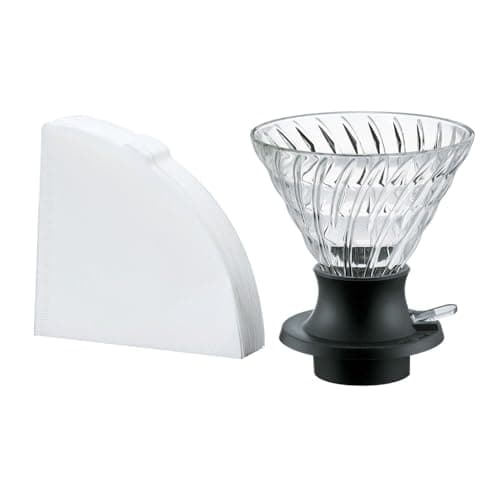
The Hario Switch solves the oldest argument in filter coffee: immersion or percolation, body or clarity, forgiving or fussy. It is a V60-shaped cone with one crucial addition — a ball valve in the base that you can open and close — so it brews both ways from a single device. Close the valve and it steeps the grounds in water like a French press; open it and the brew drains down through a paper filter like a pour-over. That means you get the heavier body of immersion and the clean cup of paper in the same brew, and, just as importantly, you get a brewer that is far easier to use well than an open V60. This review is about how well that hybrid idea actually works, its honest compromises, and who should buy it over a dedicated pour-over.
The mechanism is the whole story, so it is worth understanding. A normal V60 is a pure pour-over: water flows continuously through the grounds and straight out the big hole in the base, so the quality of the cup depends heavily on how you pour — your rate, your circles, your timing. The Switch adds a spring-loaded ball valve at the bottom. Close it, pour in all your water, and the coffee steeps as a full immersion for however long you choose, with no pouring skill required. Then flip the switch to open the valve, and the steeped brew drains down through the paper filter, which polishes the cup clean of oils and fines on the way out. You are combining the two brewing methods in sequence rather than choosing between them, which is a genuinely clever bit of design.
What that buys you in the cup is the best of both worlds, and it is real. The immersion phase gives the coffee a fuller, rounder body than a straight pour-over — closer to what a French press delivers — because the grounds sit and soak rather than being rinsed through quickly. Then the paper filter on the drain-out removes the oils and fine sediment that a French press leaves in, so the final cup is clean and clear rather than gritty. You end up with something a pure V60 and a pure press each only half-deliver: weight and clarity together. For a lot of drinkers that hybrid profile is exactly the cup they have been chasing, and it is the Switch's headline appeal.
The other big win is forgiveness, and it may matter more day to day than the flavor. Because the steep does most of the extraction, the Switch does not punish a sloppy pour the way an open V60 does — you are not relying on a slow, even, circular pour to get a good result, so a casual pour into a closed valve still makes an even, well-extracted cup. That makes it dramatically easier to brew consistently than a bare V60, which rewards a gooseneck kettle and real practice. It also uses standard V60 paper filters, so there is no proprietary-consumable lock-in and filters are cheap and everywhere. If you have ever been frustrated by inconsistent pour-over, the Switch is the brewer that makes a clean, bright cup repeatable.
The honest cons
It is not a free lunch, and the compromises are worth naming plainly. First, price and parts: the Switch costs more than a plain V60, and the valve is one extra component to keep clean — a moving part that eventually needs attention where a bare cone has none. Second, and more fundamentally, it is a jack of two trades. A dedicated French press makes a heavier, oilier, cheaper cup if raw body is all you want, and a dedicated V60 in skilled hands makes a more articulate, controllable pour-over if clarity and nuance are the goal. The Switch does both well but neither best. Third, it is still a single-cup-to-small brewer, so it does not scale to a crowd the way a larger carafe brewer does. None of these is a dealbreaker — they are the honest price of versatility — but they are why the Switch is not automatically the right pour-over for everyone.
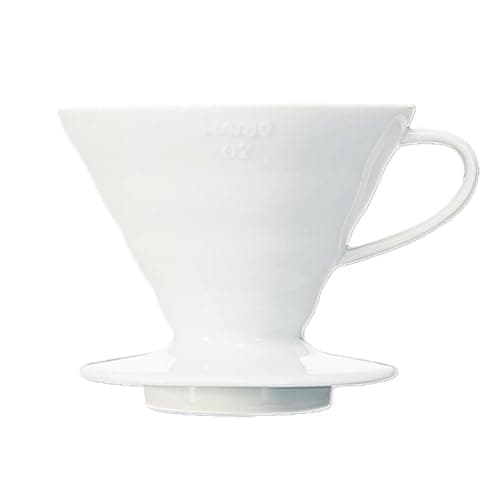
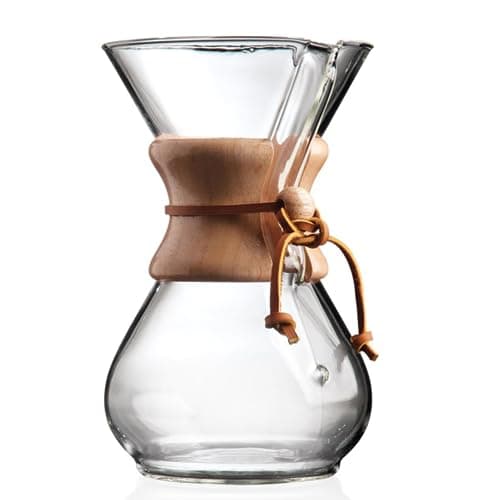
The two alternatives here frame the decision cleanly. The Hario V60 is the pick if you want to learn true pour-over and you are willing to put in the practice: it is cheaper, it gives you total control over flow and extraction, and in skilled hands with a gooseneck kettleit makes a cleaner, brighter, more expressive cup than the Switch. The trade is that the control is a double edge — a sloppy pour makes a mediocre cup — so it rewards technique the Switch does not demand. The Chemex Classicis the pick if you want the cleanest possible cup and you brew for two or more: its heavy, thick bonded filters strip more oils and fines than any paper here for an exceptionally clear cup, and it brews a whole carafe at once, though those proprietary filters cost more and that very clean profile deliberately strips body — the opposite end from what the Switch's immersion phase adds back. See our Chemex vs V60 comparison for that matchup in full.
In everyday use, the Switch is the brewer you reach for when you want a good cup without a ritual. You can run it as a pure immersion for the fullest body, as a hybrid steep-then-drain for the balanced cup most people want, or even leave the valve open and use it as a conventional V60 pour-over when you feel like practicing — one device, three modes. That flexibility is genuinely useful for a household where one person wants a rich immersion cup and another wants a cleaner pour-over, and it is a great single brewer for someone who is still figuring out which style they prefer. The honest framing: you trade a little peak performance at each individual job for a brewer that does all of them well and is hard to get wrong.
As with any manual brewer, the Switch rewards good inputs, and the grind matters even though the method is forgiving. Fresh whole beans from a burr grinderat a medium pour-over grind are what let its clean-cup potential show, and water in the Specialty Coffee Association's roughly 195-205 degrees F range extracts properly — the immersion phase is more tolerant of small variations than an open pour-over, but hot, fresh coffee is still the foundation. Weighing your dose to a repeatable ratio makes a good cup happen on purpose, and our pour-over guide covers the steps. Do that, and the Switch quietly makes the kind of cup that ends the immersion-versus-pour-over debate for you.
So who should skip it? Anyone who already knows they are a dedicated pour-over person and wants to master the craft should buy the cheaper V60 and a good kettle — the Switch's flexibility is wasted on you, and a bare cone in skilled hands edges it. Anyone who only ever wants a heavy, oily, low-cost cup should buy a French press instead, which does that one job better and cheaper. And anyone brewing for a table regularly wants a Chemex or a larger brewer, since the Switch is a single-to-small-cup device. But for the person who wants body and clarity in one cup, cannot decide between press and pour-over, or simply wants a clean cup that is hard to mess up, the Hario Switch is the best immersion-and-pour-over hybrid we recommend, and it earns the award.
Who the Hario Switch is for
Buy it ifyou want body and clarity in one cup, or you cannot decide between a press and a pour-over. The valve lets you steep the grounds like a French press for a fuller body, then drain through a paper filter for a clean cup, so you get both from one device — and because the steep does the work, it is far more forgiving than an open V60, making a consistent cup without a skilled pour. It uses standard V60 filters, so no proprietary lock-in. Buy it knowing it costs more than a plain V60, the valve is one more part to clean, and it does both jobs well without beating a dedicated tool at either.
Buy the Hario V60 instead ifyou want to learn true pour-over and will put in the practice: it is cheaper and gives total control, and in skilled hands with a gooseneck kettle it makes a more expressive cup — at the cost of punishing a sloppy pour. Buy the Chemex instead ifyou want the cleanest possible cup and brew for two or more: its thick bonded filters strip the most oils and fines and it makes a whole carafe, though the filters cost more and it deliberately strips body. And if you only ever want a heavy, oily, cheap cup, a French press does that one job better than the Switch's hybrid.
Get the most out of it
The Switch is forgiving, but it still rewards good inputs. Grind fresh from whole beans with a burr grinderat a medium pour-over grind — too fine and even the immersion drains slowly and over-extracts, too coarse and it runs thin — and weigh your dose to a repeatable coffee-to-water ratioso a good cup happens on purpose. Use water in the SCA range, roughly 195-205 degrees F, which a kettle off the boil delivers. The great advantage is flexibility: run it closed for a full immersion, steep-then-open for the balanced hybrid cup, or leave it open as a conventional V60 — experiment and find the mode you like best.
Modes, filters, and cleaning
Two habits get the most from the design. First, learn the three modes: full immersion (valve closed the whole steep, then open to drain) for maximum body; a hybrid (a short bloom and pour with the valve open, then closed to steep, then open again) for the balanced cup most recipes target; and pure pour-over (valve open throughout) when you want to practice V60 technique. Our pour-over guide and pour-over roundup cover the methods. Second, keep it clean: the ball valve is the one moving part, so rinse it thoroughly and let the brewer dry fully between uses so coffee oils and grit do not build up in the mechanism. Standard V60 paper filters fit, so consumables are cheap and easy to find anywhere.