Skip to content
Bean & Burr

HUB 02 · Coffee Makers

Chemex Classic Review

The pour-over that doubles as a decanter, reviewed honestly - the cleanest cup in coffee, the kit and technique it demands, and when a V60 or a Switch suits you better.

By Stephen V.Updated How we research
#ad

We earn a commission when you buy through our Amazon links, at no extra cost to you. It never affects our rankings, and we say so when the cheaper product is the better buy. How this works.

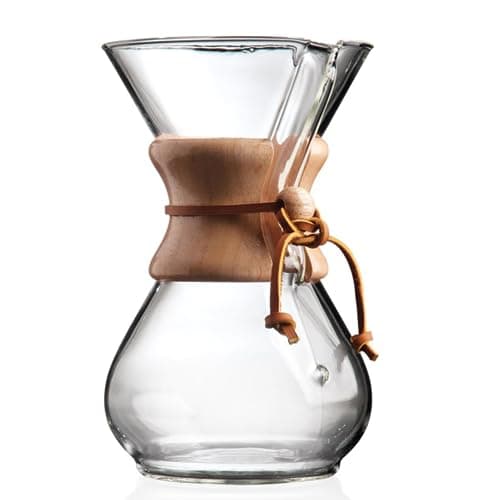
The Chemex is the rare coffee maker that belongs in a museum — and one actually does. The hourglass of one-piece glass with a wooden collar has been in production largely unchanged since the 1940s, and it is as much an object as a brewer: it makes coffee and then serves it, straight from the same beautiful carafe. But the looks are not the point of this review. The point is the cup, and the cup is defined by one thing above all — the Chemex's famously thick, bonded paper filters. They are the reason it makes the cleanest coffee here, and the reason it asks a little more of you than a cheaper brewer. This is our review of the classic 6-cup model.

Those filters are the whole story. They are noticeably heavier than standard pour-over paper, and they strip out more of the oils and the finest particles than any other filter in our coffee-makers coverage. The result in the cup is exceptional clarity: a clean, bright, light-bodied coffee with the sediment and heaviness engineered out, so the delicate, tea-like, fruity notes of a good single-origin come through with nothing in the way. If you have spent money on interesting beans, the Chemex shows them off like little else. And because it brews a carafe's worth at once, it scales past the single-cup drippers to serve two or more — brew and serve, in one striking object.

The honest catch: it is a ritual, and it needs kit

That clean cup is not free. The Chemex is a manual pour-over, which means it rewards, and quietly demands, the same supporting cast as any serious filter brewer. The first piece is a gooseneck kettle: its narrow spout lets you lay down the slow, aimed stream that wets the bed evenly and controls the pour, and pouring from a wide kitchen kettle is the most common reason a home Chemex disappoints. The second is a scale, so you can weigh coffee and water to a repeatable ratio instead of guessing. The third is the grind, and here the Chemex differs from a cone: because those thick filters slow the flow, the standard advice is a medium-coarse grind, a touch coarser than you would use in a Hario V60, so the water is not held up and over-extracted. Get grind, kettle, and ratio right and the Chemex is sublime; skip them and it can brew slow and taste weak.

The other honest cons are practical. The thick bonded filters are proprietary and cost more than standard pour-over paper, and they are not stocked in every supermarket, so it is an ongoing cost and something to keep on hand. The one-piece borosilicate glass is beautiful but fragile — it is glass, and a hard floor or a careless knock will eventually win — so it is a countertop brewer, not a travel one. And the very clean profile that is its signature is also a limit: those filters deliberately remove the oils that give coffee weight, so if you love a heavy, full-bodied mug, the Chemex is engineered in exactly the wrong direction for you.

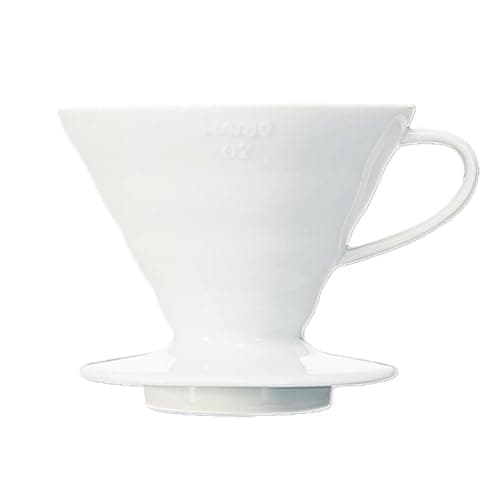
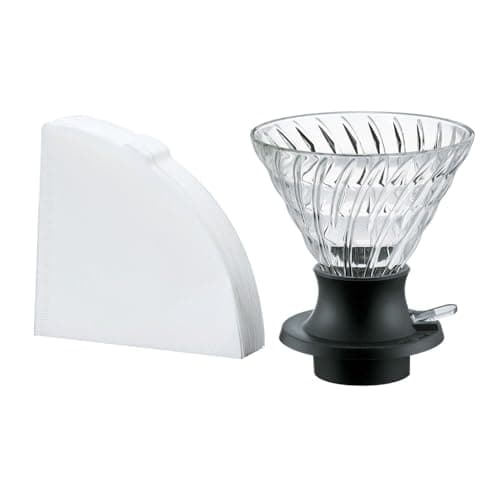
The two brewers alongside it answer the Chemex's two main limits. The Hario V60is the pick for a single drinker who wants the same clean, articulate style with more control and lower running cost: it is the world's default pour-over cone, costs almost nothing, uses cheap standard filters, and hands you even more control over the pour — at the price of brewing one or two cups at a time rather than a carafe. The Hario Switchanswers the technique demand: it is essentially a V60 with a ball-valve in the base, so you can steep the coffee like a French press and then release it through a paper filter. That gives you a clean cup with a little more body and, crucially, is far more forgiving because the steep does the work instead of your pour — the closest thing to a foolproof pour-over, using standard V60 filters.

Living with a Chemex is a large part of its appeal, and worth picturing before you buy. It is a slow, deliberate ritual — bloom, pour in circles, watch it draw down — and then a single elegant vessel you carry to the table and pour from, with no separate carafe to wash. The classic 6-cup size we tested is the sweet spot for a household: enough for a couple of large mugs or a small gathering, without being unwieldy for a solo brew. The upkeep is honest and minimal: rinse the glass after each use, and remove the wooden collar and leather tie before any deep clean so the wood does not warp. It is a brewer you tend a little and, in return, one that lasts for years.

So who should skip the Chemex? Anyone who wants a heavy, full-bodied cup — a French pressis the right tool for body, and the Chemex is the deliberate opposite. Anyone who wants to walk away while it brews, since pour-over is a hands-on two-to-three minute ritual, not a set-and-forget machine. And anyone unwilling to buy a gooseneck kettle and weigh a ratio, because without them the Chemex will not deliver what makes it special. But for the drinker who loves a clean, bright cup, brews for more than one, and enjoys the ritual — and wants the finished object to be genuinely beautiful on the counter — nothing else does quite what the Chemex does.

The short answer

Quick picks

#ProductBest forScorePrice
01
Chemex Chemex Classic (6-Cup)
Chemex Classic (6-Cup)

The pour-over that doubles as a decanter. Thick filters, the cleanest cup, and it's beautiful.

Clean, bright coffee for two or more
7.6
$47.95Amazon
02
Hario Hario V60 Dripper (02)
Hario V60 Dripper (02)

The world's default pour-over cone. Cheap, brilliant, and endlessly rewarding to learn.

The classic pour-over starting point
8.2
$29.00Amazon
03
Hario Hario Switch Immersion Dripper (03)
Hario Switch Immersion Dripper (03)

A V60 with a valve — so it does both immersion and pour-over from one device. Clever.

People who can't decide between press and pour-over
8.0
$32.00Amazon

#ad · Live prices from the Amazon Product API, as of Jul 29, 2026. Where we have no verified live price, we show none — we would rather leave a gap than print a number that has rotted.

In detail

The picks, in full

01
Chemex Chemex Classic (6-Cup)

Clean, bright coffee for two or more

Chemex Classic (6-Cup)

Thick bonded filtersOne-piece glass6-cupBrew and serve in one
7.6/10

The pour-over that doubles as a decanter. Thick filters, the cleanest cup, and it's beautiful.

Brew quality
9
Ease of use
6
Build quality
8
Versatility
7
Value
8

Pros

  • The heavy Chemex filters remove more oils and fines than any other paper here — the cup is exceptionally clean and clear
  • Brews a carafe's worth at once, so it scales to guests better than a single V60 cone
  • A genuine design object — it lives in a museum collection, and it looks it on the counter

Cons

  • The proprietary thick filters cost more than standard ones and aren't in every shop
  • That very clean profile strips some body — it's the opposite end from a French press

Don't buy this if…

you like a heavy, full-bodied cup. The thick filters deliberately remove the oils that give coffee weight — a French press is the right tool for body.

$47.95View on Amazon

Price as of Jul 29, 2026. Prices change — Amazon's is the one that counts.

#ad · we may earn a commission from this link to Chemex Classic (6-Cup)

02
Hario Hario V60 Dripper (02)

The classic pour-over starting point

Hario V60 Dripper (02)

60° coneSpiral ribsSingle large holeCeramic
8.2/10

The world's default pour-over cone. Cheap, brilliant, and endlessly rewarding to learn.

Brew quality
9
Ease of use
6
Build quality
9
Versatility
7
Value
10

Pros

  • The cone shape and single big hole give you total control over flow and extraction — the reason it's the enthusiast default
  • Costs almost nothing and pairs with cheap filters
  • Produces a clean, bright, articulate cup that shows off good beans

Cons

  • The control is a double edge — a sloppy pour makes a mediocre cup, so it rewards a kettle and a bit of practice
  • You'll want a scale and ideally a gooseneck kettle to get the most from it

Don't buy this if…

you want to walk away while it brews. Pour-over is hands-on for two to three minutes — if that's a chore, a French press or a drip machine is the set-and-forget option.

$29.00View on Amazon

$30.505% off

Price as of Jul 29, 2026. Prices change — Amazon's is the one that counts.

#ad · we may earn a commission from this link to Hario V60 Dripper (02)

03
Hario Hario Switch Immersion Dripper (03)

People who can't decide between press and pour-over

Hario Switch Immersion Dripper (03)

Immersion + percolationBall-valve baseV60 filtersSwitch to release
8.0/10

A V60 with a valve — so it does both immersion and pour-over from one device. Clever.

Brew quality
9
Ease of use
6
Build quality
9
Versatility
8
Value
8

Pros

  • The valve lets you steep like a French press then drain through a paper filter — you get body AND a clean cup
  • Far more forgiving than an open V60 because the steep does the work, not your pour technique
  • Uses standard V60 filters, so no proprietary-consumable lock-in

Cons

  • More expensive than a plain V60, and the valve is one more part to keep clean
  • It's a jack-of-two-trades — a dedicated press or a dedicated V60 each edge it at their own job

Don't buy this if…

you already know you're a pour-over person or a press person. The Switch's whole value is flexibility — if you don't need both, the single-purpose tool is cheaper and slightly better.

$32.00View on Amazon

$35.8911% off

Price as of Jul 29, 2026. Prices change — Amazon's is the one that counts.

#ad · we may earn a commission from this link to Hario Switch Immersion Dripper (03)

Who the Chemex Classic is for

Buy it ifyou want the cleanest, brightest cup in coffee, you regularly brew for two or more, and you enjoy a short hands-on ritual — and you like the idea of a brewer that is also a decanter you can serve from and a genuinely handsome object on the counter. Just buy it knowing it works best as part of a set: a gooseneck kettle, a scale, a burr grinder, and its proprietary thick filters. On that footing it is superb; without it, it under-delivers.

Buy the Hario V60 instead ifyou mostly brew a single cup, you want the same clean style with maximum control at the lowest cost, and you would rather use cheap, widely available filters — it scales down where the Chemex scales up. Buy the Hario Switch instead ifyou love the idea of pour-over but do not want to master the pour: its valve lets you steep like a press and drain like a V60, which is dramatically more forgiving while still giving a clean cup. And if you want a heavy, full-bodied mug rather than a clean one, the Chemex is the wrong end of the spectrum — a French press is the tool for body.

Get the most out of it

Four habits do almost all the work. First, rinse the thick paper filter with hot water before you add coffee — it washes out any papery taste and pre-heats the glass, and with a filter this heavy it matters more than usual. Second, grind medium-coarse and, above all, even: a touch coarser than a V60 so the thick filter does not choke and stall, and even enough that the bed extracts uniformly, which is why a burr grinder earns its place here. Third, pour from a gooseneck kettlein the SCA's 195-205 degrees F window: bloom the grounds for thirty to forty-five seconds, then pour in slow, even circles. Fourth, weigh everything to a consistent ratio so a good carafe repeats. Our pour-over guide walks through the full method.

A word on the filters

The proprietary filters are the Chemex's one true running cost, so build a small habit around them. Keep a stock on hand, since they are not in every store, and note that they come in circles and pre-folded squares — either works, folded into a cone with three layers against the spout side to keep the paper off the glass and the flow even. Always rinse the filter with hot water before brewing; with paper this thick, the pre-rinse does even more to wash out any papery taste and pre-heat the carafe than it does on a thinner filter. Treat the filter as part of the recipe rather than an afterthought, and the cup rewards it.
How we picked

We do not run a testing lab

We compiled published manufacturer specifications, computed what each option costs to run where relevant, and cross-referenced aggregated owner reviews, then scored each product against a published rubric. The scores are judgments from documented research — they are not measurements we took, because we do not have a lab and we are not going to pretend we do. Where a number came from a manufacturer or a standard, we name it in Sources.

Questions

Frequently asked

Does the Chemex need special filters?
Yes. The Chemex uses its own thick, bonded paper filters, which are heavier than standard pour-over paper and are what give it its exceptionally clean cup. They are proprietary, cost more than ordinary filters, and are not stocked everywhere, so it is worth keeping a supply on hand. You cannot swap in a plain V60filter and get the same result — the thick paper is central to how the Chemex tastes.
Chemex vs Hario V60 - which should I buy?
The Chemex for brewing a carafe for two or more and for the very cleanest cup, since its thick filters remove the most oils and fines — and it doubles as a serving decanter. The Hario V60 for single cups, maximum control, the lowest cost, and cheap standard filters. Households and clean-cup lovers lean Chemex; solo drinkers who like to tinker start with the V60. Our Chemex vs Hario V60 comparison works through the full trade-off.
What grind should I use for a Chemex?
A medium-coarse grind, a touch coarser than you would use for a Hario V60. Because the Chemex's thick bonded filters slow the flow, too fine a grind chokes the bed and over-extracts into a slow, bitter brew, while too coarse runs through too fast and tastes weak and sour. Above all, grind evenly - a burr grinder makes far more difference than any single setting, since uneven grounds are the usual reason a Chemex tastes muddy or thin.
Why does my Chemex brew slowly or taste weak?
Usually the grind or the pour. Too fine a grind clogs the thick filter and stalls the draw-down; a rushed or uneven pour channels water straight through for a thin, sour cup. Fix it with a medium-coarse, even grind from a burr grinder, a gooseneck kettle at 195-205 degrees F for a slow, controlled pour, and a weighed ratio so you can repeat what works. Change one variable at a time.

Keep reading

Receipts

Sources

We do not run a testing lab, and we do not pretend to. Where a measured number came from a manufacturer spec sheet or a published standard, we name it and link it. Where we could not verify something, we say so on the page rather than quietly leaving it out. Read our full method.