Skip to content
Bean & Burr

HUB 04 · Accessories

The Best Espresso Puck Screens

A puck screen is a cleanliness tool that gets sold as a flavor tool. Here are the two worth buying, what they really do, and what to spend the money on instead if your shots are the problem.

By Stephen V.Updated How we research
#ad

We earn a commission when you buy through our Amazon links, at no extra cost to you. It never affects our rankings, and we say so when the cheaper product is the better buy. How this works.

Buy the Normcore 58.5mm Puck Screen if you want the better-finished one, and the MHW-3BOMBER 58.5mmif you want the same job done for less — they are both 0.8mm stainless discs that sit on top of the puck, and honestly, for a part that hides under the group head, the cheaper one does the same work. But read the next paragraph before you buy either, because the thing most people expect a puck screen to fix is not the thing a puck screen fixes.

A puck screen is a cleanliness tool. It keeps coffee grounds off the group-head screen, which means dramatically less to wipe and backflush after every shot, and it stays useful forever because it is reusable steel. It also marginally evens the flow of water onto the top of the puck on some setups. What it does notdo is fix channeling, fix a sour shot, fix an uneven grind, or add meaningful sweetness. If your problem is the taste in the cup, the third and fourth picks on this page are where your money should go instead — and we would rather tell you that than sell you a disc.

The two puck screens

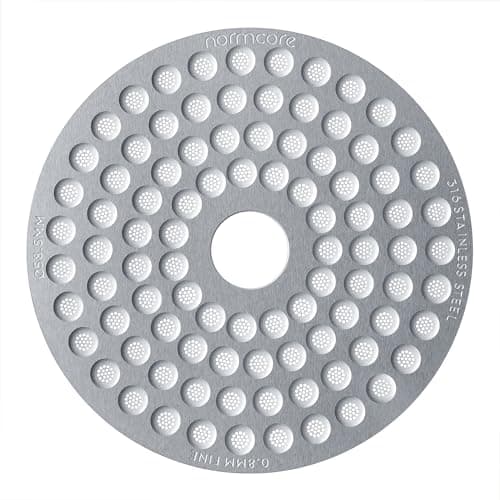
Normcore 58.5mm Espresso Puck Screen.A 0.8mm disc in 316 stainless, sized 58.5mm so it drops into a 58mm basket with a hair of clearance. The reason to pick it over the budget option is tolerances and finish: a screen that is a touch out of round catches on the basket wall and becomes annoying, and this one does not. It is reusable and effectively permanent, so it pays for itself against the cleaning it saves you. The honest con is the one we led with — it is a convenience item, not a taste upgrade.

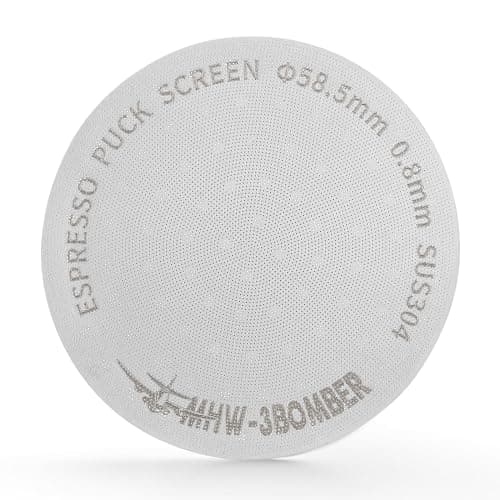
MHW-3BOMBER 58.5mm Puck Screen. The value pick, and the one we would buy if we were not fussy. Dual-layer stainless at 0.8mm, the same cleaner-group-head benefit, at a rock-bottom price, and it is often sold in multipacks so you always have a spare while one is drying. Finish and tolerances are a notch below the Normcore. For a part nobody ever sees, that is a reasonable trade.

The two parts that actually change the shot

We have put these on the page deliberately, because the search that brings people here is usually a shot problem wearing a puck-screen costume.

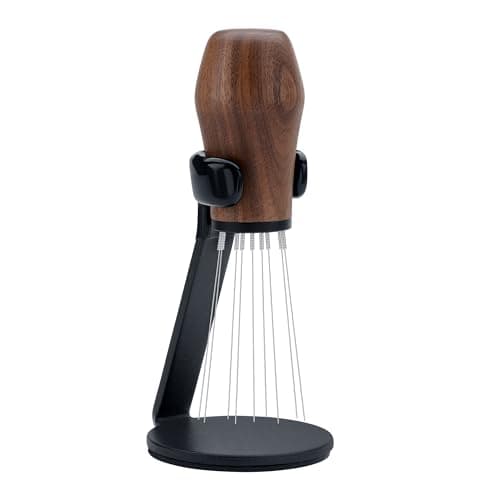
Normcore WDT Distribution Tool (V3).Nine fine needles that you stir through the dry grounds before tamping. Stirring breaks up the clumps and static that form as coffee leaves a grinder, and clumps are the single biggest cause of channeling — water finding a weak path through the puck instead of passing evenly through it. This is the highest impact-per-dollar tool in espresso, full stop. It costs a few dollars more than a puck screen and it changes the liquid. The cons are real but small: it adds a few seconds to every shot, and the needles bend if you are rough.

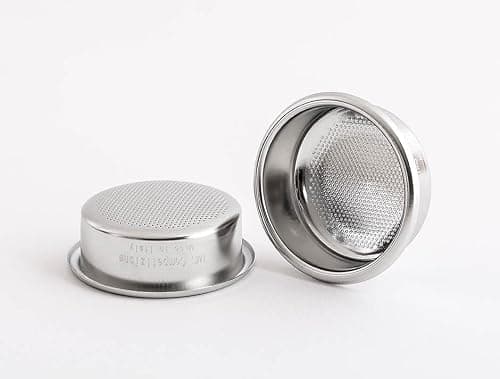
IMS Competition Convex Filter Basket 58mm (18g).The other part that moves the needle. IMS baskets are machined to tighter hole tolerances than the basket your machine shipped with, and more uniform holes means more even flow through the bed — the mechanism, not a marketing claim. It drops into any 58mm portafilter and costs a fraction of one. Its limits are honest: it narrows variance rather than eliminating it, and 18 g is a fixed target, so if you dose 20 g or more you want a larger basket instead.

The order we would buy in

If you own a 58mm machine and have none of this: WDT tool first (it fixes the most common fault), precision basket second (it reduces variance), puck screen third(it saves you cleaning). If you already have good puck prep and your shots are consistent, flip that around — the screen is a genuinely pleasant quality-of-life purchase and the reason plenty of people with dialed-in setups own one. Our puck prep tools roundup covers distributors and levelers, and the espresso gear checklist puts the whole kit in priority order.

A fit warning before you order

Both screens here are 58.5mm, for 58mm baskets — E61 machines, Gaggia, Rancilio, Rocket, ECM, Lelit and friends. They will not work in a 54mm Breville or a 51mm De'Longhi Dedica. Screen diameter has to match basket diameter, and there is no universal size. Our bottomless portafilter guide explains the group-size landscape if you are unsure what your machine takes.

The short answer

Quick picks

#ProductBest forScorePrice
01
Normcore Normcore 58.5mm Espresso Puck Screen
Normcore 58.5mm Espresso Puck Screen

A thin steel disc on top of the puck that keeps the group head clean and evens the last of the flow.

A cleaner group head, cheaply
8.5
$13.99Amazon
02
MHW-3BOMBER MHW-3BOMBER 58.5mm Puck Screen
MHW-3BOMBER 58.5mm Puck Screen

The value puck screen — the same clean-group-head benefit as the Normcore, for a little less.

The cheapest decent puck screen
8.3
$12.99Amazon
03
Normcore Normcore WDT Distribution Tool (V3)
Normcore WDT Distribution Tool (V3)

The single cheapest upgrade to your espresso. Nine needles that break up clumps before you tamp.

Fixing channeling on any espresso machine
9.0
$32.69Amazon
04
IMS IMS Competition Convex Filter Basket 58mm (18g)
IMS Competition Convex Filter Basket 58mm (18g)

The part that actually improves the shot. A naked portafilter shows you channeling; a precision basket is one of the things that reduces it.

Pairing with any 58mm bottomless portafilter
8.8
$16.46Amazon

#ad · Live prices from the Amazon Product API, as of October 11, 2026. Where we have no verified live price, we show none — we would rather leave a gap than print a number that has rotted.

In detail

The picks, in full

01
Normcore Normcore 58.5mm Espresso Puck Screen

A cleaner group head, cheaply

Normcore 58.5mm Espresso Puck Screen

58.5mm0.8mm 316 stainlessReusableFits 58mm baskets
8.5/10

A thin steel disc on top of the puck that keeps the group head clean and evens the last of the flow.

Build quality
9
Does the job
8
Ease of use
8
Value
9

Pros

  • Keeps coffee grounds off the group-head screen, so there's far less to wipe and backflush after each shot
  • Reusable and effectively permanent — it pays for itself against constant cleaning
  • Marginally improves flow evenness at the top of the puck for some setups

Cons

  • It's a convenience-and-cleanliness item; it won't fix a channeling or grind problem
  • One more thing to rinse, and it must match your basket size

Don't buy this if…

…you're expecting a big taste upgrade. A puck screen keeps things clean — the real shot fixes are a good grind and a WDT tool, not this.

$13.99View on Amazon

Price as of October 11, 2026. Prices change — Amazon's is the one that counts.

#ad · we may earn a commission from this link to Normcore 58.5mm Espresso Puck Screen

02
MHW-3BOMBER MHW-3BOMBER 58.5mm Puck Screen

The cheapest decent puck screen

MHW-3BOMBER 58.5mm Puck Screen

58.5mm0.8mm dual-layer steelReusableFits 58mm baskets
8.3/10

The value puck screen — the same clean-group-head benefit as the Normcore, for a little less.

Build quality
7
Does the job
8
Ease of use
8
Value
10

Pros

  • Does the core job — a cleaner group head and less backflushing — for a rock-bottom price
  • Dual-layer stainless holds up to daily use
  • Often sold in multipacks, so you always have a spare

Cons

  • Finish and tolerances are a notch below the Normcore
  • Same caveat as any puck screen: it's cleanliness, not a shot fix

Don't buy this if…

…you want the most refined build. The Normcore is a little nicer — but honestly, for a disc that hides under the group head, this does the same job.

$12.99View on Amazon

Price as of October 11, 2026. Prices change — Amazon's is the one that counts.

#ad · we may earn a commission from this link to MHW-3BOMBER 58.5mm Puck Screen

03
Normcore Normcore WDT Distribution Tool (V3)

Fixing channeling on any espresso machine

Normcore WDT Distribution Tool (V3)

9 thin needlesWeiss distributionWalnut handle + standAny basket size
9.0/10

The single cheapest upgrade to your espresso. Nine needles that break up clumps before you tamp.

Build quality
8
Does the job
10
Ease of use
8
Value
10

Pros

  • Stirring the grounds with fine needles breaks up clumps and static, which is the biggest cause of channeling and sour shots — the highest impact-per-dollar espresso tool there is
  • Works with any machine and any basket size, so it's never obsolete
  • The stand keeps it tidy and the walnut handle is a nice touch for the price

Cons

  • It adds a few seconds of prep to every shot
  • The needles are fine and will bend if you're rough with them

Don't buy this if…

…you don't make espresso. It does nothing for drip, press, or pour-over — it's an espresso puck-prep tool, full stop.

$32.69View on Amazon

Price as of October 11, 2026. Prices change — Amazon's is the one that counts.

#ad · we may earn a commission from this link to Normcore WDT Distribution Tool (V3)

04
IMS IMS Competition Convex Filter Basket 58mm (18g)

Pairing with any 58mm bottomless portafilter

IMS Competition Convex Filter Basket 58mm (18g)

58mm, 18gPrecision-made (IMS)Convex baseCompanion to a 58mm portafilter
8.8/10

The part that actually improves the shot. A naked portafilter shows you channeling; a precision basket is one of the things that reduces it.

Build quality
9
Does the job
8
Ease of use
9
Value
9

Pros

  • IMS baskets are machined to tighter hole tolerances than stock baskets, which is the mechanism behind more even extraction
  • Costs a fraction of the portafilter it goes into
  • The convex competition profile is the shape most 58mm precision baskets at this level use

Cons

  • A basket cannot save bad distribution — it narrows the variance, it does not eliminate it
  • 18g is a fixed target; if you dose 20g or more you want a larger basket instead

Don't buy this if…

…your portafilter already shipped with a precision basket. Several picks on this page do, and doubling up buys you nothing.

$16.46View on Amazon

$24.6833% off

Price as of October 11, 2026. Prices change — Amazon's is the one that counts.

#ad · we may earn a commission from this link to IMS Competition Convex Filter Basket 58mm (18g)

What a puck screen does, mechanically

Three things, in descending order of how much they matter.

1. It keeps the group head clean. Without a screen, the top layer of your puck migrates upward onto the dispersion screen during and after the shot, so you wipe and backflush constantly. With one, the grounds stay below the disc and the screen comes out with the puck. This is the real, reliable, every-shot benefit, and it is why owners keep using them.

2. It can even out the first contact.Water arrives at the puck through a dispersion screen that is not a perfectly uniform shower. A thin steel disc spreads that first contact slightly, which on some setups reduces the surface disruption that starts a channel. "Some setups" is doing real work in that sentence — the effect is small and it is not universal.

3. It adds a little thermal mass. A steel disc preheated in the group contributes marginally to temperature stability at the top of the puck. This is the weakest of the three claims and we would not pay for it alone.

What it does not do, and why people think it does

A puck screen does not fix channeling. The reason that belief is so widespread is that people often buy a screen at the same moment they start taking puck prep seriously — new basket, WDT tool, better grind — and then credit the improvement to the cheapest and newest part. If you want to know what is really happening in your basket, pull a shot through a bottomless portafilter: an even extraction appears as one centered cone of coffee, and an uneven one sprays jets sideways. Add and remove one variable at a time against that picture and the puck screen's real contribution becomes obvious.

Thickness, mesh and what to look for

The useful spec range is narrow. 0.8mmis the standard thickness and the one both picks here use — thin enough not to steal meaningful headroom in the basket, thick enough to stay flat. Thinner screens deform; thicker ones eat dose space. Diameter should be 58.5mm for a 58mm basket, which gives clearance without rattling. Material should be stainless; anything else is a false economy in a wet, hot, acidic environment.

Headroom is the one practical constraint. If you already dose near the top of your basket, adding a screen reduces the gap between the coffee bed and the dispersion screen. Too little headroom and the puck gets squashed on insertion, which can itself cause channeling. If you dose 20 g in an 18 g basket, either dose less or get a deeper basket before you add a screen.

Cleaning, and the mistake that ruins them

Rinse the screen with the puck every time — it takes two seconds under a tap. Once a week or so, soak it in a coffee-oil cleaner alongside your basket; our cleaning supplies roundup covers what to use. The mistake is letting oils build up and bake on: a clogged screen restricts flow unevenly, which turns a neutral part into an actively harmful one. A screen you do not clean is worse than no screen.

If your shots taste wrong, start here instead

In order of how much difference each makes: fresher beans and a better grinder (see best espresso grinders under $200), a WDT tool, a precision basket, a level consistent tamp (tamping guide), and a scale so your dose and yield are repeatable (espresso scales). A puck screen is not on that list, and a shop that tells you otherwise is selling discs. If you are chasing a specific fault, how to dial in espresso and why your puck is wet are the diagnostic pages.
How we picked

We do not run a testing lab

We compiled published manufacturer specifications, computed what each option costs to run where relevant, and cross-referenced aggregated owner reviews, then scored each product against a published rubric. The scores are judgments from documented research — they are not measurements we took, because we do not have a lab and we are not going to pretend we do. Where a number came from a manufacturer or a standard, we name it in Sources.

Questions

Frequently asked

Are espresso puck screens worth it?
Yes, for cleanliness - no, for flavor. A puck screen keeps grounds off the group head, so there is far less wiping and backflushing after each shot, and since it is reusable steel it pays for itself in saved cleaning. It will not fix channeling, sourness or an uneven grind. If your shots taste wrong, a WDT tool and a precision basket are the parts that actually change the liquid.
What size puck screen do I need?
Match it to your basket. A 58mm basket takes a 58.5mmscreen — the half-millimetre is clearance, not a mismatch. A 54mm Breville basket needs a 54mm screen and a 51mm De'Longhi Dedica needs 51mm; there is no universal size, and the two screens on this page are 58.5mm only. If you are not sure what group your machine has, our portafilter guide lists which machines use which diameter.
Does a puck screen stop channeling?
No. Channeling is caused by uneven resistance in the coffee bed — from an inconsistent grind, clumped or unevenly distributed grounds, or an angled tamp. A screen sits on top of the puck and cannot change any of those. It may slightly smooth the first contact of water on some setups, which is not the same thing. The real fixes, in order, are a better grinder, a WDT tool, and a level consistent tamp.
How thick should a puck screen be?
0.8mm is the standard and the right answer for almost everyone - thin enough that it does not steal useful headroom in the basket, thick enough to stay flat in use. Thinner screens tend to deform; thicker ones reduce the space your dose has. Stainless steel is the material to insist on, since the screen lives in a hot, wet, acidic environment every day.
Do I need a puck screen if I have a precision basket?
They do different jobs, so neither replaces the other. A precision basket like the IMS improves flow through the puck by holding tighter hole tolerances; a puck screen keeps grounds off the group head above it. If you can only buy one and your aim is a better shot, buy the basket. If your aim is less cleaning, buy the screen.
How do you clean a puck screen?
Rinse it under the tap every time you knock out the puck, then soak it weekly in a coffee-oil cleaner with your basket — the same cleaner you use for backflushing is fine. Do not let oils bake on: a partially clogged screen restricts flow unevenly, which turns a harmless part into one that actively hurts your shot.
Will a puck screen fit my Breville?
Not these two. Breville and Sage Barista machines use a 54mm group, and both screens here are 58.5mm for 58mm baskets. You need a 54mm screen for a Breville and a 51mm one for a De'Longhi Dedica. Buy the size the listing names for your machine rather than assuming screens are universal - they are not.

Keep reading

Receipts

Sources

We do not run a testing lab, and we do not pretend to. Where a measured number came from a manufacturer spec sheet or a published standard, we name it and link it. Where we could not verify something, we say so on the page rather than quietly leaving it out. Read our full method.