Skip to content
Bean & Burr

HUB 05 · Coffee Beans

The Best Light Roast Coffee

Light roast is the only roast level where the bag can be right and the cup can still be wrong. Here are the eight bags worth buying, and the four brewing changes that stop them tasting sour.

By Stephen V.Updated How we research
#ad

We earn a commission when you buy through our Amazon links, at no extra cost to you. It never affects our rankings, and we say so when the cheaper product is the better buy. How this works.

Start with the uncomfortable fact: "light roast" is not a measured quantity. The Specialty Coffee Association lists a roast-level test method, SCA-131, as a standard still in development— which means that today, when a bag says light roast, nothing independent is standing behind the word. It is the roaster's own classification on the roaster's own scale. Starbucks calls its lightest coffee "Blonde" and means something quite different from what a specialty roaster means by light. Both are telling the truth about their own scale. Neither is telling you a number.

A few roasters do publish a number. Coffee Bros, for example, states an Agtron reading of 75-80 for its light roast and says it pulls the beans just past first crack, ending around 395-405°F. That is what an actual specification looks like, and it is rare. So the first job of this page is to rank light roasts by what their makers are willing to put in writing — roast label, origin, certification, format, bag size — rather than by adjectives, and then to be honest about which bags give you nothing but the adjective.

The second job is more useful: telling you how to brew the bag once it arrives. Light roast is the one roast level where buying well and brewing normally produces a bad cup. Lightly roasted beans are denser and harder than dark ones, they are less soluble, and they surrender their sugars more slowly. Brew a light roast with your dark-roast habits and you get the thin, sour, tea-like cup that convinces people they dislike light coffee. They usually do not. They dislike under-extracted coffee, and the fix is four small changes covered in the buyer's guide below.

Every bag here was checked against Amazon's live catalog on October 10, 2026and was in stock on that date. That check removed more candidates than it kept. Whole-bean light roast is genuinely poorly served on Amazon compared with dark roast: several well-known light roasts came back only as pods, only as ground coffee, or only through resellers at two and three times the roaster's own price, and none of those are listed below. We have not cup-scored these coffees in a lab, because we do not have one — how we research spells out exactly what we do instead.

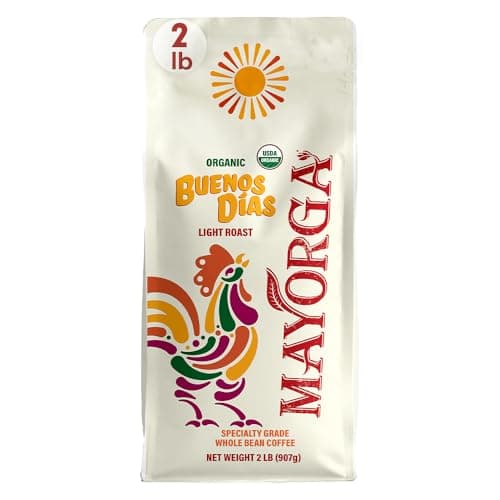
Mayorga Buenos Díasis the pick for most people, and the reason is arithmetic as much as flavor. It is a two-pound, USDA Organic, specialty-grade, 100% Arabica whole-bean light roast, which puts its cost per ounce at roughly half what a 12 oz specialty bag charges — and light roast is a style you need to drink regularly before your palate adjusts to it. Mayorga publishes the profile as citrusy and sweet with low acidity, and that combination is the thing to look for: citrus gives you the brightness you came for, sweetness stops it reading as sour. The honest cons are the ones that come with any big bag. Two pounds is a lot of coffee to keep fresh, and if you leave it in the original bag it will taste flat by the last half pound — see our coffee storage container picks. And it is a Latin American blend, so it is sweet and nutty rather than floral; if you want jasmine and bergamot, this is not that coffee.

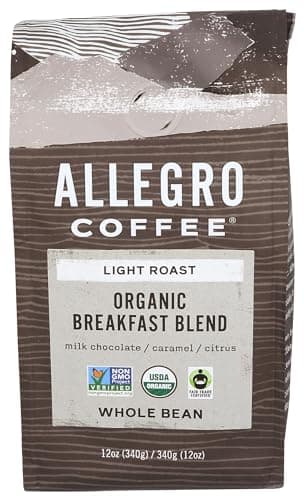
Allegro Organic Breakfast Blend is the pick if you have never deliberately bought a light roast before, and it is the cheapest certified bag here. Whole Foods publishes it as a light roast whole bean with tasting notes of milk chocolate, caramel and citrus, carrying USDA Organic and Fair Trade certification, in a 12 oz bag at supermarket money. Those tasting notes are the reason it leads the beginner slot: chocolate and caramel are the flavors that make a light roast feel like coffee rather than like fruit juice, and the citrus sits on top rather than dominating. The cons are real but small. It is a blend, so it will not show you a specific farm the way a single-origin Ethiopian will, and Allegro publishes neither a roast date nor an Agtron figure, so you are trusting the label rather than a measurement.

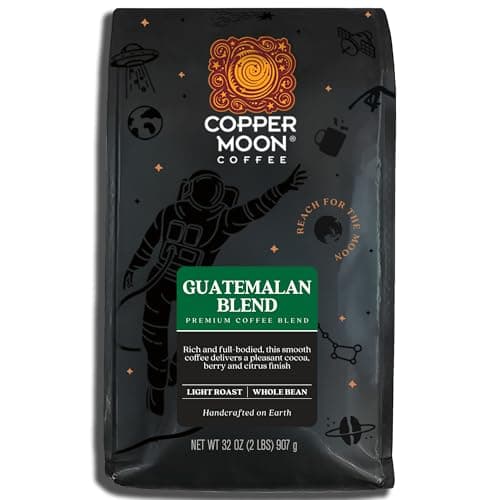
Copper Moon Guatemalan Antiguais the pick when you want origin character without specialty pricing. Antigua is one of the few growing regions whose name actually predicts a flavor — a nutty, cocoa-leaning backbone that gives a light roast body instead of leaving it thin — and this is a two-pound whole-bean bag at close to one-pound specialty prices. The limits are stated plainly on the label: it is an Antigua blend, so the region is named and the farm is not, and like most bulk coffee it carries no roast date. If you want a bag this size with certification behind it, buy the Mayorga instead.

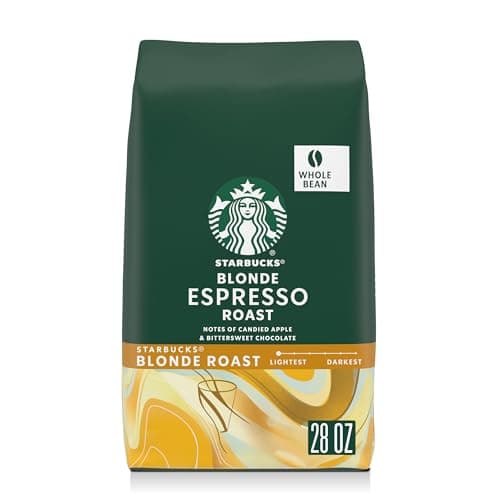
Starbucks Blonde Espresso Roastearns its slot for one specific job: light-roast espresso. This is the only coffee on this page roasted and blended as an espresso coffee, and under nine bars of pressure that matters more than any tasting note. Light roasts are the hardest coffees in the world to pull well — they are dense, they need a finer grind and hotter water, and a filter-focused light roast will run sour and sharp in a basket. A purpose-built blonde espresso roast forgives most of that. It is also sold in a 28 oz bag and stocked nearly everywhere, which is the practical argument for anyone drinking light-roast shots daily. The honest con: blonde is light on Starbucks' scale. Expect toasted, sweet and caramel-leaning rather than floral and articulate. If you want to see what a light roast really does in a basket, our best coffee beans for espresso page covers the rest of the shelf.

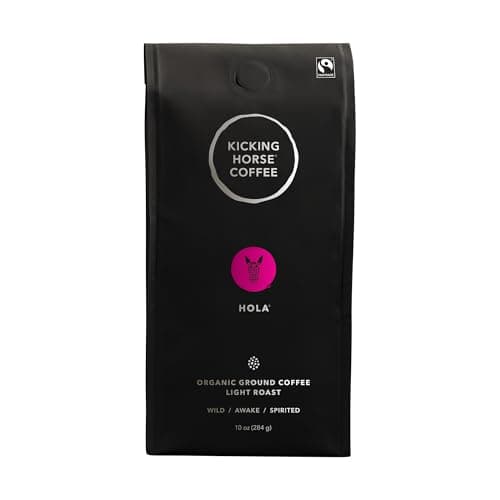
Kicking Horse Holais the most certified coffee on this page — certified organic andcertified fairtrade arabica, which is rarer than either label alone — and Kicking Horse publishes a properly specific profile for it: red currant acidity with a creamy honey body. That is a claim you can hold them to, unlike "smooth." It ranks here rather than higher for one reason we are not going to hide: the reliably stocked US listing is pre-ground, not whole bean. Pre-grinding costs a light roast more than it costs a dark one, because the delicate aromatics that justify buying light in the first place are the first thing to leave. If you own a grinder, buy a whole-bean bag from this page instead; if you do not, Hola is an excellent drip and press coffee and our whole bean vs ground page makes the case for fixing that.

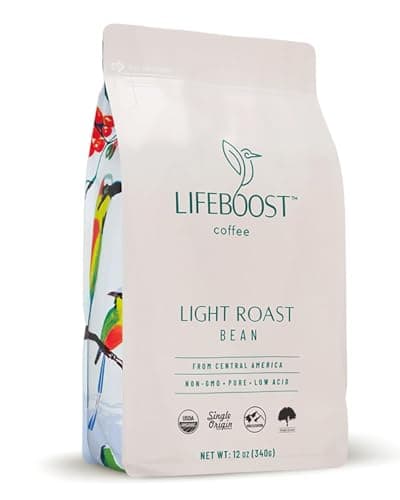
Lifeboost Light Roastis the low-acid light roast, which is close to a contradiction in terms — acidity is most of what people like about light coffee — and it is on this page because a real group of buyers wants the brightness without the stomach consequences. Lifeboost sells single-origin, certified-organic, third-party tested beans, and that testing is the actual reason people choose it over a cheaper organic bag. Two blunt cons. It is by a wide margin the most expensive coffee here per ounce. And "low acid" is a marketing category rather than a regulated measurement, so if brightness is the point for you, this is the wrong bag. Our best low acid coffee roundup covers that need properly, across roast levels.

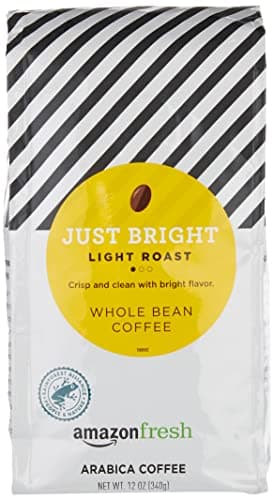
Amazon Fresh Just Brightis the cheapest honest way to find out whether you actually like light roast. It is a 12 oz store-brand whole-bean bag, explicitly labeled light roast, at a few dollars — less than most brands charge for pre-ground. If you have been curious but unwilling to spend specialty money on a style you might not like, this answers the question for the price of a coffee shop latte. What you do not get is anything else: no origin, no certification, no roast date, and commodity sourcing that shows up as generic brightness rather than specific fruit. Once you know you like the style, the money is better spent on the Mayorga.

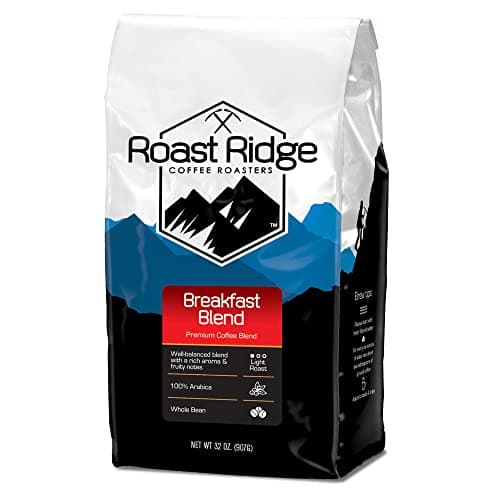
Roast Ridge Breakfast Blendcloses the list as the office-pot option: two pounds of whole-bean light roast at the price of a small specialty bag. Whole bean at bulk pricing is unusual — most cheap bulk coffee is sold ground — and a breakfast-blend profile is built for drip, which is where most light roast is actually drunk in American kitchens. It ranks last on information rather than on taste: no published origin, no certification, no roast date. Breakfast blends are also formulated to be inoffensive, so do not expect the fruit and florals that make a specialty light roast worth the trouble.

What we ranked on, and what we refused to rank on

Because the roast label is unregulated, we gave weight to four things a roaster either publishes or does not. Roast level as the roaster states it— every bag above is labeled light or blonde by its own maker; we did not infer a roast level from tasting notes or from a photograph of the beans. Origin specificity— a named region beats "light roast blend," and a named farm beats a named region. Certification— USDA Organic and Fair Trade are audited claims, which is more than any flavor adjective is. And format and size— whole bean beats ground for a light roast specifically, and bag size drives cost per ounce, which drives whether you drink the style often enough to learn it.

What we refused to use: the absence of a published roast date as a disqualifier. Almost no bag sold through a mass retailer publishes one, and pretending otherwise would have left this page with two entries. Instead we have said, per bag, whether a roast date exists, and the buyer's guide below tells you what to do about it. We also did not rank by price alone. The cheapest coffee here is genuinely worth buying for one specific purpose — finding out whether you like light roast — and genuinely not worth buying once you know the answer.

The short answer

Quick picks

#ProductBest forScorePrice
01
Mayorga Mayorga Buenos Dias Light Roast (Whole Bean, 2 lb)
Mayorga Buenos Dias Light Roast (Whole Bean, 2 lb)

The best light roast here per dollar — a specialty-grade, slow-roasted organic 2 lb bag that drinks sweet rather than sour.

Drinking light roast every day without rationing it
7.8
$31.99Amazon
02
Allegro Coffee Allegro Organic Breakfast Blend (Whole Bean)
Allegro Organic Breakfast Blend (Whole Bean)

The easiest light roast to actually like: certified organic, Fair Trade, and priced like a supermarket bag.

A first light roast that won't taste like lemon water
7.5
$11.99Amazon
03
Copper Moon Copper Moon Guatemalan Antigua Light Roast (Whole Bean, 2 lb)
Copper Moon Guatemalan Antigua Light Roast (Whole Bean, 2 lb)

A light roast with an actual origin story — Guatemalan Antigua character, in a 2 lb bag you can afford to brew twice a day.

Origin character at bulk-bag pricing
7.5
$26.00Amazon
04
Starbucks Starbucks Blonde Espresso Roast (Whole Bean, 28 oz)
Starbucks Blonde Espresso Roast (Whole Bean, 28 oz)

The one light roast on this page actually built for a pressurized 9-bar shot — and the only one sold in a 28 oz bag.

Pulling light-roast espresso without fighting the grinder
7.8
$26.66Amazon
05
Kicking Horse Kicking Horse Hola Light Roast (Ground, 10 oz)
Kicking Horse Hola Light Roast (Ground, 10 oz)

The most certified bag on this page — organic and fairtrade arabica — but the widely stocked US listing is ground, not whole bean.

Certified light roast for a drip machine or press
6.5
$15.45Amazon
06
Lifeboost Lifeboost Light Roast Low Acid (Whole Bean, 12 oz)
Lifeboost Light Roast Low Acid (Whole Bean, 12 oz)

The low-acid light roast — a near contradiction in terms that Lifeboost answers with single-origin beans and third-party testing.

Light roast when bright coffee upsets your stomach
6.0
$28.99Amazon
07
Amazon Fresh Amazon Fresh Just Bright Light Roast (Whole Bean, 12 oz)
Amazon Fresh Just Bright Light Roast (Whole Bean, 12 oz)

The cheapest way to find out whether you actually like light roast — a store-brand 12 oz whole-bean bag at a few dollars.

Testing the style before committing
6.5
$6.66Amazon
08
Roast Ridge Roast Ridge Breakfast Blend Light Roast (Whole Bean, 2 lb)
Roast Ridge Breakfast Blend Light Roast (Whole Bean, 2 lb)

Two pounds of whole-bean light roast at the price of a small specialty bag — the office-pot option.

Feeding a drip machine or an office pot all week
6.5
$19.99Amazon

#ad · Live prices from the Amazon Product API, as of October 11, 2026. Where we have no verified live price, we show none — we would rather leave a gap than print a number that has rotted.

In detail

The picks, in full

01
Mayorga Mayorga Buenos Dias Light Roast (Whole Bean, 2 lb)

Drinking light roast every day without rationing it

Mayorga Buenos Dias Light Roast (Whole Bean, 2 lb)

Light roast2 lb whole beanUSDA Organic100% Arabica, specialty grade
7.8/10

The best light roast here per dollar — a specialty-grade, slow-roasted organic 2 lb bag that drinks sweet rather than sour.

Flavor
8
Espresso suitability
6
Versatility
8
Value
9

Pros

  • Two pounds of specialty-grade organic coffee, which is roughly half the per-ounce cost of a 12 oz specialty bag
  • Mayorga publishes the profile as citrusy and sweet with low acidity — the combination that stops a light roast tasting like under-ripe fruit
  • Slow-roasted and labeled Non-GMO and Kosher as well as USDA Organic, so the sourcing claims are checkable

Cons

  • Two pounds is a lot of surface area to keep fresh — without an airtight container the last half-pound will taste flat
  • A Latin American blend profile, so it is sweet and nutty rather than floral; Ethiopian fans will find it tame

Don't buy this if…

…you drink less than a bag a month. Buy the 12 oz Allegro instead and finish it while it is still bright — a stale light roast is worse than a fresh medium.

$31.99View on Amazon

Price as of October 11, 2026. Prices change — Amazon's is the one that counts.

#ad · we may earn a commission from this link to Mayorga Buenos Dias Light Roast (Whole Bean, 2 lb)

02
Allegro Coffee Allegro Organic Breakfast Blend (Whole Bean)

A first light roast that won't taste like lemon water

Allegro Organic Breakfast Blend (Whole Bean)

Light roast12 oz whole beanUSDA OrganicFair Trade Certified
7.5/10

The easiest light roast to actually like: certified organic, Fair Trade, and priced like a supermarket bag.

Flavor
8
Espresso suitability
5
Versatility
8
Value
9

Pros

  • Whole Foods publishes the tasting notes as milk chocolate, caramel and citrus — chocolate and caramel are what make a light roast approachable instead of thin
  • USDA Organic and Fair Trade Certified at a price most unlabeled supermarket bags charge
  • A 12 oz bag is the right size for a light roast, which goes stale faster than you expect once opened

Cons

  • A blend, not a single origin, so it will not show you a specific farm the way a Yirgacheffe does
  • Allegro does not publish a roast date or an Agtron number, so you are trusting the label rather than a measurement

Don't buy this if…

…you want origin character above all. A single-origin Yirgacheffe or the Copper Moon Guatemalan will taste more specific — this one is built to be liked, not to be studied.

$11.99View on Amazon

Price as of October 11, 2026. Prices change — Amazon's is the one that counts.

#ad · we may earn a commission from this link to Allegro Organic Breakfast Blend (Whole Bean)

03
Copper Moon Copper Moon Guatemalan Antigua Light Roast (Whole Bean, 2 lb)

Origin character at bulk-bag pricing

Copper Moon Guatemalan Antigua Light Roast (Whole Bean, 2 lb)

Light roast2 lb whole beanGuatemalan Antigua blendNutty finish (published)
7.5/10

A light roast with an actual origin story — Guatemalan Antigua character, in a 2 lb bag you can afford to brew twice a day.

Flavor
8
Espresso suitability
6
Versatility
8
Value
8

Pros

  • Antigua coffees are known for a nutty-chocolate backbone, which is why this reads as a light roast with body rather than a thin one
  • Two pounds at a price closer to a one-pound specialty bag
  • A named growing region rather than a generic light-roast blend, so you know roughly what you are buying

Cons

  • It is an Antigua blend, not a lot-specific single origin — the region is named, the farm is not
  • No published roast date, and bulk bags tend to sit longer in the supply chain than 12 oz specialty bags

Don't buy this if…

…you want certification as well as flavor. Mayorga's Buenos Dias is the same 2 lb format with USDA Organic behind it.

$26.00View on Amazon

Price as of October 11, 2026. Prices change — Amazon's is the one that counts.

#ad · we may earn a commission from this link to Copper Moon Guatemalan Antigua Light Roast (Whole Bean, 2 lb)

04
Starbucks Starbucks Blonde Espresso Roast (Whole Bean, 28 oz)

Pulling light-roast espresso without fighting the grinder

Starbucks Blonde Espresso Roast (Whole Bean, 28 oz)

Blonde (light) roast28 oz whole beanBuilt as an espresso roastWidely stocked
7.8/10

The one light roast on this page actually built for a pressurized 9-bar shot — and the only one sold in a 28 oz bag.

Flavor
7
Espresso suitability
9
Versatility
7
Value
8

Pros

  • Roasted and blended as an espresso coffee, so it is far more forgiving under pressure than a filter-focused light roast
  • 28 oz is a serious bag — the cheapest way here to drink light-roast espresso daily
  • Stocked almost everywhere, so you can replace it the same week instead of waiting on a roaster's ship date

Cons

  • Blonde is light by Starbucks' scale, not by a specialty roaster's — expect toasted and sweet rather than floral and bright
  • No roast date on the bag, and a 28 oz bag takes a while to get through

Don't buy this if…

…you are chasing fruit and florals in the cup. This is a smooth, caramel-leaning light roast — the Copper Moon or a Yirgacheffe will taste far more like a specialty light roast.

$26.66View on Amazon

Price as of October 11, 2026. Prices change — Amazon's is the one that counts.

#ad · we may earn a commission from this link to Starbucks Blonde Espresso Roast (Whole Bean, 28 oz)

05
Kicking Horse Kicking Horse Hola Light Roast (Ground, 10 oz)

Certified light roast for a drip machine or press

Kicking Horse Hola Light Roast (Ground, 10 oz)

Light roast10 oz groundCertified organicCertified fairtrade arabica
6.5/10

The most certified bag on this page — organic and fairtrade arabica — but the widely stocked US listing is ground, not whole bean.

Flavor
8
Espresso suitability
5
Versatility
7
Value
6

Pros

  • Both organic AND fairtrade certified, which is rarer than either label alone
  • Kicking Horse publishes the profile as red currant acidity with a creamy honey body — a specific, checkable claim rather than smooth
  • Roasted in the Canadian Rockies and widely distributed, so bags turn over quickly

Cons

  • The reliably stocked US listing is pre-ground, which costs a light roast more aroma than it costs a dark one
  • A 10 oz bag at a specialty price — the per-ounce cost is the highest here apart from Lifeboost

Don't buy this if…

…you own a grinder. Buying ground coffee when you own a burr grinder throws away the biggest freshness advantage you have — buy any whole-bean bag on this page instead.

$15.45View on Amazon

Price as of October 11, 2026. Prices change — Amazon's is the one that counts.

#ad · we may earn a commission from this link to Kicking Horse Hola Light Roast (Ground, 10 oz)

06
Lifeboost Lifeboost Light Roast Low Acid (Whole Bean, 12 oz)

Light roast when bright coffee upsets your stomach

Lifeboost Light Roast Low Acid (Whole Bean, 12 oz)

Light roast12 oz whole beanCertified organicMarketed as low acid
6.0/10

The low-acid light roast — a near contradiction in terms that Lifeboost answers with single-origin beans and third-party testing.

Flavor
8
Espresso suitability
5
Versatility
7
Value
4

Pros

  • The only light roast here aimed squarely at people who find bright coffee harsh
  • Certified organic and third-party tested, which is the reason most buyers pick Lifeboost over a cheaper organic bag
  • Single-origin sourcing, so the cup is consistent bag to bag

Cons

  • By a clear margin the most expensive coffee on this page per ounce
  • Low acid is a marketing category, not a regulated measurement — if brightness is what you want from a light roast, this is the wrong bag

Don't buy this if…

…price matters or brightness is the point. Allegro gives you organic certification for less than half the per-ounce cost.

$28.99View on Amazon

Price as of October 11, 2026. Prices change — Amazon's is the one that counts.

#ad · we may earn a commission from this link to Lifeboost Light Roast Low Acid (Whole Bean, 12 oz)

07
Amazon Fresh Amazon Fresh Just Bright Light Roast (Whole Bean, 12 oz)

Testing the style before committing

Amazon Fresh Just Bright Light Roast (Whole Bean, 12 oz)

Light roast12 oz whole beanStore brandLowest price here
6.5/10

The cheapest way to find out whether you actually like light roast — a store-brand 12 oz whole-bean bag at a few dollars.

Flavor
6
Espresso suitability
4
Versatility
7
Value
9

Pros

  • Whole bean at a price most brands charge for pre-ground, so you keep the freshness advantage even on the budget tier
  • A genuinely low-risk way to learn whether light roast suits your palate and your brewer
  • Restocks constantly, so it is almost never out of stock

Cons

  • No origin, no certification and no roast date — you get the words light roast and nothing else
  • Commodity sourcing shows in the cup as generic brightness rather than specific fruit

Don't buy this if…

…you already know you like light roast. Put the money into Mayorga or Copper Moon instead — the gap in the cup is large and the gap in price is a few dollars a pound.

$6.66View on Amazon

Price as of October 11, 2026. Prices change — Amazon's is the one that counts.

#ad · we may earn a commission from this link to Amazon Fresh Just Bright Light Roast (Whole Bean, 12 oz)

08
Roast Ridge Roast Ridge Breakfast Blend Light Roast (Whole Bean, 2 lb)

Feeding a drip machine or an office pot all week

Roast Ridge Breakfast Blend Light Roast (Whole Bean, 2 lb)

Light roast2 lb whole beanBreakfast blendBulk value
6.5/10

Two pounds of whole-bean light roast at the price of a small specialty bag — the office-pot option.

Flavor
6
Espresso suitability
4
Versatility
7
Value
9

Pros

  • One of the lowest per-ounce costs on this page for a 2 lb whole-bean bag
  • A breakfast-blend profile is built for drip, which is where most people actually drink light roast
  • Whole bean at bulk pricing, which is unusual — most cheap bulk coffee is sold ground

Cons

  • A value brand with no published origin, certification or roast date
  • Breakfast blends are formulated to be inoffensive, so do not expect the fruit and florals a specialty light roast gives you

Don't buy this if…

…you are buying light roast for the flavor rather than the format. Mayorga is the same 2 lb size with specialty-grade organic beans behind it.

$19.99View on Amazon

$23.9917% off

Price as of October 11, 2026. Prices change — Amazon's is the one that counts.

#ad · we may earn a commission from this link to Roast Ridge Breakfast Blend Light Roast (Whole Bean, 2 lb)

Why your light roast tastes sour, and the four fixes

Almost every complaint about light roast is a complaint about under-extraction. A lightly roasted bean has spent less time in the roaster, so it is denser, harder, and less soluble than a dark one. The same grind, the same water and the same ratio that produce a balanced dark roast will pull too little out of a light roast, and under-extracted coffee tastes sour, thin and salty rather than bright and sweet. Four changes, in order of how much they matter:

1. Grind finer than you think.This is the single biggest lever and the one people are most reluctant to pull. Go one or two clicks finer than your usual setting for the same brewer, and expect a slightly slower drawdown. If your grinder cannot hold a fine setting consistently, that is the real problem — see the best burr grinders and our grind size chart.

2. Use hotter water.The National Coffee Association puts the useful brewing window at 195-205°F. With a dark roast you can sit at the bottom of that range; with a light roast, go to the top of it. Off-boil is correct here, and a kettle that holds temperature makes it repeatable — our gooseneck kettle picks cover the variable-temperature options.

3. Fix the ratio before you fix the dose.A light roast rewards a slightly stronger brew ratio, not a longer brew. If the cup is thin, work from a measured starting point rather than guessing — our coffee to water ratio guide has the numbers for each brewer. Weigh the coffee; scoops are the enemy of consistency with light roast because the beans are denser than you are used to.

4. Give it longer off the roaster, not less. This one is counter-intuitive. Dark roasts degas quickly and are often at their best within days. Light roasts frequently taste tight and closed for the first week and open up after it. If a bag tastes sharp on day two, give it four more days before you decide it is bad coffee.

Which brewer suits a light roast

Light roast is at its best in a brewer that gives you clarity and control: pour-over first, then a well-made drip machine that actually reaches the top of the NCA window. The delicate, high-aromatic end of coffee is exactly what a paper filter flatters — see the best pour-over setups and the best coffee for pour-over. A French press will work but mutes the top notes under body and sediment, which is spending money on a light roast to make it taste more like a medium. Espresso is the hard mode: possible, rewarding, and the reason the purpose-built blonde espresso roast is on this list.

Storage matters more here than anywhere else

The aromatics that justify a light roast's price are volatile, and they leave through oxygen and light. Two of the best-value bags on this page are two pounds, which means most of that coffee is sitting around while you drink the first quarter of it. Decant into something airtight and opaque, keep it out of the cupboard above the stove, and do not freeze and thaw repeatedly. Our how to store coffee beans guide covers the specifics, and how long coffee beans last gives the realistic timelines.
How we picked

We do not run a testing lab

We compiled published manufacturer specifications, computed what each option costs to run where relevant, and cross-referenced aggregated owner reviews, then scored each product against a published rubric. The scores are judgments from documented research — they are not measurements we took, because we do not have a lab and we are not going to pretend we do. Where a number came from a manufacturer or a standard, we name it in Sources.

Questions

Frequently asked

Is light roast coffee stronger in caffeine than dark roast?
Marginally, and only if you measure by volume. Caffeine survives roasting largely intact, so weighed on a scale the two are nearly identical; measured by the scoop, denser light-roast beans fit more mass into the same space and so carry slightly more. Either way the difference is too small to be a reason to buy. If you want more caffeine, use more coffee — how much caffeine is in coffee has the actual numbers, and the best high-caffeine coffee covers the bags that are genuinely built for it.
Why does my light roast taste sour?
Because it is under-extracted, nine times out of ten. Light roasts are denser and less soluble than dark roasts, so the grind and water temperature that work for your usual bag pull too little out of them. Grind one or two clicks finer, brew at the top of the 195-205°F window rather than the bottom, and weigh your coffee instead of scooping it. Sour, thin and salty means not enough extraction; bitter and drying means too much. They are opposite problems and the fixes run in opposite directions.
Is there an official standard for what counts as a light roast?
Not yet. The Specialty Coffee Association lists SCA-131 Coffee Roast Level as a test method still in development, so there is currently no published independent standard a bag must meet to call itself light. Some roasters volunteer an Agtron number — Coffee Bros publishes 75-80 for its light roast — and that is the closest thing to a measurement you will see on a label. Everything else is the roaster's own scale, which is why a Starbucks Blonde and a specialty light roast can both be honestly labeled and taste nothing alike.
Can you pull espresso with a light roast?
Yes, and it is the hardest espresso there is. Light roasts need a finer grind, a hotter brew temperature and usually a longer ratio than a medium or dark roast, and they punish uneven puck prep — which is why light-roast shots are the usual reason people buy a bottomless portafilter and a distribution tool. Start with a blend roasted specifically for espresso rather than a filter-focused single origin, and expect to re-dial rather than keep your usual recipe.
Light roast or medium roast - which should I buy?
Medium if you want one bag that works in every brewer and forgives sloppy technique; light if you want to taste where the coffee came from and are willing to grind finer and brew hotter to get it. Medium roast is the safer default and the better gift, and our best medium roast coffee roundup covers it. If you are deciding between the two ends of the spectrum rather than the middle, light vs dark roast explains what actually changes in the cup.
Does light roast coffee have more acidity - and is that bad for you?
More perceived brightness, yes; that is the main reason to drink it. Whether that troubles you is individual, and it is worth knowing that caffeine itself stimulates stomach acid regardless of the coffee's pH, so switching roast levels is not a guaranteed fix. Darker roasts, lower-acid beans and cold brewing all help some people. For a genuine GI problem, that conversation belongs with a doctor rather than a coffee label — our low acid coffee page is honest about the same limits.
Is whole bean really worth it for a light roast?
More than for any other roast level. The high, volatile aromatics that make a light roast worth its price are the first thing lost once coffee is ground, so pre-ground light roast gives up a larger share of what you paid for than pre-ground dark roast does. That is the one reason the ground Kicking Horse bag is not ranked higher on this page despite being the most certified coffee here. If you do not own a grinder yet, our best grinders under $100 is the cheapest fix available.

Keep reading

Receipts

Sources

We do not run a testing lab, and we do not pretend to. Where a measured number came from a manufacturer spec sheet or a published standard, we name it and link it. Where we could not verify something, we say so on the page rather than quietly leaving it out. Read our full method.