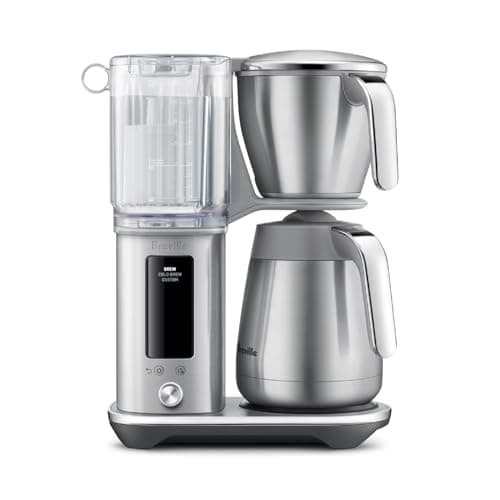
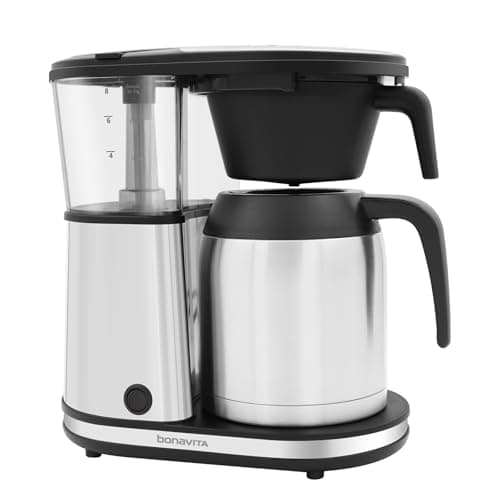
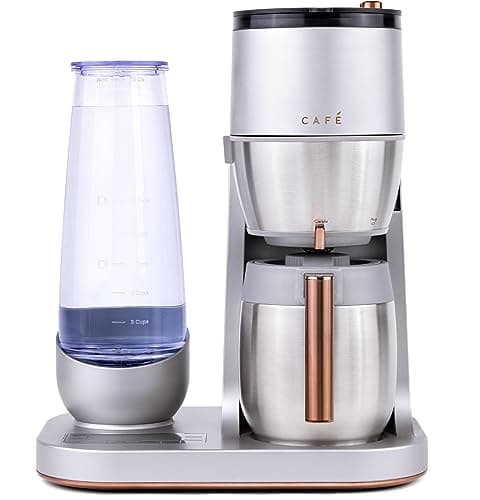
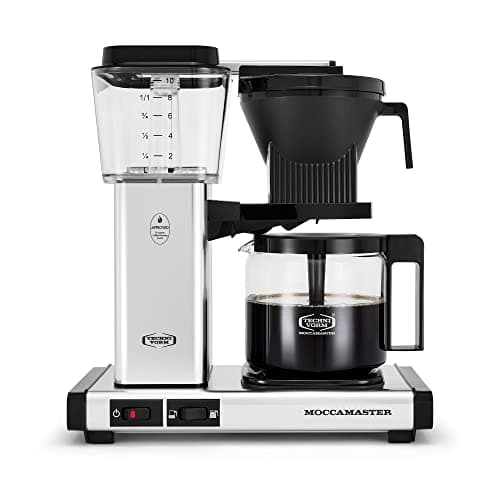
For most people the answer is the Technivorm Moccamaster KBGV Select— certified by the SCA, built to be repaired rather than replaced, and the brewer we would buy with our own money. If you want certified brewing with modern controls, the Breville Luxe Brewer adds three brew modes and a thermal carafe. The Bonavita Connoisseur is the certified machine that costs the least and asks the least of you. And if you want the grinder built in, the Café Specialty Grind & Brew is certified with the grinder in the box, which is rare.
Before the picks, the thing that makes this page useful: SCA certification is a real third-party test, and it is also a paid program.Both halves of that sentence matter, and most pages about "SCA approved coffee makers" only tell you the first half.
What the certification actually is
The Specialty Coffee Association runs a Certified Equipment Program for home brewers. In the SCA's own description, certified machines "meet SCA's rigorous standards for brewing quality, consistency, and performance" and have "successfully completed SCA third-party testing." The testing is not done in-house by the manufacturer and it is not done by the SCA's marketing department — it happens at an external testing centre, and the SCA says the standards are "grounded in decades of industry research led by the SCA and the Coffee Brewing Center."
In practice the standards are about the brewing variables a machine controls and you cannot: whether it gets the water into the correct temperature band and holds it there, whether it contacts the grounds for the right length of time, and whether it distributes water evenly over the bed instead of drilling a hole through the middle. These are exactly the things cheap drip machines get wrong, which is why the certification correlates with cups that taste good.
And the part nobody prints
Certification is not free. Per the SCA's program page, a manufacturer needs an active SCA company membership to submit at all, every submission is tested at the third-party centre, and certification carries a USD $5,000 annual licensing fee on a three-year term. That has two consequences worth understanding before you use the list as a shopping filter.
First, the list skews toward brands with the volume to absorb a five-figure commitment per certified model. Second, and more usefully: a machine's absence from the list is not evidence that it brews badly. It may simply mean nobody paid. Several brewers we rate highly are not on it, and plenty of pour-over gear cannot be on it because the certification is for machines, not for a V60 and your own kettle.
The picks
Technivorm Moccamaster KBGV Select.Certified by the SCA for 2026 and the machine we recommend above everything else in drip. Hand-built in the Netherlands, a copper heating element that gets to brew temperature fast and stays there, and a selector that switches between a half and full carafe so a small batch is not brewed as if it were a big one. The real argument for it is longevity: Technivorm sells parts, so this is a ten-year machine rather than a three-year one. The honest cons are the price and the fact that it has no timer — you fill it and switch it on, like a kettle. Our full Moccamaster review has the detail.
Breville Luxe Brewer (Thermal).Certified in 2025 for both the thermal and glass versions. This is the certified brewer for people who want settings: three brew modes including a "golden cup" mode that targets the certified parameters, a cold-brew mode, a fully custom mode, and a removable reservoir with an integrated water filter. It is the most capable machine here and the one to buy if you also want to control bloom time yourself. See the Luxe Brewer review.
Bonavita Connoisseur 8-Cup.Bonavita is the brand with the most certified models on the SCA's current list, and the Connoisseur is the one to buy: a flat-bottom basket, optional pre-infusion, a thermal carafe, a full carafe in about six minutes, and one button. It is the cheapest honest way onto this page. What you give up next to the Moccamaster is build and repairability, not cup quality.
Café Specialty Grind & Brew. Certified since 2023, and notable because it is certified with a built-in burr grinder— most grind-and-brew machines are not certified anything. It also has a podless single-serve function and a built-in carbon water filter. If you want one appliance to replace a grinder and a brewer, this is the certified option; our grind-and-brew roundup puts it against the uncertified field.
One honest correction, because it comes up
OXO's drip machines are frequently described online as SCA certified, and OXO does have certified models — the 8-Cup (certified 2025) and the 12-Cup (certified 2023) are both on the SCA's current list. The 9-Cup, which is the OXO we recommend most often and which many articles call certified, is not on that list. We still rate it — see the OXO Brew 9 Cup review— but we are not going to put a certification badge on it that the SCA has not given it. If the certification is the thing you are buying, buy the 8-cup or the 12-cup.
Should certification decide your purchase?
Use it as a floor, not a ceiling. A certified machine is very unlikely to brew badly, which makes the list a genuinely good shortlist if you do not want to think hard. But treat it as one signal among several: price, carafe type, capacity, whether parts exist, and whether you will actually use the features. A certified machine you find annoying is worse than an uncertified one you use every day.
Thermal or glass?
Glass carafes sit on a hotplate, and a hotplate continues to cook the coffee — after thirty or forty minutes it tastes stewed and bitter. Thermal carafes hold heat without applying any, so the last cup tastes like the first. If you brew a full carafe and drink it over an hour or more, pay for thermal; our thermal carafe roundup ranks the field. If you drink two cups in ten minutes, glass is fine and usually cheaper.
Flat-bottom versus cone basket
The basket shape changes the cup and almost nobody mentions it at the point of sale. Per the NCA, a flat-bottom basket is wider, so water flows through faster over a larger bed and tends toward a smoother, milder cup. A cone concentrates the flow over a smaller area and slows it down, which tends toward a richer, more complex cup. Neither is better; they are different targets, and the filters are not interchangeable, so check what the machine takes before you buy a year of filters.
The grinder matters more than the certification
This is the uncomfortable part. A certified brewer fed pre-ground supermarket coffee will make a worse cup than an uncertified brewer fed beans ground thirty seconds ago. The NCA recommends a burr grinder over a blade grinder for exactly this reason, and so do we, everywhere. If your budget has to cover both, buy the Bonavita and a decent burr grinder rather than the Moccamaster and a blade grinder. The ordering is not close.
Water, the other input
Brewed coffee is overwhelmingly water, and hard water both tastes worse and scales up the heating element that the certification is all about. Two of the machines here ship with a carbon filter in the reservoir for this reason. If your tap water is hard, filter it, and descale on schedule — how to clean a coffee maker covers the routine, and a scaled machine drifts out of the temperature band it was certified in.