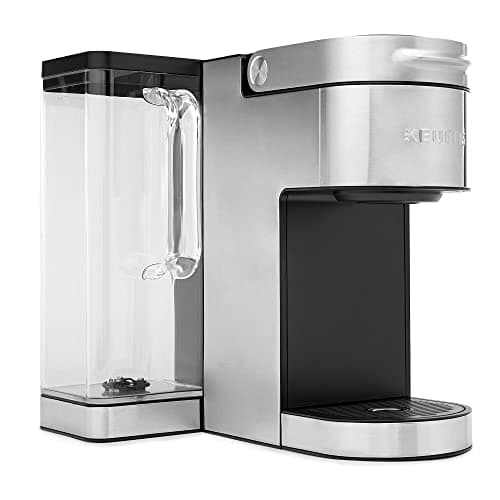
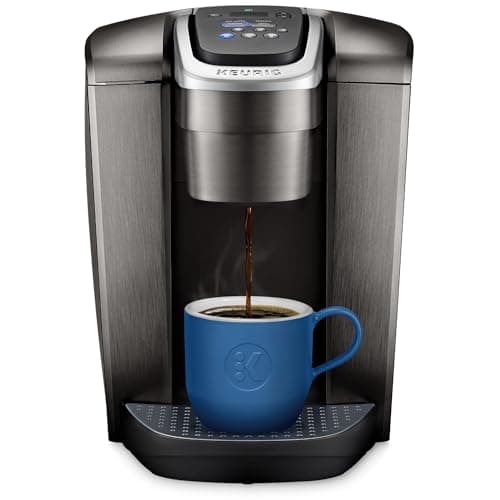
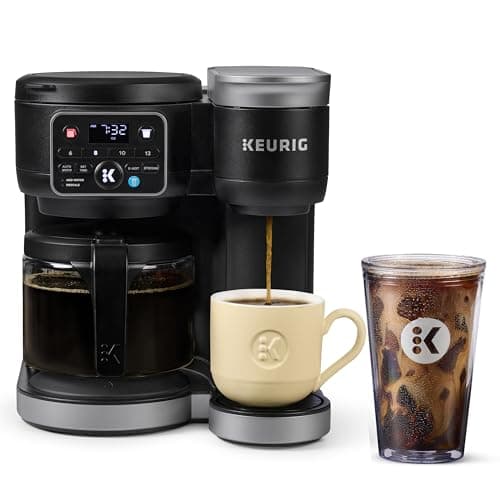
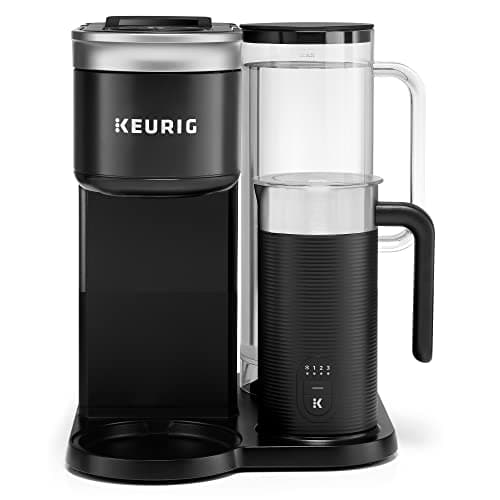
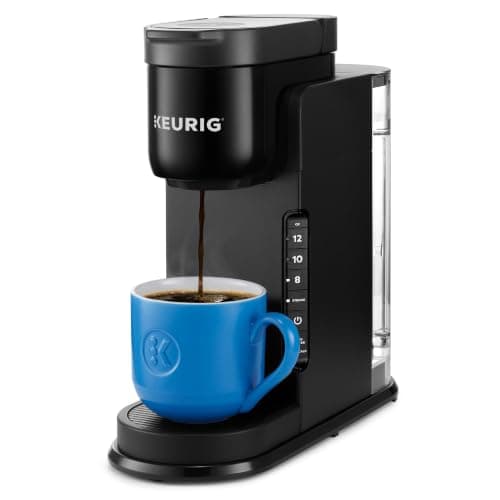
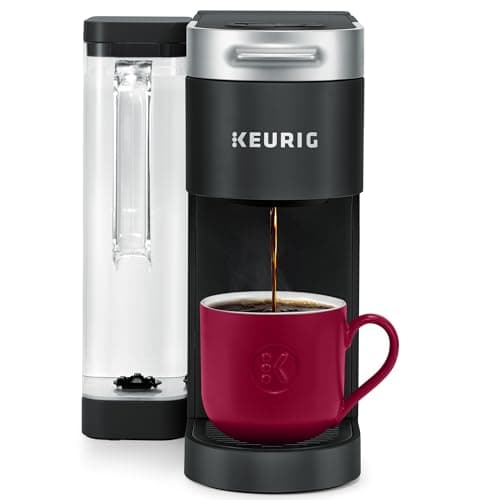
Buy the Keurig K-Supreme. It has the newer MultiStream brew head, which is the only hardware difference in this entire lineup that changes what lands in the cup, and it is usually the cheapest machine that has one. The K-Supreme Plus is the same brewing with a bigger tank, temperature control and saved presets; the K-Elite is the one to buy if iced coffee and hotter water matter more to you than the new shower head; the K-Duo is the only Keurig that can also brew a carafe for a table of people; and the K-Cafe SMART is the one that froths milk. The K-Express and K-Mini exist to be cheap, and they are honest about it.
Here is the thing worth knowing before you compare feature lists. Most of what separates one Keurig from the next is conveniencehardware — reservoir size, how many cup sizes the buttons offer, whether it remembers two people's preferences. Those things are worth money, but none of them change the coffee. Only one spec does, and Keurig gives it an unhelpfully marketing-shaped name.
MultiStream vs single-stream: the only spec that affects the cup
A classic Keurig punctures the pod and sends hot water in through a single needle in the center of the lid. That means water enters at one point, finds the quickest path down through the grounds, and leaves a ring of coffee at the edge of the pod that barely gets wet. Keurig's newer machines use a multi-needle head it markets as MultiStream Technology, which spreads the water over several entry points so more of the bed is saturated. Keurig Dr Pepper says the technology came out of direct consumer feedback asking for a stronger, fuller-flavored cup, and the packaging copy reproduced by the Specialty Coffee Association describes the goal as saturating the grounds more evenly to extract fuller flavor and aroma.
Does it work? Modestly, and in the direction you would expect. Even water distribution is the same principle that makes a WDT toolworth $12 on an espresso machine and makes a flat-bottom drip basket brew differently from a cone. Wetting more of the bed extracts more of what is in there. It cannot add flavor the roaster did not put in the capsule, and reviewers who have compared MultiStream and classic machines side by side describe a real but small difference. The useful conclusion is narrow and practical: if two Keurigs cost roughly the same, buy the MultiStream one. Right now the MultiStream models are the K-Supreme, K-Supreme Plus and K-Slim; the K-Elite, K-Express, K-Mini and the K-Duo's pod side are single-stream.
What no Keurig can do
We should say this plainly before ranking anything, because it decides whether you should buy one at all. A pod has a hard flavor ceiling: it holds a fixed dose of coffee that was ground and sealed in a factory months ago, and you cannot change the dose, the grind or the ratio. Fresh whole beans ground at the moment of brewing are the single biggest upgrade in home coffee, and a pod machine is architecturally unable to offer it — see whole bean vs ground. Pods also cost several times per cup what the same coffee costs as beans, every single morning, forever.
None of that makes a Keurig a bad buy. It makes it a specific buy: you are paying for sixty-second coffee with nothing to clean, which is a real thing to want, especially for one drinker in a household that does not otherwise brew. If that is the trade you want, read on. If you are not sure, Keurig vs drip coffee does the comparison honestly and best coffee makers for one person covers the non-pod ways to brew a single cup.
The picks
1. Keurig K-Supreme — the one most people should buy.The Amazon listing specifies MultiStream Technology, four brew sizes and a 66 oz removable reservoir. That is the important half of the K-Supreme Plus at a markedly lower price: the brew head is the same part, and the reservoir is big enough that you are not refilling mid-week. The honest cons are the omissions. There is no temperature control, no iced setting, and fewer saved presets than the Plus, so if two people in the house want different strengths they will be pressing buttons rather than recalling a profile. And it is still a pod machine — the ceiling is the capsule.
2. Keurig K-Supreme Plus — the fully-equipped MultiStream.Same brewing, plus a listed 78 oz removable reservoir (the largest in the line), temperature and strength settings, and programmable favorites so two or three drinkers each get their own setup. If one machine serves a couple with different tastes, the presets genuinely earn their money. The cons: you are paying a significant premium over the plain K-Supreme for conveniences rather than cup quality, and the pod economics do not improve with the price of the brewer. Several owners also report the descale light coming on sooner than the water warrants — how to descale a Keurig covers the routine either way.
3. Keurig K-Elite — for iced coffee and hotter water. The K-Elite is the old flagship and it still holds a niche the MultiStream machines do not fill: strength control, adjustable brew temperature and a dedicated iced setting that brews hotter and stronger to survive dilution over ice. If you drink iced coffee most of the year, that matters more day to day than the shower head does. The con is simply that it is single-stream brewing, so the cup itself is the older recipe. Our full Keurig K-Elite review goes deeper, and K-Elite vs K-Mini is the head-to-head with the little one.
4. Keurig K-Duo — the only one that serves a table.A pod side and a ground-coffee carafe side in one body, sharing a tank that Blain's Farm & Fleet lists at 72 oz. It can be programmed up to 24 hours ahead so a pot is ready when you get up, offers strong and over-ice settings, and will let you pour a cup mid-brew. For a household where one person wants a quick cup and three people want coffee at 8am, this is the answer, and it saves you buying two machines. The cons are real: the carafe side is an ordinary basket brewer with no published brew-temperature claim and no SCA certification — see SCA-certified coffee makers for what that standard actually tests — and carafe coffee sitting on a heating plate flattens within the hour.
5. Keurig K-Cafe SMART — for lattes without a pump machine.Farm & Fleet's spec list gives 6, 8, 10 and 12 oz brews plus single and double shot settings, a 60 oz reservoir, and a frother that works hot or cold with dairy or oat, almond and soy milk. The shot setting is what makes the milk drinks work: a normal 8 oz pod brew disappears into steamed milk, and a concentrated one does not. BrewID recognizes the pod and suggests drinks through the app. The honest limit is the important one — this is not espresso. There is no 9-bar pump, so there is no crema and none of espresso's syrupy texture; it is strong pod coffee in a latte glass. If that distinction matters, coffee vs espresso explains why, and a separate milk frother plus any Keurig gets you most of the same drinks for less.
6. Keurig K-Express — cheapest with a reservoir. Three brew sizes, a listed 42 oz removable tank, a Strong Brew button and enough height for a travel mug. The reservoir is the whole argument: it is the one thing the cheaper K-Mini cannot do, and filling a tank once rather than for every cup is the difference between a machine you tolerate and one you forget about. Cons: single-stream brewing, no temperature control, no iced mode, and build quality that is visibly built to a price.
7. Keurig K-Mini — the smallest footprint there is. Under five inches wide, stores its own cord, brews 6 to 12 oz. For a dorm room, an office drawer or a kitchen with no counter left, nothing else in the category fits. The trade is severe and you should go in knowing it: there is no reservoir at all, so you pour fresh water for every single cup, and there are no controls beyond the one button.
The one-line answer by situation
Best Keurig for most people: K-Supreme. Two drinkers, different tastes: K-Supreme Plus. Iced coffee most days: K-Elite. One cup and a full pot: K-Duo. Lattes and cold foam: K-Cafe SMART. Cheapest that is not annoying: K-Express. No counter space: K-Mini. For the wider single-serve field, including the Nespresso side, see single-serve machines and Keurig vs Nespresso.
How to choose, in order of what actually matters
First, MultiStream or not. It is the only brewing difference in the range, so when two models sit near each other in price, the MultiStream one wins. Second, the reservoir. This is the feature you will feel every day: a 42-78 oz tank means you fill it twice a week, and no tank at all means you fill a carafe every cup. Third, do you need a specific drink?Iced points at the K-Elite, milk drinks at the K-Cafe SMART, a carafe at the K-Duo. Everything else — app connectivity, finishes, the number of saved profiles — is comfort, not coffee.
The pod math, honestly
A pod costs several times what the equivalent coffee costs as whole beans, and that gap compounds daily rather than once. Two pods a day is a recurring expense in the same bracket as a streaming subscription, which is why the cheap machine often turns out to be the expensive decision. We will not quote a per-cup number here, because pod prices move constantly and a stale figure is worse than none — but you can do it in thirty seconds: divide the price of a pod box by the pod count, and compare that against the price of a 12 oz bag divided by the roughly 20 cups it brews. Our cost calculator runs the same arithmetic for espresso habits, and the shape of the answer is identical.
There are two ways to cut it without giving up the machine. Buy pods in large boxes rather than grocery-store 12-packs — best coffee pods covers which ones are worth drinking and which bulk buys are genuinely cheaper. Or fill your own: a reusable K-Cup drops the per-cup cost to the price of the beans and, incidentally, lets you use fresh coffee, which raises the flavor ceiling the pod format imposes.
Pod compatibility, and the generation question
All the machines here take standard K-Cup pods, including the third-party and store-brand ones, so you are not locked to a single roaster the way Nespresso's Vertuo line locks you — Vertuo vs Originalexplains that difference. The old "Keurig 2.0 only reads licensed pods" problem belongs to a discontinued generation; current brewers do not police pods. The only genuine compatibility trap is physical: very tall travel mugs do not fit under every model, and reusable filters are machine-specific enough that it is worth checking yours is listed as compatible before buying a multi-pack.
Descaling is not optional, and it is the usual culprit
Nearly every "my Keurig brews half a cup now" or "the coffee got weak" complaint is scale. A pod machine forces water through a needle and a narrow line, so mineral buildup restricts flow faster than it does in a drip brewer with a wide shower head, and the result is a short, cool, under-extracted cup. Descale on the schedule in how to descale a Keurig— more often if your water is hard — and clear the exit needle with a paperclip when flow drops. If your water is very hard, a filtered jug refilling the tank will slow the whole problem down; water for espresso explains the chemistry, which applies identically here.
What we would not pay extra for
App connectivity. Starting a brew from your phone sounds useful until you remember the pod still has to be loaded by hand, which requires standing at the machine. Extra cup sizes.One pod has a fixed dose of coffee, so a bigger size is the same coffee plus more water — a 12 oz setting on a pod built for 8 oz brews weaker coffee, not more of it. A built-in frother on a machine you do not want otherwise. A standalone frother costs a fraction of the K-Cafe premium and does the same job for any brewer. Finishes. Brushed metal looks better and brews identically.
When to skip Keurig entirely
If you drink more than two cups a day, the pod premium will outrun the machine's price within months, and a drip machine or a French presswill both cost less to run and taste better. If you want espresso or milk drinks properly, buy an actual pump machine — best budget espresso machines starts where the K-Cafe SMART ends, and the drink is genuinely different. If one appliance has to cover espresso, filter and iced coffee for a whole household, the Ninja Luxe Cafe Premierdoes all three with a grinder built in. And if the appeal is purely "cheap machine, no cleanup, one cup," best cheap coffee makers includes non-pod options that are cheaper to live with. Keurig earns its place for speed and zero cleanup — nothing more, and it does not need to be more.