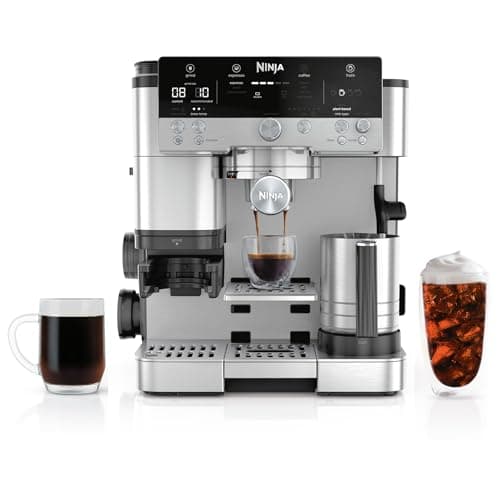
The Luxe Cafe Premier is the most disruptive thing to happen to home espresso pricing in a decade, and the reason is the box, not the shot. For roughly what a grinder-equipped Breville costs, Ninja gives you a pump espresso machine with a conical burr grinder, a built-in scale, an assisted tamper, a milk frothing system that does hot and cold foam — and then, on the same chassis, a full drip coffee brewer and a genuine cold brew cycle. Abt's published specification lists espresso as a double or quad shot, drip in classic, rich or over-ice styles at 6, 8, 10, 12, 14, 16 and 18 oz, and cold brew as either cold-pressed espresso or cold brew coffee. Nothing else at the price does three categories of coffee.
So this review is going to be positive, and then it is going to be specific about the ceiling, because the Luxe Cafe is a machine whose limits are unusually easy to describe and unusually easy to live with if you know them going in.
What Barista Assist actually does
Three things, and they map precisely onto the three mistakes that ruin beginners' shots. It doses by weight: the built-in scale weighs the grounds for the drink you selected rather than running the grinder for a fixed number of seconds, which is the variable that makes a bag of dense beans brew differently from a light roast. It recommends a grind changebased on how your last brew ran, which is the feedback loop people normally learn over weeks of sour shots — see how to dial in espresso for what that loop looks like by hand. And it monitors the brew, adjusting temperature and pressure to stay inside a window that Ninja says is intended to avoid sour or bitter results.
The assisted tamper matters for the same reason Breville's Impress lever does: a crooked, inconsistent tamp is the fastest way to channel water through one side of the puck and get a shot that is simultaneously thin and harsh. Ninja includes the tamper and funnel, stores them on the side of the machine, and includes the double basket, a deeper "Luxe" basket, a milk jug, cleaning brush, cleaning disc, descaling powder, cleaning tablets and a hard-water test kit. For context, every one of those is an accessory you buy separately with most machines — our espresso gear checklist prices that pile up.
The shot: good, and capped
CoffeeGeek's hands-on review — the most detailed published teardown of this machine we could find — scored it 8.5/10 overall with a perfect 10 for value against cost, called it a "market disruptor," and reported that repeat pulls came out nearly identical to one another. That last point is the one to hold onto: consistency is what a beginner actually needs, and the machine delivers it. The same review notes the spec sheet claims a warm-up of under 30 seconds and that first shots arrived after roughly 30 to 45 seconds of preheating.
Now the ceiling. The published pump rating is 15 bar, which is a marketing number rather than a brewing one — espresso is extracted at around 9 bar and the extra exists to satisfy a spec war; our what is crema explainer covers why high bar figures do not mean better shots. More consequentially, CoffeeGeek reports that temperature is three presets (low, medium, high) rather than a value you set, that the grinder has no micro-adjustment between its clicks, and that the dose is effectively fixed at about 17.5 to 18 gin the double basket. Those three together describe the machine's skill ceiling: you can get a very good shot, repeatedly, but when you want to move the dose to 19 g and the temperature up two degrees to chase a specific light roast, the machine has no answer. The same review also found the "grind by weight" behavior is an adaptive timer rather than a live scale reading, so it does not respond instantly to a change in bean density.
The two omissions you will notice
There is no hot water tap on the US model, which CoffeeGeek calls baffling, and we agree — it means no Americano without brewing a separate drip cup, on a machine that can brew drip. There is no water filter, so in a hard water area you are descaling on schedule and nothing is slowing the scale down in between; water for espresso explains what that does to both taste and the boiler. Two smaller irritations from the same review: steaming is loud and high pitched, the steam wand only pulls straight out rather than angling, and the drip tray fills faster than you expect because the machine auto-purges.
Milk, drip and cold brew
The Dual Froth System steams and whisks simultaneously, with four presets — steamed milk, thin froth, thick froth and cold foam — and it handles plant milks. That is a genuinely different proposition from a steam wand: you are not learning to texture milk, you are pressing a button, and cold foam for iced drinks is a job a conventional espresso machine cannot do at all. If you want to learn the manual skill instead, how to steam milk is the technique, and a proper pitcher matters more than the machine does.
The drip side brews 6 to 18 oz in classic, rich or over-ice styles, which makes this a plausible single machine for a household where one person drinks lattes and another drinks a mug of filter coffee. It is not an SCA-certified brewer and Ninja publishes no brew-temperature figure for it, so treat the drip as convenient rather than best-in-class. The cold brew cycle is the genuine bonus: a real cold extraction rather than hot coffee poured over ice, done in the machine instead of occupying a jug in your fridge overnight — compare the dedicated cold brew makers and how to make cold brew for what you are replacing.
What to buy instead, and when
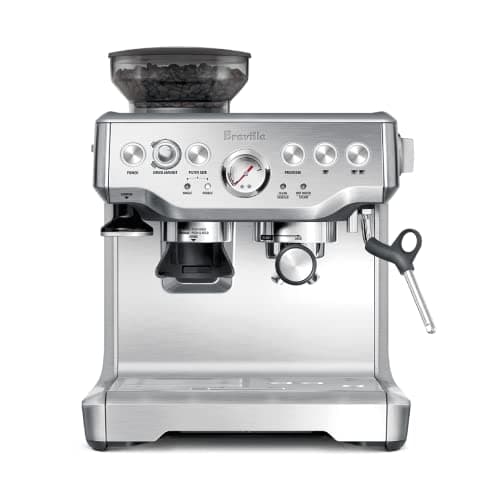
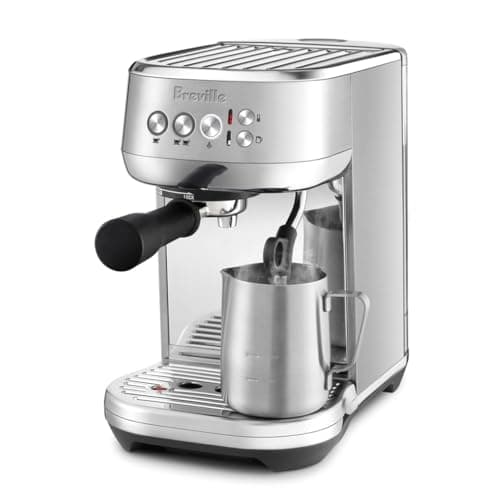
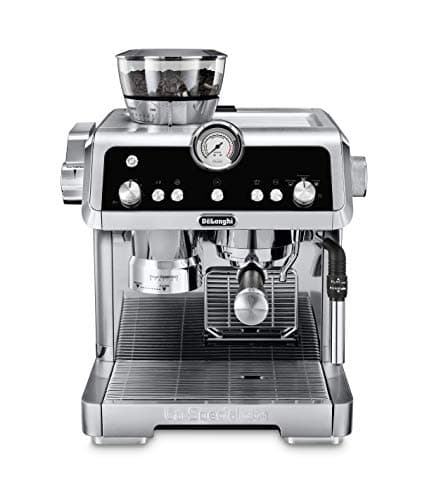
If espresso is the point and you want to keep improving: the Breville Bambino Plus plus a real grinder — a Fellow Opus 2or a Baratza Encore ESP sits in the right bracket. You lose drip, cold brew and the all-in-one convenience; you gain a grinder you can micro-adjust, a dose you choose, and an upgrade path — best espresso grinders has the field. If you want one box with a grinder and the highest shot ceiling: the Breville Barista Express remains the benchmark — 25 grind settings you can move in either direction, a dose you control, and PID temperature. It does not brew drip or cold brew. If you want the guided experience with a more serious grinder: the De'Longhi La Specialista is the closest philosophical rival; see La Specialista vs Barista Express.
The verdict
Buy the Luxe Cafe Premier if your household needs one appliance to cover espresso drinks, filter coffee and iced coffee, and you would rather press a button than learn a craft. On that brief it is close to unbeatable value, and the published consistency plus the weight-based dosing mean you will get drinkable espresso from week one rather than week six. Do not buy it if espresso is a hobby you intend to get better at: the fixed dose, preset temperatures and coarse grind steps are a floor that is unusually high and a ceiling that is unusually low, which is exactly the right trade for the first group and the wrong one for the second. For where it sits against the rest of the field, see espresso machines with a built-in grinder and coffee and espresso combo machines.
Premier, Pro or Mini: which Luxe Cafe is which
Ninja sells the Luxe Cafe as a family, and the model names do not make the differences obvious. The Premier (ES601) reviewed here is the three-in-one: espresso, drip and cold brew. The Pro is the four-in-one above it. The Minimodels drop cold brew and run espresso plus drip on a smaller footprint. Refurbished Premier units also circulate under an R-ES601 part number at a lower price — a legitimate way to buy if you accept a refurbished warranty, but check what the specific listing says about coverage, because it is not the same as new. Prices across the family move constantly, so compare the live price of each before deciding the Premier is the right rung.
Getting a good shot out of it, in order
Start with fresh beans and a medium-fine setting, let the machine dose by weight, and use the assisted tamper every time rather than sometimes — consistency in the puck is what makes the machine's brew monitoring useful. Then taste, and move one thing. Sour and thin means the shot ran too fast: go finer. Bitter and drying means it ran too slow or too hot: go coarser, or drop the temperature preset a step. Sour vs bitter espresso is the diagnostic in full, and espresso grind size explains why grind moves extraction faster than anything else you can change.
Because the grinder has no micro-adjust, you will sometimes find one click too fine and the next too coarse. The lever you have left is the ratio: pull a slightly longer or shorter shot for the same dose. With an 18 g dose, moving from a 36 g to a 40 g output lengthens extraction without touching the grind, which is usually enough to land a bean the clicks will not quite bracket.
What the included accessories mean for your budget
The in-box list is unusually complete: portafilter, double basket, deeper Luxe basket, assisted tamper, funnel, milk jug, cleaning brush, cleaning disc, descaling powder, cleaning tablets and a hard-water test kit. On a Breville you would buy the jug, a tamper and the cleaning supplies separately, and a decent espresso scaleon top of that — the Ninja's built-in scale covers the dosing half of what a scale does, though not the output half, so a cheap scale under the cup is still the single most useful $25 you can add. One compatibility note from CoffeeGeek's review: the baskets are not interchangeable with Breville accessories, so the usual 54 mm aftermarket parts bin does not apply here, and a bottomless portafilter upgrade is not an option.
Living with it: cleaning and the plastic parts
Two maintenance realities. First, the auto-purge keeps the group clean but fills the drip tray quickly, so emptying it is a daily job rather than a weekly one. Second, the dosing collar is plastic and the grinder will not run without it — CoffeeGeek flags it as a possible failure point, which is worth knowing because it is the sort of part that decides how long a machine lasts. Treat it gently, and keep the burrs clean: they come out easily for cleaning, and cleaning the burrskeeps your grind setting meaning the same thing month to month. Descale on Ninja's schedule using the powder it supplies — with no water filter fitted, that schedule is the only thing protecting the boiler.
Who this machine is genuinely for
A household with mixed coffee habits and limited counter space, where the person buying wants good drinks without a hobby attached. A first espresso machine for someone who has been put off by horror stories about dialing in. An office kitchen or a holiday rental, where whoever walks up needs to press one button and get something drinkable — though if sixty-second coffee with nothing to clean is genuinely the whole brief, a pod machine does that better and cheaper, and best Keurig coffee makersranks those. It is not for the person who already owns a grinder they like, and it is not for anyone whose next purchase was going to be a bottomless basket and a puck screen — that person wants a Gaggia Classic Pro or a Bambino and a grinder, and they will be happier for it.