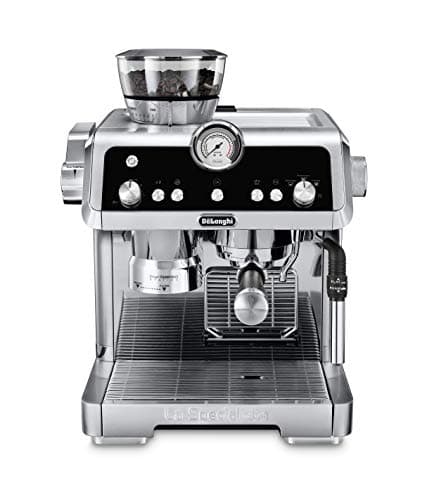
If you want to make espresso yourself, buy the De'Longhi La Specialista (EC9335M)— it is the only De'Longhi manual machine with a grinder and a tamping station built in, which is exactly the gap most beginners fall into. If you would rather press a button and get a coffee, buy the Magnifica Start (ECAM22020), the cheapest bean-to-cup machine on De'Longhi's most-serviced platform. Those are two different products for two different people, and picking the wrong half of the line is the mistake this page exists to prevent.
De'Longhi is the most widely sold espresso machine brand in US kitchens, and the range reflects it: dozens of model numbers, several naming families, and listings that describe a 15-bar pump machine and a fully automatic bean-to-cup machine in almost the same language. The useful division is not price. It is who does the work.
Manual pump machines— the Stilosa, the Dedica, the La Specialista — give you a portafilter. You grind, dose, tamp, lock it in and pull the shot, and you steam the milk yourself on a wand. They reward technique and they have a much higher ceiling: a dialed-in La Specialista shot beats anything an automatic will hand you. They also demand five minutes of attention every morning, and a grinder, unless the machine has one.
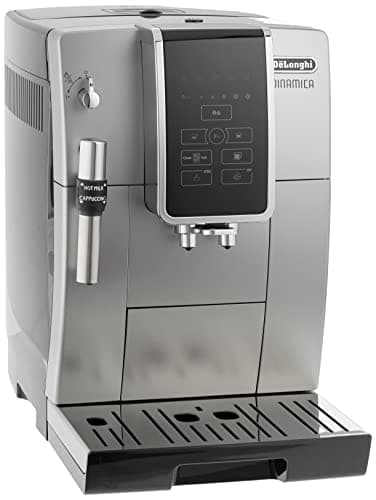
Bean-to-cup automatics— the Magnifica Start, Magnifica Evo and Dinamica — grind, dose, tamp, brew and dump the puck internally. You load beans and water and press a button. The shot is good rather than great, and you cannot really dial it in, but it is the same good every single time with no skill and no mess. For a household where two or three people want different drinks before work, that is not a compromise, it is the correct answer. Our best super-automatic espresso machines page ranks that category across brands.
The De'Longhi line at a glance
Specs below are as De'Longhi lists them on each machine's live retail listing. We have not measured them — how we research explains what we do instead.
| Model | Type | Grinder | Milk | Buy it for |
|---|
| La Specialista (EC9335M) | Manual pump | Built-in sensor grinder | Manual wand | Guided manual espresso, one box |
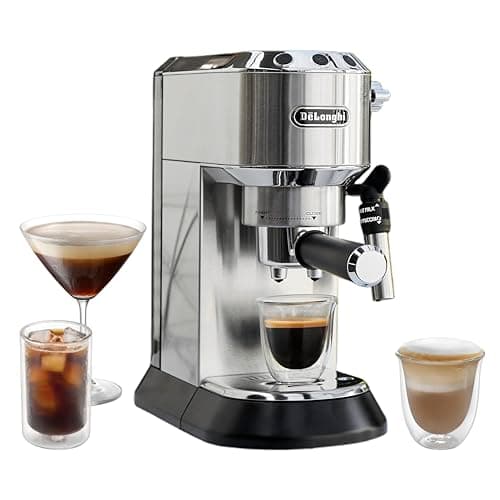
| Dedica Deluxe (EC685) | Manual pump | None | Manual frother | 4.9 in wide — the narrowest counter |
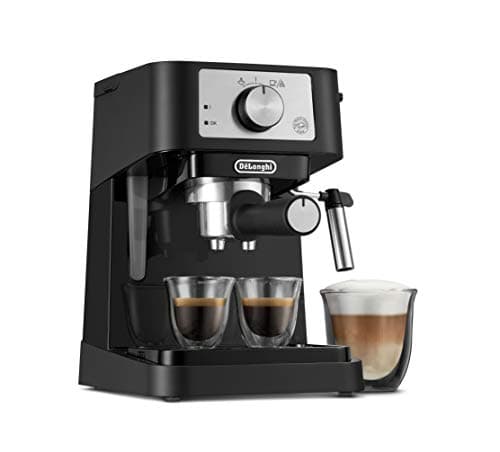
| Stilosa (EC260) | Manual pump | None | Manual wand | The cheapest real pump machine |
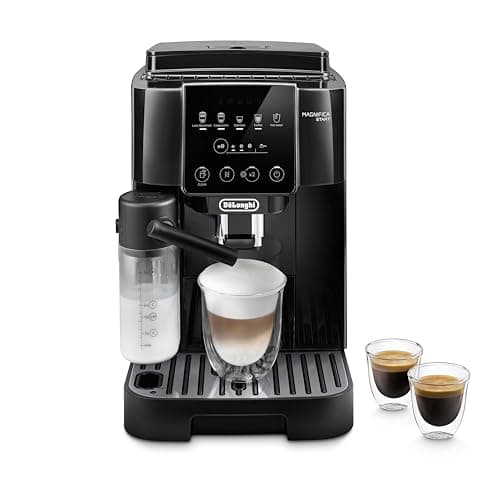
| Magnifica Start (ECAM22020) | Bean-to-cup | Steel conical burrs | Manual wand | Simplest dependable automatic |
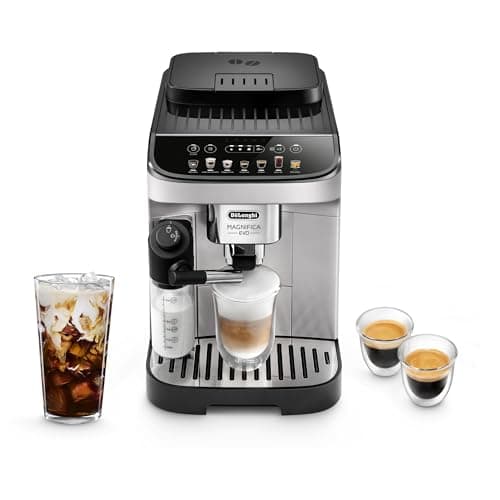
| Magnifica Evo | Bean-to-cup | Steel burrs, 13 settings | Frother wand | More drinks, cleaner interface |
| Dinamica (ECAM35025) | Bean-to-cup | 13 grind settings | Adjustable manual frother | Iced and long-coffee routines |
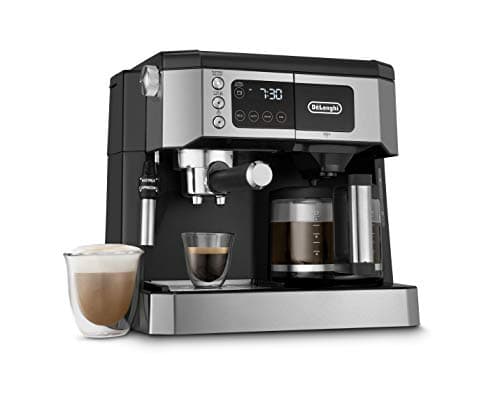
| All-in-One (BCO430) | Pump + drip combo | None | Frother | Espresso and a 10-cup pot |
The La Specialistatakes the top slot because it answers the question beginners actually have. Its built-in sensor grinder and smart tamping station remove the two steps new espresso makers get wrong most often — grinding to the right fineness and tamping with consistent pressure — and De'Longhi rates it with a dual heating system, so brew and steam temperatures are handled more independently than a plain single boiler manages. It is the De'Longhi that competes directly with Breville's Barista Express, and the trade between them is philosophical: the Breville is the more open tool, the La Specialista hides more of the fiddly parts from you. The cons are real — less control once you know what you are doing, a bulky footprint, and a smart-tamp mechanism that is one more thing to service. Our La Specialista review is the long version, and La Specialista vs Barista Express runs the head-to-head.
The Magnifica Startis the value pick of the whole page and the one we would put in most kitchens that do not want a hobby. It is the entry point to De'Longhi's automatic platform, which matters more than any single feature: it is the most widely owned and serviced bean-to-cup family in the US, so parts, descaler, water filters and help are everywhere. The controls are genuinely simple, the burrs are steel, and the body is narrower than most bean-to-cup machines. Its frother is a manual wand, so you still steam milk yourself — a plus for control, a minus if you wanted hands-off.
The Dedica Deluxesolves exactly one problem and solves it better than anything else here: De'Longhi lists it at under five inches wide, which is narrower than most kettles. If your constraint is counter space rather than money, that is the whole argument. It heats quickly and pulls a respectable shot for the size, and its manual frother lets you learn milk properly. Against: a small boiler and tank built for one or two drinks at a time, no grinder, and a pressurized basket that flatters mediocre grinding rather than rewarding good grinding. If space is not your problem, you are paying a premium for slimness.
The Stilosais the honest cheapest way to find out whether you are actually going to do this. It costs a fraction of everything else on this page and still pulls a real pressurized shot through a real portafilter, with a genuine manual steam wand to practice on. It is plastic-heavy, has no grinder, and its temperature stability and single-walled basket put a firm ceiling on the shot. Buy it to test the hobby, not to keep — if you already know you are serious you will outgrow it fast and buy twice. Dedica vs Stilosa compares the two cheap De'Longhis directly.
The Magnifica Evo is the Start with more drink options and a cleaner soft-touch interface, on the same well-proven brewing unit. It is a strong middle pick and a poorer value one: you are paying mostly for menu and interface rather than a better shot, and the base configuration still froths milk by hand. The Dinamicasteps up again with a bigger tank, a larger recipe list and De'Longhi's iced and long-coffee routines, which are genuinely useful if you drink those and dead weight if you do not. Note the detail buyers miss: the base ECAM35025 uses an adjustable manual frother, not the automatic LatteCrema carafe fitted to pricier Dinamica models, so do not assume one-touch cappuccino from the family name.
The All-in-One (BCO430)closes the list by serving a household rather than a drinker: a pump espresso side, a 10-cup drip carafe and a frother in one appliance. For a couple where one person wants shots and the other wants a pot of coffee, that is a real problem solved with one plug and one footprint. The compromise is honest and unavoidable — the espresso trails a dedicated machine and the drip trails a dedicated brewer, and the dual layout is fiddlier to clean. Its sibling the COM530M and the rest of the combo category are ranked separately.
What we did not rank.De'Longhi's Nespresso-badged pod machines are made by De'Longhi but are a pod system, not an espresso machine you grind for — they are covered in best Nespresso machines. We also left out the top-end Eletta and Maestosa automatics: they are sold inconsistently on Amazon at prices that move hundreds of dollars week to week, and we will not rank a machine whose live price and availability we cannot verify.
How to choose a De'Longhi
1. Answer the manual-or-automatic question before you look at prices
These are not two price tiers of the same thing. A manual machine asks for five minutes and a grinder and gives you a shot you can improve indefinitely. A bean-to-cup machine asks for nothing and gives you the same decent coffee forever. People who buy the wrong half are almost never rescued by spending more — an enthusiast is bored by a Magnifica, and someone who wanted a button finds a Stilosa an annoyance. Decide which person you are first.
2. If manual, budget the grinder in the same breath
Only the La Specialista grinds. The Dedica, the Stilosa and the BCO430 all need a grinder you supply, and pre-ground coffee makes a poor shot in every one of them. That changes the real price of a Stilosa substantially, which is the main reason the La Specialista often works out better value than it looks. Our best espresso grinders under $200 page is the realistic shopping list.
3. Check what the frother actually is, model by model
"Frother" in De'Longhi listings covers three different things: a plain steam wand you texture milk with, an adjustable manual frother that aerates for you at a set level, and the automatic LatteCrema milk carafe that makes a cappuccino at one touch. They are not interchangeable, and the family name does not tell you which you are getting — the base Dinamica and the base Magnifica Evo are manual. If one-touch milk is the reason you are buying, verify that specific model has the carafe.
4. Descaling is not optional on this brand
De'Longhi machines are thermoblock-based and will tell you to descale on a schedule set by the water hardness you enter at setup. Skipping it is the most common cause of a De'Longhi that brews cool, brews slowly, or stops mid-cycle — and a cool brew tastes weak and sour no matter what you do to the recipe. Budget for descaler as a consumable, not an accident; our descaling and cleaning supplies page covers what actually works, and water for espresso explains why your tap water decides the interval.
5. The 15-bar number on the box means nothing
Every pump machine here advertises 15 bar, including the cheapest. Espresso is brewed at about 9 bar; the extra is pump headroom, not better coffee, and a pressurized (dual-wall) basket like the Stilosa's and Dedica's manufactures crema artificially so that a coarse or stale grind still looks right. That is a feature if you will never grind properly and a handicap if you will — it hides the feedback you need to improve. How to dial in espresso is where that feedback loop starts.