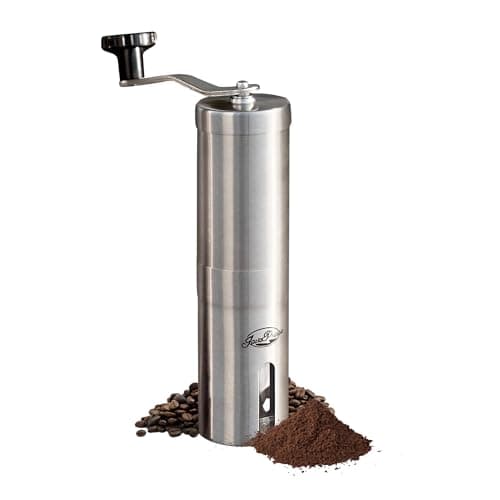
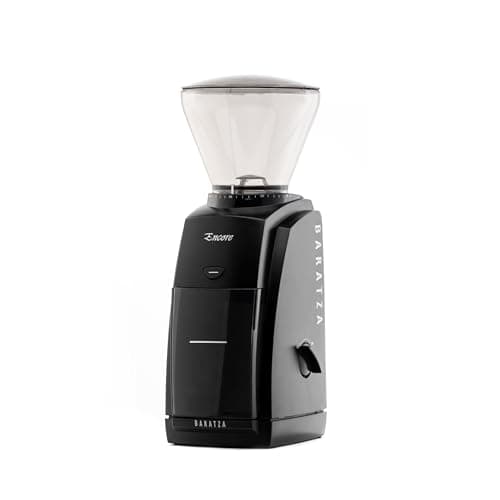
For most AeroPress drinkers the answer is the Baratza Encore: an electric conical burr grinder with 40 settings, built for exactly the filter range AeroPress lives in, and rebuildable rather than disposable. If you brew one or two cups at a time — which is what an AeroPress is — the TIMEMORE Chestnut C3 ESP is the better buy: a hand grinder whose stainless burrs shame electric grinders twice the price, and whose only real cost is thirty seconds of cranking. On a tight budget, the OXO Brew Conical electric or the KINGrinder K6 hand grinder both do the job properly.
The useful thing to understand first is that AeroPress is the easiest brewer in the house to grind for. It brews under gentle pressure with a short, controlled contact time and a paper filter catching the fines, so it tolerates a range of grind sizes that would ruin an espresso shot or a pour-over. That is good news for your wallet: you do not need an espresso-capable grinder, and you should not pay for one if AeroPress is the only thing you brew.
What AeroPress does care about is evenness. Because the plunge is short, a grind full of dust and boulders extracts unevenly in a way you taste immediately as a muddy, simultaneously sour-and-bitter cup. This is why every pick here is a burr grinder and none is a blade grinder — a blade grinder chops beans into random gravel, and no brewer, AeroPress included, recovers from that. Burr vs blade is the whole argument if you want it.
The electric picks
Baratza Encore.Thirteen years as the default answer to "my first burr grinder" for filter coffee, and AeroPress sits squarely in its wheelhouse. Forty settings across the filter range mean you can move in small steps to find your spot and come back to it. The thing that justifies the price over cheaper electrics is that Baratza sells parts and the grinder is designed to be rebuilt — burrs, motor, gearbox. The honest limitation: it does not grind fine enough for good espresso, so if there is any chance you will want espresso later, read Encore vs Encore ESP before you buy, because the ESP version keeps that door open for a small premium.
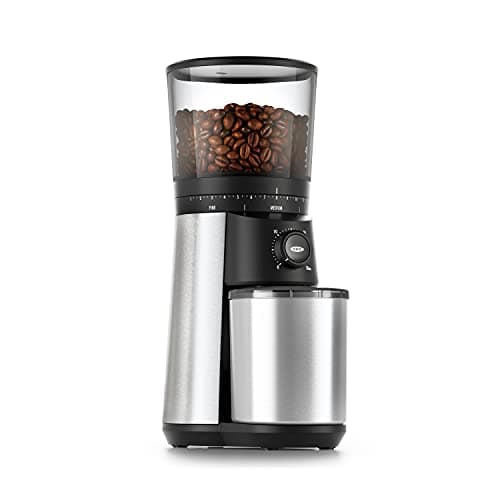
OXO Brew Conical Burr Grinder. The budget electric that gets filter coffee right. Fifteen settings plus micro-adjust, a built-in timer that makes repeatable dosing easy, and a 12 oz hopper. It is a genuine burr grind for less than the Baratza, which makes it a massive upgrade over any blade grinder. Two honest cons: it does not reach espresso fineness or consistency, and it is an appliance rather than a repairable platform, so when it dies it is done.
The hand grinders, which suit AeroPress unusually well
Hand grinders are normally a compromise. For AeroPress they are arguably the right tool, because the brewer's natural dose is one or two cups — exactly the capacity a hand grinder is built around — and the grind is medium rather than espresso-fine, so cranking takes well under a minute rather than being a workout.
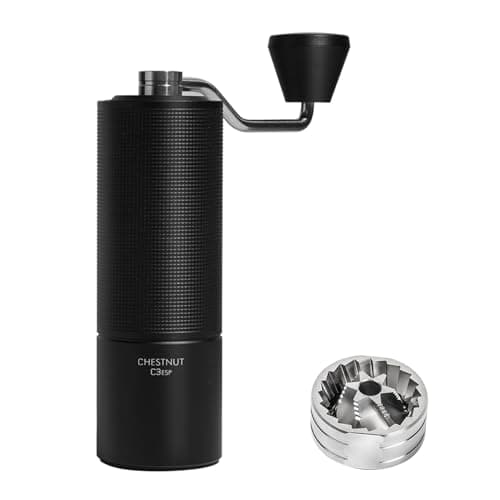
TIMEMORE Chestnut C3 ESP. The value champion of this whole page. Stainless S2C burrs and a tight build give a consistency that embarrasses electric grinders at twice the money, and it adjusts from espresso fine to French press coarse, so one small tool covers every brewer you own. It is light and tough enough to go in a bag, which pairs naturally with the AeroPress Go for travel. The cons are inherent: it is manual, and its single-dose capacity means a third cup is another round of grinding.
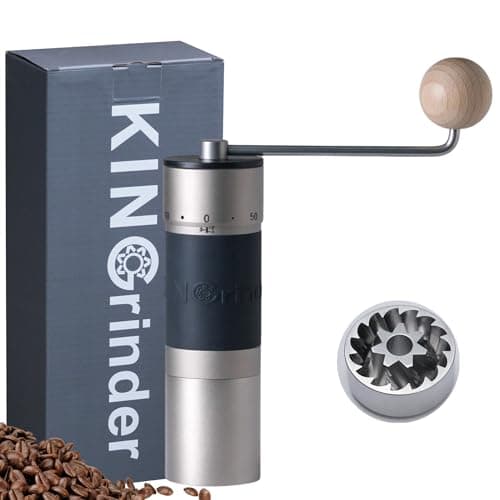
KINGrinder K6.The value play, and its standout feature matters more than it sounds: the adjustment is external and numbered, so you can write down "AeroPress: 12 clicks" and return to it exactly. That repeatability is the thing most cheap grinders cannot give you. It undercuts the pricier hand grinders while matching much of their capability; what you give up is brand track record and resale value next to TIMEMORE or 1Zpresso.
The two cheapest ways in
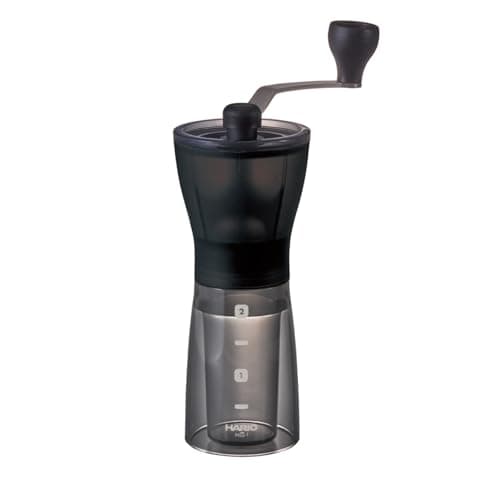
Hario Mini-Slim Plus.A real ceramic conical burr mill for under forty dollars, with a detachable crank that packs flatter than anything else here — Hario designed it as a travel mill and it is honest about being filter-oriented. Hario rates its capacity at 24 g, which is about two cups, so a pot means grinding in rounds, and there are no numbered settings to return to. For one AeroPress a day it is plenty.
JavaPresse Manual Grinder.The cheapest thing on this page that is still a burr grinder, and that distinction is the point: it beats any blade grinder decisively, it is tiny and packable, and ceramic burrs will not rust. Its consistency lags well behind the TIMEMORE and the KINGrinder, and the stepped ceramic adjustment is coarse — fine for press and AeroPress, marginal for anything that needs precision.
The one-line answer by situation
One AeroPress a day, at home, electric preferred: Baratza Encore. One or two cups, best grind per dollar, do not mind cranking: TIMEMORE C3 ESP. Cheapest decent electric: OXO. Cheapest grinder you can dial in repeatably: KINGrinder K6. Travel kit: Hario Mini-Slim Plus or the TIMEMORE. For the wider field, see our best burr grinders roundup and hand grinder vs electric.
What grind size does AeroPress actually want?
Start at medium-fine— finer than drip, coarser than espresso, roughly the texture of table salt — with the standard method: coffee in, water in, stir, steep for about a minute, then plunge over about thirty seconds. That is the setting that suits the paper filter and the short contact time.
Then adjust by brew style rather than by rule. A short steep (30 to 45 seconds) wants a finer grind to get enough extraction in the time available. A long steep (two minutes or more, including the popular inverted method) wants a coarser grind so you do not over-extract. An espresso-style concentrate— small water volume, hard plunge — wants it finer still, and this is the one case where plunge resistance becomes the limiting factor: too fine and you are pressing against a plug. Our grind size chart has the reference textures for each.
Reading the cup to find your setting
Two symptoms, two directions, and they are reliable. A cup that tastes sour, thin, or salty is under-extracted: grind finer, or steep longer. A cup that tastes bitter, harsh, or drying is over-extracted: grind coarser, or steep shorter. Change one variable at a time and change it by a small amount. Sour vs bitter explains the mechanism; why is my coffee weak covers the case where the problem is dose rather than grind.
Why evenness matters more than fineness here
Every grinder produces a distribution of particle sizes, not a single size. The width of that distribution is what separates a good grinder from a bad one. Fine particles ("fines") extract very fast and large ones extract slowly, so a wide distribution means part of your coffee is over-extracted and part is under-extracted in the same cup— which is why bad grind tastes bitter and sour at once rather than just one or the other.
AeroPress papers over some of this, because the paper filter traps a lot of the fines before they reach your cup. That is exactly why a mid-priced burr grinder is enough here and an expensive one is not necessary. It is also why a blade grinder still fails: the filter catches fines, but it cannot do anything about boulders that never extracted at all.
Dose, and the thing nobody mentions
A standard AeroPress holds about 11 to 18 g of coffee comfortably, and the chamber is a real constraint — you cannot solve weak coffee by just adding more. That makes grind and ratio the levers you have. Our coffee to water ratio guide gives the starting numbers, and a cheap scaleis the single accessory that makes a grinder's consistency worth having, because an even grind on a random dose is still a random cup.
Do not buy an espresso grinder for an AeroPress
Espresso-capable grinders cost more because fine, repeatable adjustment at the fine end of the range is hard to engineer. AeroPress does not use that range. If AeroPress is your only brewer, the money is better spent on fresher beans — which have a larger effect on your cup than the difference between a good filter grinder and a great espresso one. If you think espresso might be in your future, that changes the calculation, and the best espresso grinders under $200 is the page to read instead.