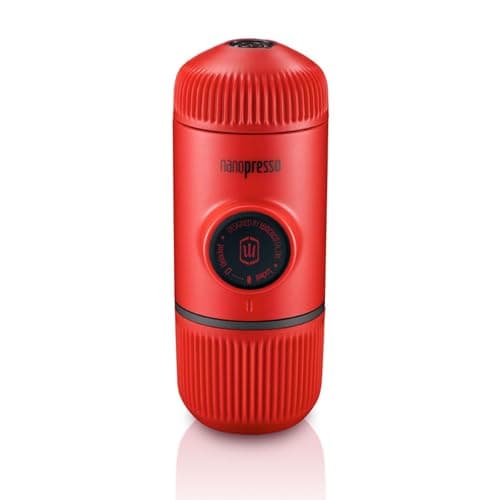
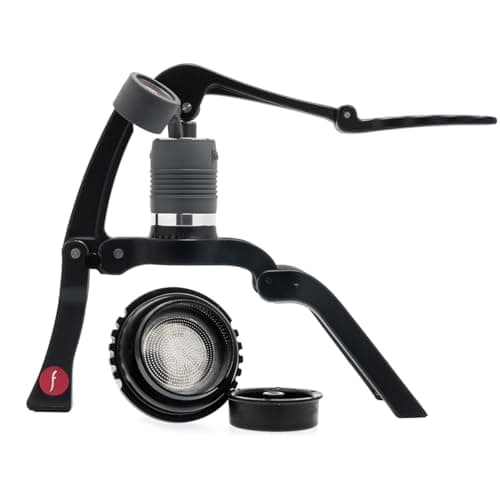
You can make genuine espresso without an electric machine, and the device that does it is a manual lever press — the Flair 2GO is the one we rank, because Flair rates it at the 9 bar that actually defines a shot and you supply the pressure with your arm. If you want something pocket-sized, the WACACO Nanopressois hand-pumped and makes a real crema-topped shot. What you cannot do is get espresso out of a French press, a drip machine, or a jar — and almost every "espresso without a machine" recipe you will find is making strong coffee and calling it espresso.
So start with the definition, because everything else follows from it. Espresso is not a roast, a bean or a strength. It is a brewing method defined by pressure:roughly 9 bar of water pressure forced through about 7 to 20 grams of finely ground coffee in 25 to 30 seconds, at around 195 to 205°F. That pressure is what emulsifies the coffee's oils into crema, and crema is why a shot has the texture and the lingering body that a strong cup of filter coffee does not. Our coffee vs espresso page is the longer version, and what is crema explains the mechanism.
Nine bar is about 130 psi. That is the hurdle, and it is why most no-machine methods fail: atmospheric pressure brewing — drip, press, pour-over — is about 1 bar, so it cannot produce espresso at any grind, dose or strength. You can brew a very concentrated coffee that works in a drink where espresso would otherwise go, and for a latte at home that is often good enough. Just know which one you are making.
The four methods, from most to least espresso-like
1. A manual lever press — real espresso, no electricity.A lever press is a piston you push by hand. Flair rates the 2GO at 9 bar, which is the actual espresso figure rather than a marketing one, and the shot quality genuinely embarrasses cheap electric machines because there is no thermoblock or vibration pump to compromise. You heat water separately (a kettle), preheat the brew head, load a fine dose, and press. The honest trade-offs: it is slow and involved, you supply both the hot water and the pressure, and there is no steam wand — milk drinks need a separate frother. It collapses to pack, which makes it a legitimate travel espresso setup. If you like the ritual, this is the method; if you want a latte in ninety seconds before work, it is the wrong one. Our manual espresso makers page ranks the category.
2. A hand-pumped portable — real shot, small scale.The WACACO Nanopresso is a hand pump with a brew basket: WACACO rates it at 18 bar, it needs no battery, and it fits in a bag. It produces a legitimate crema-topped shot, which nothing else that size does. The limits are capacity and consistency: it is a single-shot device, one at a time, and it is forgiving of nothing — your grind and technique show up immediately. Treat it as a travel or office tool rather than a kitchen machine; at home a cheap pump machine beats it every morning without the hand cramp.
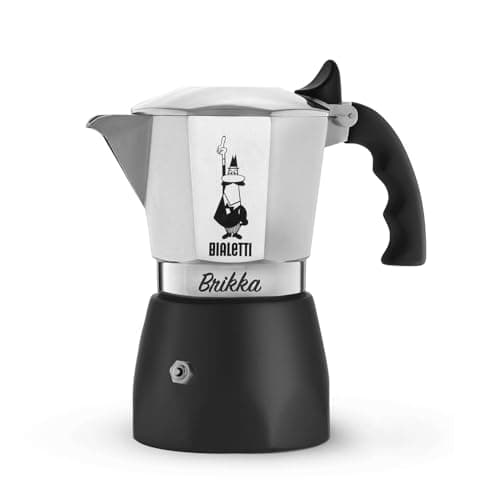
3. A pressure-valve moka pot — the closest a stovetop gets.A standard moka pot brews at roughly one to two bar, which is nowhere near espresso. The Bialetti Brikka adds a weighted valve that holds back the flow until more pressure has built, and the result is an actual crema layer on a stovetop — thin next to a real shot, but real. It is still not 9 bar and it is fussier than a plain moka pot, wanting the right grind and a patient hand on the heat. For strong coffee with a crema cap and no electricity, it is the cheapest thing that works. See moka pot vs espresso machine for the honest gap, and what to put in it.
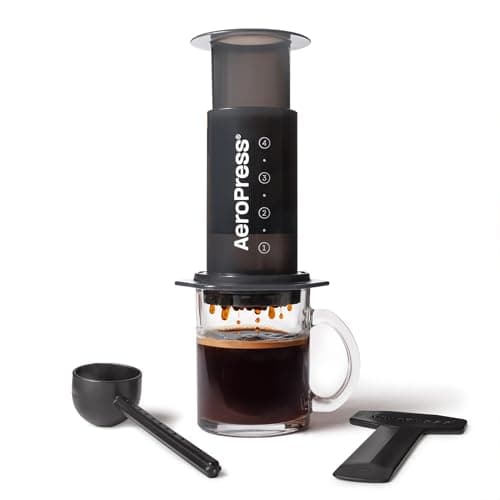
4. An AeroPress — concentrate, not espresso, and genuinely useful. The AeroPress builds a couple of bars by hand, so it does not make espresso and we are not going to say it does. What it makes, with a fine grind, a short steep and a firm press, is a clean low-bitterness concentrate that works well as the base of a milk drink or an Americano. It costs very little, it is nearly unbreakable, it cleans up in ten seconds, and it is the most versatile single brewer you can own. If your real question is "how do I make a latte at home without buying a machine", this plus a milk frother is the cheapest honest answer. Our AeroPress roundup covers the versions, and how to make a latte at home is the recipe.
What does not work, and why
A French press with fine coffee. You get a muddy, over-extracted cup and a clogged filter. The press has no pressure mechanism, and fine grounds pass straight through a metal mesh. A drip machine with a tiny amount of water. Dripping less water through more coffee gives you strong coffee, not espresso: no pressure, no emulsification, no crema. Instant espresso powder.It is instant coffee made from espresso-roasted beans — fine in baking, not a shot. A Moka pot sold as an "espresso maker". The packaging says espresso; the physics says one to two bar.
None of that means those drinks are bad. Cuban coffee, which is traditionally made in a moka pot and whipped with sugar, is excellent and is not espresso — how to make Cuban coffee is the method. The same goes for a strong AeroPress in an iced latte. The point is only to stop judging a good drink against a definition it was never trying to meet.
Getting a decent shot out of a manual device
1. Grind matters more here, not less
Manual devices have no pump to muscle through a bad grind, so grind size and evenness are the whole game. You need espresso-fine — powdery, clumping when squeezed — from a burr grinder. Pre-ground coffee is a guaranteed failure in a lever press: too coarse, already stale, and you will conclude the device is bad when the coffee was. The grind size chart has the target, and hand grinders for espresso pairs naturally with a manual brewer since neither needs power.
2. Preheat everything, every time
This is the single biggest difference between a good manual shot and a sour one. A cold metal brew head pulls heat straight out of the water, and espresso brewed below about 195°F tastes thin and sour no matter how good the technique. Run hot water through the device first, discard it, then brew. On a lever press this is not optional.
3. Use water just off the boil, and a thermometer if you have one
Boiling water poured straight onto espresso-fine coffee over-extracts the surface; water that has stood too long under-extracts. A variable-temperature kettle removes the guesswork entirely and is the accessory most manual-espresso users say made the biggest difference. Best gooseneck kettles ranks them, and water for espresso covers what should be in the water as well as how hot it is.
4. Weigh the dose and the yield
Espresso is a ratio, usually around 1:2 — 18g of coffee to about 36g of liquid. Manual devices make it very easy to lose track of yield because you are concentrating on the lever. A cheap 0.1g scale turns the whole thing into a recipe you can repeat and adjust, which is the difference between a lucky shot and a routine. Ristretto vs lungo vs espresso explains what moving that ratio actually does to the cup.
5. Accept the milk limitation, or budget for it
No manual espresso device steams milk — there is no boiler to make steam with. If milk drinks are the point, you need a separate frother, and a handheld whisk or a standalone frother is a small fraction of what a machine with a steam wand costs. Our best milk frothers page covers both, and how to froth milk without an espresso machine is the no-equipment version.