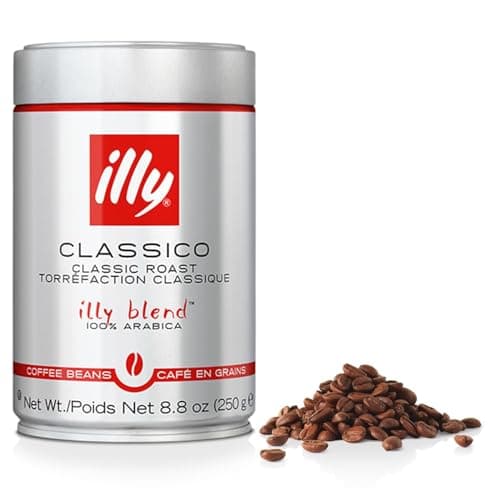
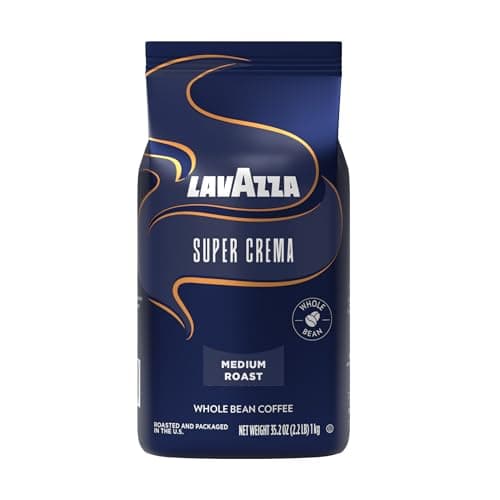
Buy Lavazza Super Crema if you are learning espresso, if you drink milk drinks, or if cost per pound matters: the robusta in the blend builds thick, stable crema, it forgives a sloppy shot, and it comes in a 2.2 lb bag. Buy illy Classico if you want a smoother, cleaner, less bitter cup, if you drink your espresso black, or if you value a bag that tastes identical every single time. Neither is a mistake. They are solving different problems, and the problem they solve comes down to one decision each company made about beans.
That decision is robusta. Super Crema is an arabica-and-robusta blend; Classico is 100% arabica. Everything people argue about when they compare these two brands — crema thickness, bitterness, caffeine, price — follows from it.
The one difference that explains all the others
The National Coffee Association describes the two species in blunt terms. Arabica trees "produce fine, mild, aromatic coffees that bring the highest prices on the world market." Robusta is "known for strong, bold flavors with bitter undertones" and is "primarily used in blends and for instant coffees," carrying about 50 to 60 percent more caffeinethan arabica. Arabica also demands higher ground — generally 2,000 to 6,000 feet, with mild temperatures and good drainage — while robusta tolerates hotter, lower, more humid conditions. That is why arabica costs more to grow and robusta costs less.
So a robusta-containing blend like Super Crema gives you more body, a thicker and longer-lasting crema, more caffeine and a lower price, at the cost of some of the delicacy and with a little more bitter edge. An all-arabica blend like Classico gives you a cleaner, sweeter, more aromatic shot with a thinner crema, and you pay for it. Our arabica vs robusta explainer goes further into the two species.
Crema and body: Lavazza wins, on purpose
Crema is the layer of foam on top of a shot, and it is mostly carbon dioxide trapped in emulsified oils. Robusta produces more of it and holds it longer, which is why Super Crema's name is a product claim rather than a flourish. Practically, that matters in two situations. First, while you are learning: a thick crema flatters an imperfect shot and makes feedback easier to read. Second, under milk: body is what stops a cappuccino tasting like warm milk with a hint of coffee, and the Lavazza blend has more of it.
illy's Classico is the other case. All-arabica crema is thinner and fades faster, and the cup underneath it is smoother and sweeter — less bitterness to cut through, which is exactly what you want if you drink espresso straight. If you are chasing visual crema on a milk drink and buy Classico, you will think your machine is broken. It is not; you bought the wrong bean for that job. What is crema covers what the layer does and does not tell you.
Roast and flavor
Both are medium roasts rather than the scorched dark roast people expect from Italian coffee. Super Crema reads mild and nutty with low perceived acidity, which is the profile that makes it such a safe first bag. Classico is the cleaner, more aromatic of the two, with the caramel-and-blossom character illy builds its reputation on. Neither is a bright, fruity third-wave coffee — if that is what you are after, both are the wrong aisle and a single origin is the right one.
Packaging and freshness
This is the quiet difference and it matters more than the flavor notes. Lavazza sells Super Crema as a 2.2 lb (1 kg) bag — a lot of coffee, and the NCA's freshness guidance for roasted whole beans at room temperature is one to three weeks once you are into them. That is fine for a household pulling several shots a day and genuinely wasteful for one person pulling one. illy's Classico whole bean reaches the US in smaller formats — illy's own store currently lists a 500 g bag, and the familiar pressurized can is the format most Amazon listings carry — which is less coffee to get through before it fades.
If you buy the big Lavazza bag, decant a week or two at a time into an airtight, opaque container and leave the rest sealed. The NCA is explicit that clear canisters let in light and compromise taste. Our storage container roundup and how to store coffee beans cover the routine.
Cost per pound, not cost per bag
Compare these two by the pound and the gap is not close: a 2.2 lb Lavazza bag is in a different price bracket per pound than illy's smaller whole-bean formats, which is the single strongest argument for Super Crema as an everyday bean. The buy buttons on this page carry live prices for both, so check them rather than trusting any figure typed into an article — and if the gap has narrowed on the week you are shopping, the decision gets easier, not harder.
Which suits your machine
On a pressurized-basket machine— the entry De'Longhi and Casabrews class, where the basket generates artificial crema — either bean works, and Super Crema is the better value because you are not paying for subtlety the basket flattens anyway. On a non-pressurized, dial-it-in machine like a Bambino, a Gaggia Classic Pro or a Barista Express, both reward you, but Classico asks for a better grinder: with less robusta body to hide behind, a coarse or uneven grind shows up as a thin, sour shot. On a moka pot or in a drip machine, Classico is the more pleasant of the two black, because you lose the pressure that makes crema the point.
A note on Lavazza's own range: Gran Cremais the slightly bolder sibling of Super Crema with a fuller body and the same forgiving crema, and the honest advice is to buy whichever of the two is cheaper the week you shop — the difference between them is far smaller than the difference between either and illy.
The verdict by situation
Your first bag of espresso beans: Lavazza Super Crema. Cappuccinos and lattes: Lavazza. Espresso drunk straight: illy Classico. One person, slow drinker: illy, on bag size alone. Cheapest decent espresso per pound: Lavazza. Same cup every time, no fiddling: illy. Neither — you want fruit and acidity: see the best espresso beans or the best coffee brands for specialty alternatives.
Dialing in either bean
Start at a fine espresso grind, dose to your basket, and aim for roughly a doubling of the dose in the cup — 18 g in, about 36 g out — in 25 to 30 seconds. If the shot runs fast and tastes thin and sour, go finer. If it crawls and tastes harsh, go coarser. How to dial in espresso has the full loop and sour vs bitter espresso explains which direction a bad shot is telling you to move.
The practical difference between the two beans while dialing in is tolerance. Super Crema will give you something drinkable across a wider band of grind settings; Classico has a narrower window where it is genuinely good, because there is less body masking an under-extraction. That is not a flaw in the coffee, it is the consequence of the all-arabica choice — and it is why we point beginners at Lavazza and people with a decent grinder at illy.
Caffeine, honestly
Robusta carries roughly 50 to 60 percent more caffeine than arabica according to the NCA, so a robusta-containing blend will deliver more caffeine per gram than an all-arabica one. Neither company publishes a milligrams-per-shot figure for these specific products, so we are not going to invent one — the direction of the difference is well established, the magnitude in your cup depends on your dose and your blend ratio. If caffeine is the actual goal, the high-caffeine roundup is the page you want, and how much caffeine is in espresso has the per-shot context.
Grind matters more than which brand you picked
Both of these are good beans and neither can survive a bad grinder. Pre-ground espresso goes flat within days of opening, and a blade grinder cannot produce the even, fine particle size espresso needs — it makes dust and boulders at once, which channels water and gives you a sour, bitter shot simultaneously. If your budget has to choose between upgrading from Lavazza to illy and buying a burr grinder, buy the grinder. See best espresso grinders under $200 and burr vs blade.
If you also brew filter coffee
An espresso blend is not wasted in a filter brewer, but it is not optimized for one either: both of these are roasted for pressure extraction, and in a drip machine or a press you will taste more roast and less origin. If one machine has to cover both duties, Classico is the more flexible of the two black. If you want beans chosen for the brewer instead, see best coffee for drip and best beans for French press.