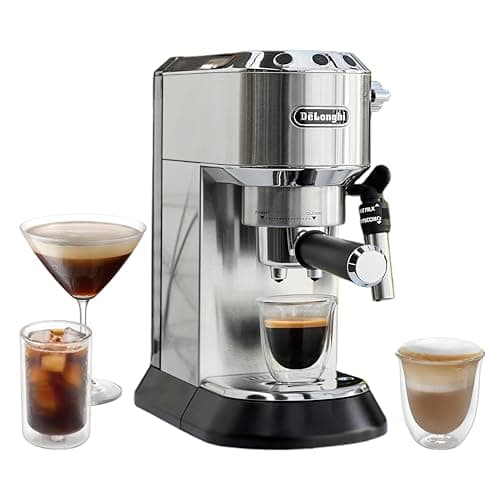
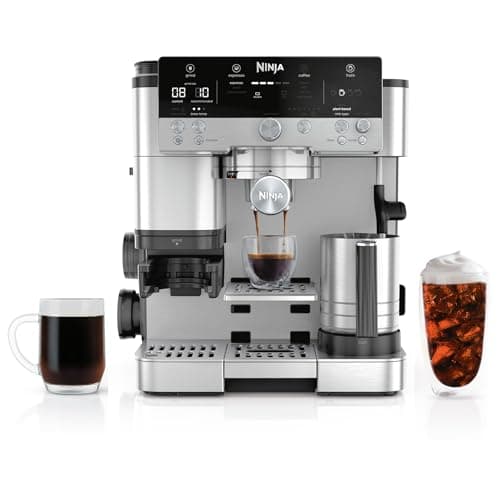
The best Breville Barista Express alternative is the Ninja Luxe Cafe Premier (ES601) — it is for the buyer who wanted the Express's all-in-one promise, with a grinder, a scale and an assisted tamp in the box, for meaningfully less money. The budget pick is the De'Longhi Dedica Deluxe (EC685), which abandons the built-in grinder entirely and costs a fraction of the Express. Prices come from the live price layer (as of November 22, 2026).
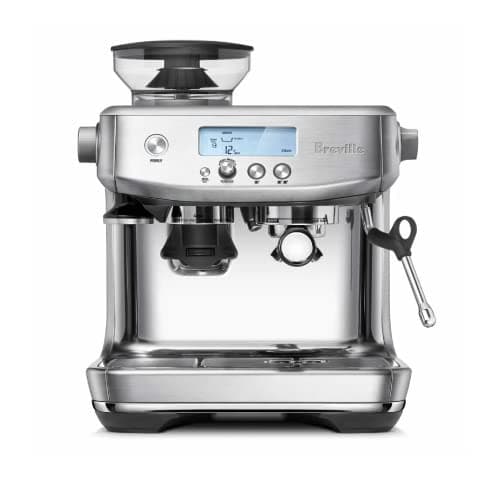
Start with what the Barista Express earns, because the alternatives have to be measured against it rather than against a strawman. It has a conical burr grinder built in, which is why it is the default recommendation: one purchase, one footprint, fresh-ground coffee from day one. It has a 54 mm portafilter, a 15-bar pump and a 1600 W ThermoCoil heating system. It is manual enough to learn on — you do dose, tamp and steam yourself — and forgiving enough not to defeat you. Our full Barista Express review goes through it, and the Breville range puts it in family order.
People shop around it for five reasons. Which one applies to you decides the answer completely.
Reason 1: the price, for the same all-in-one idea
This is the most common reason and the Ninja Luxe Cafe Premier is the direct answer. It brews espresso, drip and cold brew from one body, with built-in burrs across 25 settings, a built-in scale, an assisted tamp and a dual froth system — a specification the Express does not match at any price, for less money. It is the pick if one machine has to cover every coffee in the house. Honest cons, and they are real: it has a genuine ceiling, with a fixed dose, preset temperatures and no hot water tap, so it is a machine you operate rather than one you dial in; and Ninja is new to this category compared with Breville's decade of parts and service. Our Ninja Luxe Cafe Premier review has the detail.
Reason 2: you want the Breville, just better
The Breville Barista Pro (BES878) is the in-family step up and the honest summary is that it is nicer rather than transformative: the same built-in grinder and 54 mm basket, with a ThermoJet heating system that reaches temperature in about three seconds instead of warming up, and an LCD display. If the Express's warm-up time is what irritates you, this is the fix and nothing else on this page addresses it. Honest cons: it costs more than the Express for an improvement you notice in the morning rather than in the cup, and it does not change the shot ceiling. Barista Express vs Barista Pro is the head-to-head.
Reason 3: you want to learn espresso properly
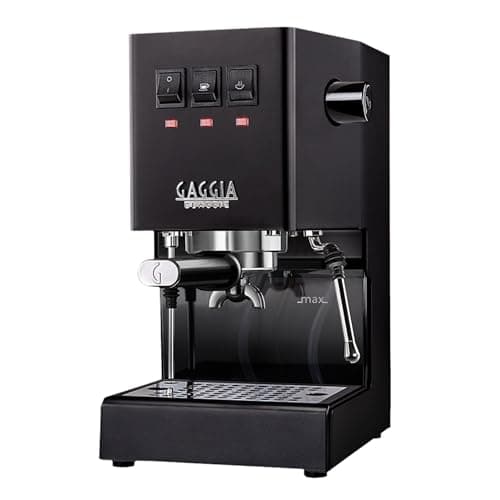
If the Express feels like it is hiding the machine from you, the Gaggia Classic Evo Pro is the alternative that does the opposite. It is the enthusiast's entry machine: a commercial-style 58 mm portafilter at a home price, a metal body, a commercial steam wand and a vast modification community — people fit PID controllers, better baskets and pressure gauges to these for years. It teaches you espresso instead of shielding you from it. Honest cons: no grinder at all, so budget for one separately and the total exceeds the Express; and it is genuinely less forgiving — a bad grind produces a bad shot and the machine will not soften it. Gaggia Classic Pro vs Barista Express is the direct comparison.
Reason 4: you already own a grinder
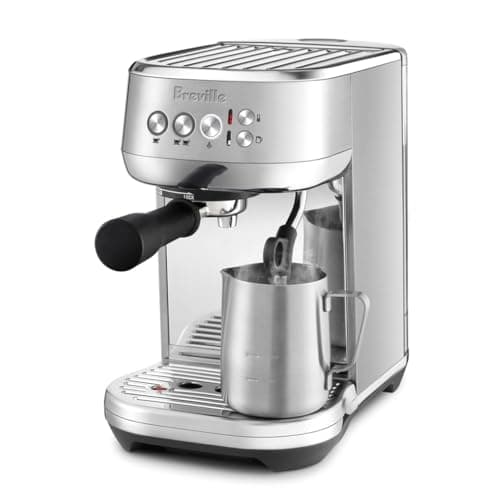
Half the Express's price is its grinder, and if you already have a good one you are paying twice. The Breville Bambino Plus (BES500) is the machine Breville builds for exactly that situation: the same 54 mm basket, a three-second heat-up, and automatic milk texturing that genuinely produces decent microfoam without a technique — in a footprint less than half the Express's width. Honest cons: no grinder, so it only makes sense if you own one; and automatic steaming is convenient rather than better than a wand you have learned. Bambino Plus vs Barista Express works through whether you should keep your grinder.
Reason 5: puck prep is the part you want removed
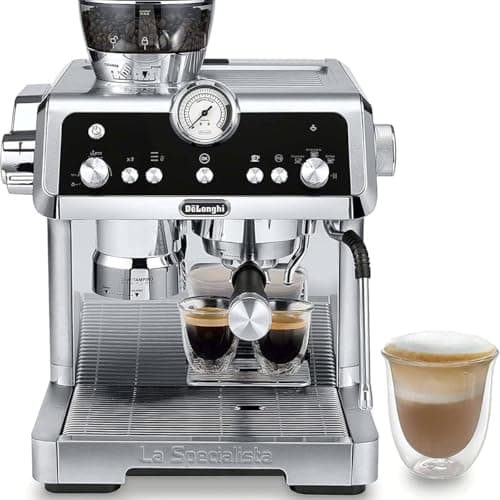
Dosing and tamping is where most beginners actually struggle, and two machines attack it differently. The De'Longhi La Specialista Prestigio (EC9355M) is the guided all-in-one: a sensor grinder, a lever tamping station and active temperature control, built to hide the fiddly parts. It is the pick for someone who wants the result without the practice. Honest cons: it is the most expensive machine on this page, and the same guidance that removes the fiddling also removes the feedback you learn from. La Specialista vs Barista Express is the comparison, and Breville's own answer to the same problem is covered in Barista Express vs Impress.
And at the opposite end, the De'Longhi Dedica Deluxe (EC685) is the budget pick: a real 15-bar pump machine barely wider than a wine bottle, with a manual frother and fast pre-heat, for a fraction of the Express. It is the alternative for someone who concluded the Express was more machine than they needed. Honest cons: no grinder, a small 51 mm basket with a narrower accessory ecosystem, and a plastic-heavy build. Our Dedica review covers it.
The verdict
Same idea, less money, more drinks: Ninja Luxe Cafe Premier. The Express without the warm-up: Breville Barista Pro. Learn espresso properly: Gaggia Classic Evo Pro. Already own a grinder: Breville Bambino Plus. Want the fiddly parts removed: De'Longhi La Specialista Prestigio. Want to spend much less: De'Longhi Dedica Deluxe. And if none of the five reasons above is actually your reason, the Express remains the sensible default — it is the most recommended first machine in home espresso because it is genuinely hard to beat on completeness.
Price the grinder, not the machine
This is the arithmetic that decides most of this page. The Express bundles a grinder, so its sticker price is not comparable to a machine without one. A Gaggia Classic Evo Pro or a Bambino Plus plus a competent espresso grinder lands above the Express, not below it — and the shot is usually better, because a standalone grinder at that money out-performs a built-in one. The honest comparison is always machine plus grinder versus machine plus grinder. Grinders under $200 and espresso grinders under $500 are the two bands that matter here, and how much an espresso machine really costs works the whole total through.
54 mm versus 58 mm is a real fork in the road
Breville's machines use a 54 mm basket; the Gaggia and most enthusiast machines use the commercial-standard 58 mm. This matters less for the shot than people claim and more for everything around it. The 58 mm ecosystem is enormous — precision baskets, bottomless portafilters, puck screens, distribution tools, all available from dozens of makers. The 54 mm ecosystem is real but narrower, and the 51 mm world the Dedica lives in is narrower again. If you expect to buy accessories and tinker for years, that is an argument for 58 mm that has nothing to do with taste. The bottomless portafilter roundup shows the size split, and what is a portafilter covers the mechanism.
An all-in-one is a single point of failure
The Express's great strength is also its structural weakness, and the same applies to the Ninja and the La Specialista: when the grinder fails, the machine goes in for service, and you have no espresso at all. A separate machine and grinder fail independently, can be upgraded independently, and can be replaced one at a time as money allows. That is a genuinely good reason to prefer the Bambino Plus or the Gaggia even at a higher total price, and it is rarely mentioned in reviews.
Automatic milk texturing versus a wand you have learned
The Bambino Plus automates milk; the Express, the Gaggia and the Dedica do not. Automatic systems are genuinely good now and they are the right answer for someone who wants a flat white without a learning curve. A manual wand, once you can use it, produces better microfoam and lets you texture differently for a cappuccino than for a latte — and the skill takes a weekend, not a year. How to steam milk is the method, and a decent pitcher matters more than people expect.
When the answer is to keep the Express on your list
Two cases, stated plainly because this page exists to help you choose rather than to talk you out of something. If you own no grinder, want one footprint and one purchase, and intend to learn dose and tamp rather than have them automated, the Express is still the most complete machine at its price and nothing here strictly replaces it. And if your only objection is the current price, the band pages are the better tool than an alternatives list — espresso machines under $500 and machines with a grinder built in both rank on exactly that.