The best coffee grinder under $200 is the Baratza Encore ESP — it is for the person who wants one grinder for both espresso and filter and wants to still own it in ten years, because Baratza sells every part of it individually. The budget pick is the TIMEMORE Chestnut C3 ESP, a hand grinder at a third of the price that out-grinds most of the electrics here, at the cost of your forearm. Every pick sat under $200 at the last price check (as of November 22, 2026) — the Quick Picks table carries each one's live price with the same stamp.
This is the band where the grinder question actually gets decided. Below about $100 you are choosing between a decent filter grinder and a decent hand grinder, and espresso is off the table. Above $300 you are buying flat burrs, single-dosing workflow and build quality. Under $200 is where the real trade-off lives: one grinder that does everything adequately, or one that does one thing well.
It is also the band with the most mismatched buyers, so start here. If you brew only filter coffee— drip, pour-over, French press — you do not need espresso range and you should not pay for it. If you brew espresso, grind consistency at the fine end is the whole game and most grinders in this band cannot do it. And if you brew both, you are the customer the Encore ESP and the Opus 2 were built for.
The criteria: what we ranked on
1. Grind consistency, not setting count. Sixty settings on a grinder with poorly aligned burrs is sixty flavours of uneven. What matters is how tightly the particle sizes cluster, which is a function of burr geometry and alignment rather than of the dial.
2. Does the range actually reach espresso? Plenty of grinders have a "fine" setting that is not fine enough to build pressure against a pump, or that is so coarse-stepped you cannot land between two settings. We separate the ones that truly reach espresso from the ones that claim to.
3. Retention and workflow. Grounds left in the chute are yesterday's coffee in today's cup, and they also make dose weight unpredictable, which matters far more for espresso than for filter.
4. Can it be repaired? At this price a grinder should be a platform, not an appliance. A manufacturer that sells burrs, motors and gearboxes individually is worth a real premium over one that sells you a new unit.
The picks, and who each one is for
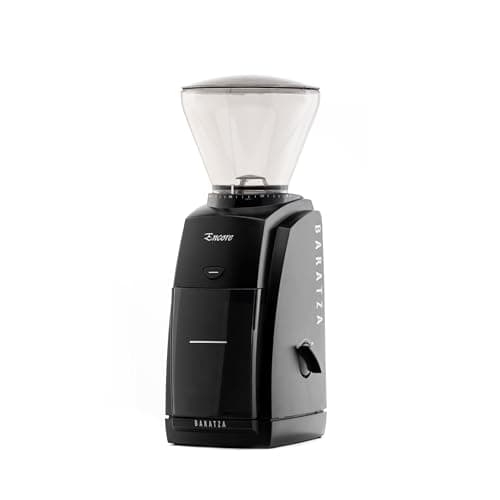
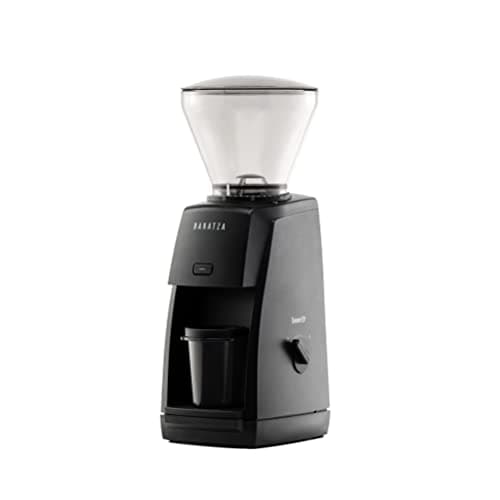
Baratza Encore ESP — the winner, and it is for the household that brews espresso some mornings and pour-over on others. It takes the plain Encore's 40 mm conical burr platform and gives it the micro-adjustable fine range the original never had, so it covers espresso and filter from one dial without either feeling like an afterthought. The decisive argument is Baratza's service model: parts sold individually, published repair guides, and a company that will still help you years out of warranty. Honest cons: it is the most expensive electric in the band, and it is a stepped dial rather than stepless, so espresso dialing is coarser than on a dedicated espresso grinder. Our Encore ESP review has the detail, and Encore vs Encore ESP is the in-family comparison.
Baratza Encore — for the filter-only drinker, and the one to buy if you will never pull a shot. It has been the default recommendation in this category for over a decade for good reason: 40 grind settings across the filter range, genuinely even grinding for drip, press and pour-over, and the same rebuildable platform as the ESP. Buying it saves you money you should not spend on espresso range you will not use. Honest cons: it does not reach espresso, full stop — the fine end is not fine enough and the steps are too coarse — and the plastic body feels its price. Our Encore review covers it, and best grinder for pour over is the page if filter is all you brew.
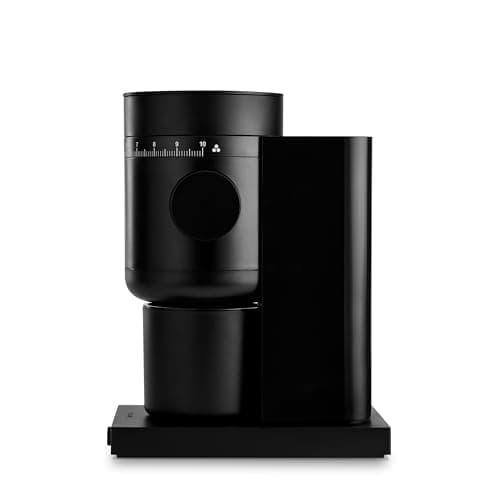
Fellow Opus 2 — for the person who wants one grinder for everything and wants it on the counter. 48 mm conical burrs on a stepless dial with a published espresso-to-cold-brew range and near-zero retention, which is an unusually complete specification at this price. The stepless adjustment is the real advantage over the Baratzas for espresso, because you can land between settings rather than jumping over the one you wanted. Honest cons: Fellow is an appliance brand rather than a repair-forever platform, so parts support is thinner than Baratza's; and a 48 mm conical asked to do both espresso and cold brew is a compromise at both ends. Our Opus 2 review goes through it.
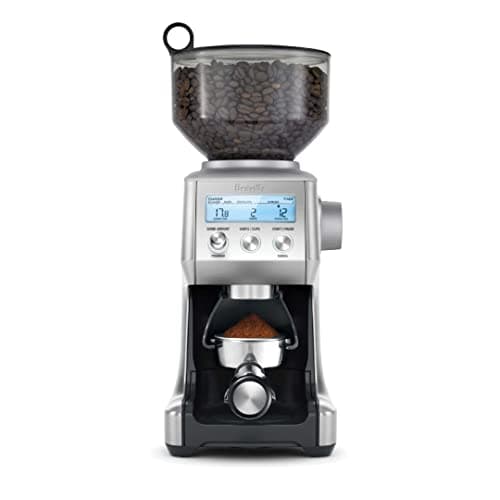
Breville Smart Grinder Pro (BCG820) — for the Breville espresso owner, specifically. It grinds straight into the portafilter on a timed dose across 60 settings, which removes the single most annoying step in a morning espresso routine, and it is the natural partner to a Bambino or a Bambino Plus. Honest cons: timed dosing is less accurate than weighing, so dose drifts as beans age; and the convenience is worth little if you do not own a Breville machine with a 54 mm basket. Our review has the detail, and best espresso grinders under $200 is the espresso-only version of this page.
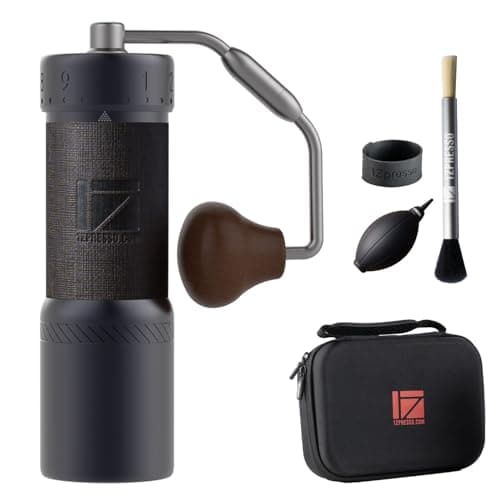
1Zpresso J-Ultra — for the serious espresso drinker who will accept hand grinding. This is the best espresso grind in the band and it is not close: an external numbered dial with fine steps, conical burrs, and a consistency that rivals electric grinders costing several times as much. If your priority is the shot rather than the convenience, buy this. Honest cons: it is manual, so an 18 g espresso dose is real physical work every single morning; and it is slow, which makes it poorly suited to grinding 60 g for a French press. Our J-Ultra review covers the workflow, and best hand grinders for espresso ranks the category.
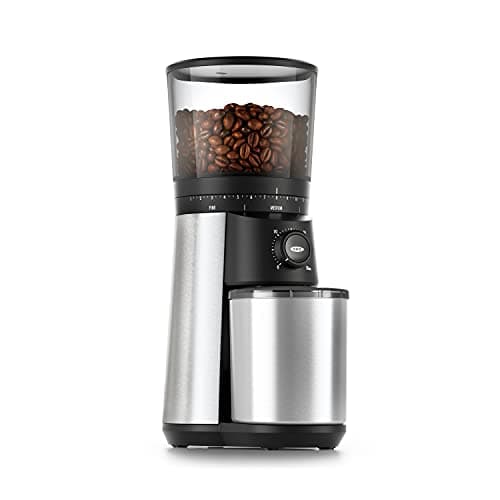
OXO Brew Conical Burr Grinder — for the drip drinker who wants an electric grinder and nothing more. It is the cheapest electric burr grinder we rank that gets filter coffee genuinely right, with 15 settings plus micro-adjust, a timer and a 12 oz hopper. It is also honest about its limits, which we rate highly. Honest cons: it does not do espresso and does not claim to; and it is an appliance rather than a repairable platform, so a failure is a replacement.
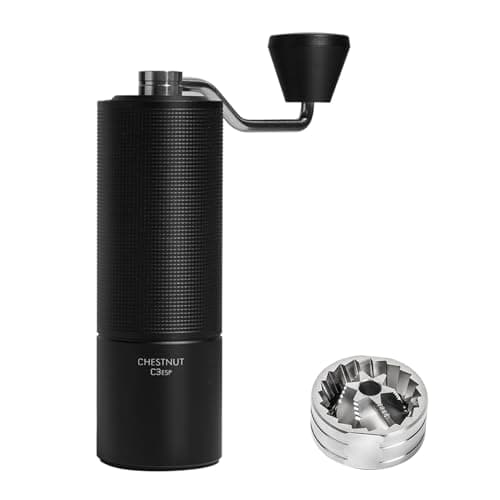
TIMEMORE Chestnut C3 ESP — the budget pick, and the best value in this entire hub. Stainless S2C burrs that reach espresso at one third the price of the cheapest electric here, in a body that feels considerably more expensive than it is, with a range that covers espresso through French press. For the money there is nothing close. Honest cons: it is manual, so volume hurts; and its espresso dialing is coarser than the J-Ultra's, so it is a grinder you can pull shots with rather than one you can chase shots with. Our C3 review has the detail, and C3 vs J-Ultra is the head-to-head.
The verdict
Espresso and filter, built to last: Baratza Encore ESP. Filter only: Baratza Encore. One stepless grinder for everything: Fellow Opus 2. Breville espresso owner: Breville Smart Grinder Pro. Best espresso grind in the band: 1Zpresso J-Ultra. Cheapest sensible electric for drip: OXO Brew Conical. Best value, full stop: TIMEMORE Chestnut C3 ESP. If the budget can stretch, espresso grinders under $500 is where flat burrs and single-dosing arrive; if it cannot, grinders under $100 is the band below.
The uncomfortable physics: hand grinders win at this price
A manual grinder spends its entire budget on burrs, bearings and alignment. An electric grinder at the same price has to pay for a motor, a gearbox, a housing, a hopper and a control panel first, and the burrs get what is left. That is why a $70 hand grinder out-grinds a $150 electric, and why the J-Ultra produces a better espresso grind than anything electric in this band. The electrics are not being cheated — they are selling you convenience, which is a real product. But if your criterion is grind quality per dollar, the answer under $200 is manual, and it is not close. Hand grinder vs electric works through the trade properly.
Volume is what decides manual versus electric
Grind quality says buy manual; your morning says otherwise. Hand-grinding 18 grams for one espresso takes about 30 seconds of real effort and is entirely tolerable. Hand-grinding 60 grams for a French press, or two doses before anyone has spoken to you, is not — and it is the reason most hand grinders end up in a drawer. The honest test: count the grams you grind on a weekday morning. Under about 25, manual is fine and you should buy the best burrs your money reaches. Over about 40, buy an electric even though you are paying for the motor.
Stepped versus stepless matters only for espresso
A stepped dial clicks between fixed positions; a stepless one moves continuously. For filter brewing this is irrelevant — the window of acceptable grind sizes is wide enough that a step either side makes little difference. For espresso it can be decisive, because the useful range is narrow and the setting you want is sometimes between two clicks. That is the single clearest technical argument for the Opus 2 or the J-Ultra over the Baratzas if espresso is your main brew. Espresso grind size shows how narrow the target actually is.
Retention is a flavour problem and a dose problem
Coffee left in the burr chamber and the chute comes out in the next grind, which means today's shot contains some of yesterday's coffee — staler, and ground for a different brew. It also makes your dose unpredictable: put in 18 g, get 17 g out, and the missing gram is sitting in the machine waiting to surprise you. For filter this is a minor annoyance. For espresso, where a gram changes the shot, it is a real variable, and it is why Fellow's near-zero retention claim is worth paying attention to.
Buy the repairable one if you intend to keep it
This is the argument that wins the page for Baratza. Both Encores are built as platforms: burrs, motors, gearboxes and switches are sold individually, repair guides are published, and the company has a long record of helping owners fix grinders long out of warranty. A grinder you can rebuild for the cost of a burr set is a different purchase from one that becomes landfill when a gear strips. Over ten years that gap is larger than the difference between any two prices on this page.
What under $200 does not buy
Three things worth naming. It does not buy flat burrs, which give a tighter particle distribution for espresso and are the main reason the $300-500 band exists. It does not buy single-dose workflow— a proper single-dosing grinder with a bellows and almost no retention starts above this band. And it does not buy grind-by-weight: everything here is timed, volumetric or manual, so a scale is still part of the setup. The espresso scale roundup covers that, and single-dose grinders is the tier above.