The best Nespresso alternative is the De'Longhi Dedica Deluxe (EC685) — it is for the person who likes everything about their Nespresso except the capsule bill, because De'Longhi lists it at under five inches wide, so it occupies the same sliver of counter, and it pulls a real pump shot from ground coffee you buy by the bag. The budget pick is the Bialetti Moka Express: the cheapest route on this page to a rich, concentrated, espresso-style cup, with no capsules, no subscription and nothing to plug in.
First, what Nespresso is actually good at, because an alternatives page that opens by running down the original is not worth reading. Nespresso built the category it sells in. Its machines produce a consistent, crema-topped cup at one button press, every time, with no grinder, no dose, no tamp and no technique — and the sealed capsule means the coffee inside is as fresh on day 300 as on day one. The Vertuo line reads a barcode on each capsule and brews the right size for it; the OriginalLine is open enough that dozens of third-party brands make compatible pods. Our best Nespresso machines page exists because if that is what you want, some Nespresso machines are much better than others, and Vertuo vs Original explains which line to be in.
People look for an alternative for three reasons, and they point at different machines.
Reason one: cost per capsule
This is far and away the most common. A capsule holds a fixed, small dose and costs several times what the same coffee costs as beans, so a machine that was cheap to buy becomes the most expensive thing in the cupboard over a year. The fix is a machine that takes ground coffee: the Dedica and the Bambino Plus both pull real espresso from a portafilter you fill yourself, and the Moka Express and AeroPress do it with no machine at all. If you are on the Vertuo line specifically, the squeeze is tighter: Vertuo capsules are proprietary with few third-party options, which is exactly the situation the OriginalLine avoids.
Reason two: you want a better shot
A capsule machine decides everything for you — dose, grind, pressure, volume — which is the convenience and also the ceiling. You cannot make a Nespresso shot better, only different, by changing capsules. A pump machine with a portafilter hands you the variables back, and a shot you control from freshly ground beans has a much higher ceiling than any sealed capsule. Nespresso vs an espresso machine is the honest head-to-head. The catch is equally honest: you now need a grinder, and pre-ground supermarket coffee in a real espresso machine makes a worse drink than a capsule does. Budget for a grinder before you switch, not after.
Reason three: pods, waste and lock-in
One capsule per cup, in aluminum or plastic, and a machine that only accepts the pods its maker blesses. Nespresso runs a recycling program and the OriginalLine has a broad third-party market, so this is a smaller problem than it is on some systems — but if what you want is to stop buying single-serve packaging altogether, only a grounds machine or a manual brewer actually does that. Every pick on this page except the Keurig does.
What each alternative matches it on
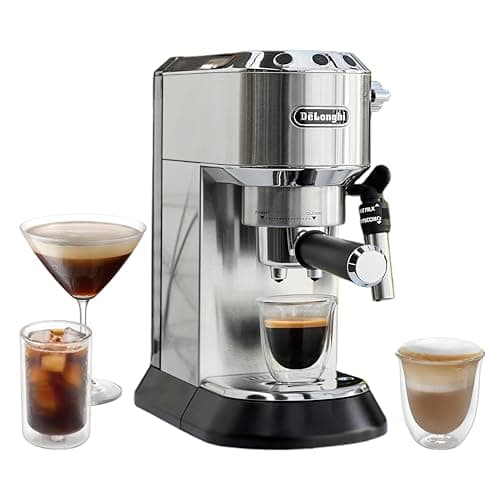
De'Longhi Dedica Deluxe — matches on footprint and on brand lineage: De'Longhi builds many of Nespresso's own machines, and the Dedica is listed at 4.9 inches wide, which genuinely solves the no-counter-space problem better than anything else here. It heats quickly, pulls a respectable shot for the size and price, and its manual frother lets you learn milk texturing properly. Honest cons: the small stature means a small boiler and tank, so it is built for one or two drinks at a time; and there is no grinder, while the pressurized basket flatters mediocre grinding rather than rewarding good grinding. Full detail in our Dedica review.
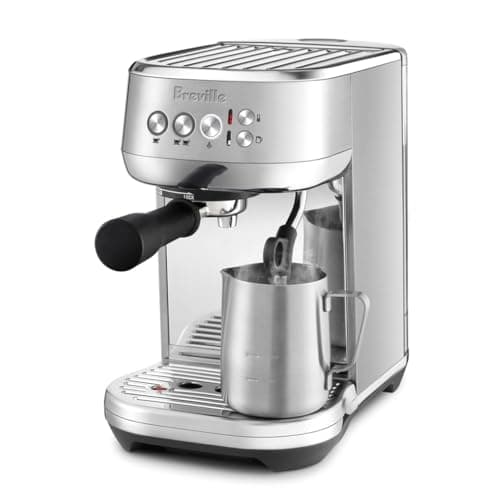
Breville Bambino Plus — matches on effortlessness and beats it on the drink. Breville rates it at a three-second heat-up, so it is ready faster than a kettle boils, and its automatic milk wand textures to a set temperature with no technique — which means it replaces a separate milk frother as well as the machine. Honest cons: no grinder, so you must own or buy one and factor that into the real price; and the small water tank means frequent refills if you make several drinks a day. This is the pick for someone leaving Nespresso because they want better coffee rather than cheaper coffee.
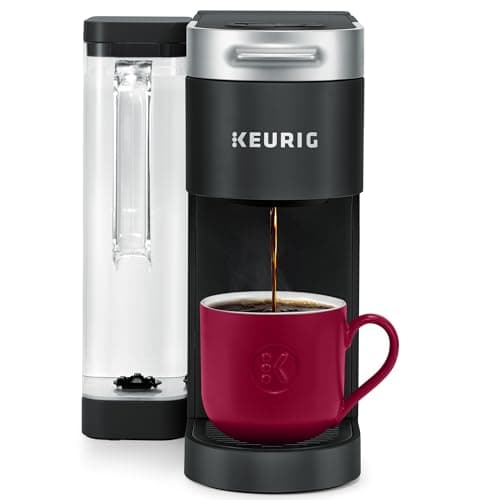
Keurig K-Supreme — the pick if you want to stay in pods but change ecosystems. K-Cups are made by dozens of brands, stocked almost everywhere, and cheaper per pod than Vertuo capsules, and the K-Supreme shares the MultiStream brew head with the much pricier K-Supreme Plus — the part that affects the cup — on a 66 oz removable reservoir. Honest cons: no temperature control and fewer saved presets than the Plus, and the same pod economics and flavor ceiling as every other pod system. It is a lateral move on quality and a real one on choice and price; our Keurig alternatives page is the mirror image of this one if you later want out of that ecosystem too.
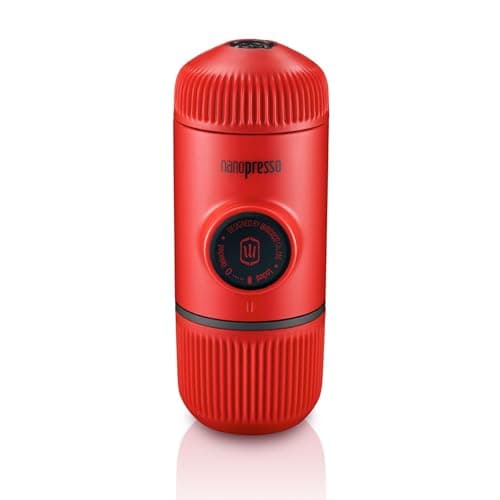
WACACO Nanopresso — matches on crema, of all things, with no power at all. WACACO rates it at 18 bar, hand-pumped, no battery, small enough for a bag, and it makes a legitimate crema-topped shot from ground coffee, which no other device that size does. Honest cons: small capacity and hand pumping make it a single-shot, one-at-a-time device, and consistency depends heavily on your grind and technique — it is forgiving of nothing. Treat it as a travel or office setup rather than a kitchen machine; at home a Dedica will out-perform it every morning without the hand cramp.
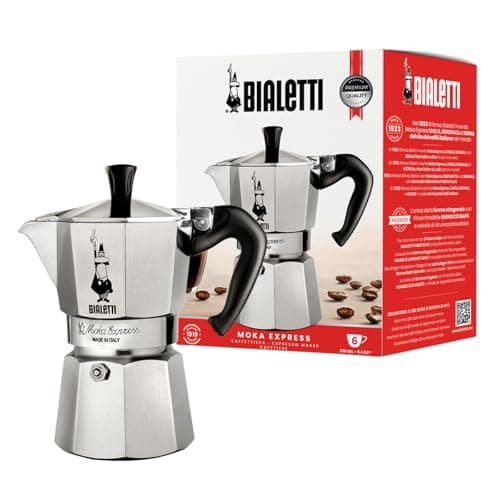
Bialetti Moka Express — the budget pick. The stovetop icon, a design essentially unchanged since 1933, making a genuinely rich, concentrated coffee for the price of lunch with nothing to plug in and gaskets available everywhere. Honest cons, and they are the reason it is not higher: it brews at around one to two bar rather than the nine of real espresso, so there is no true crema and the profile is bolder and more bitter; and the aluminum body is not induction-compatible. If your stove is induction, the stainless Induction Venus is the version to buy. Our moka pot vs espresso machine page sets expectations properly before you switch.
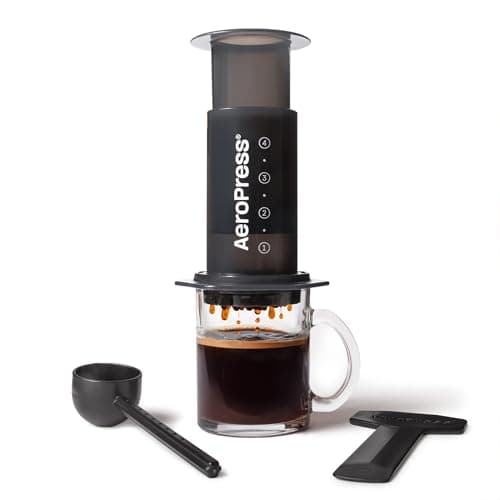
AeroPress Original — the cheapest alternative on the page and the one that abandons the format entirely. Immersion plus hand pressure through a paper micro-filter gives a clean, low-bitterness cup in about two minutes, and cleanup is ten seconds — pop the puck into the bin. Honest cons: it is not a true espresso maker, building a few bars of pressure by hand rather than nine, so there is no proper crema; and it makes one or two cups at a time. If what you liked about the Nespresso was speed and no cleanup rather than not being involved, it is a closer match than it sounds.
The verdict
Same slim counter, real espresso, no capsules: Dedica Deluxe. Better coffee and hands-off milk, if you already own or will buy a grinder: Bambino Plus. Stay in pods, pay less, choose from more brands: Keurig K-Supreme. Espresso-style coffee anywhere with no power: Nanopresso. Cheapest espresso-style cup at home: Bialetti Moka Express. Cheapest good cup, full stop: AeroPress. And the case for staying put is real too — if you drink one cup a day, value never thinking about it, and the capsule bill does not bother you, Nespresso is doing exactly what you bought it for, and nothing here will make that cup appear faster.
Do the arithmetic on your own habit before you switch
Count the cups you actually brew in a week, then compare what a capsule costs against the same weight of coffee as whole beans. For one cup a day the annual difference is real but survivable; for a two-person household at two cups each it is the single clearest argument on this page. Set that number against the price of the machine you are considering plus a grinder, and you get a genuine payback period rather than a vibe. That calculation, not the sticker price, is what should decide this.
The grinder is not optional on the espresso picks
This is where switchers get burned. A capsule contains coffee ground to a specification and sealed under inert gas; supermarket pre-ground coffee is neither. Espresso needs a fine, even grind to build resistance against the pump, and pre-ground coffee channels instead, so the shot runs fast, thin and sour. A Dedica or a Bambino Plus fed pre-ground coffee makes a worse drink than the Nespresso you replaced, which is the single most common disappointment in this switch. Budget for a burr grinder as part of the machine purchase, not as a later upgrade, and espresso grind size explains how narrow the target is.
Pressurized baskets: the training wheel to know about
The Dedica ships a pressurized (dual-wall) basket, which creates artificial back-pressure so even a coarse or uneven grind produces something crema-topped. That is deliberate and it works — it is how a cheap machine flatters a bad grinder, and it is why a Dedica is a gentler landing than a 58 mm enthusiast machine. The cost is that the machine stops telling you the truth about your grind, so you cannot improve past a point. What is a portafilter covers the mechanism, and if you eventually want the unflattered version, best semi-automatic espresso machines is the tier above.
Milk: what you lose and what you gain
A Nespresso paired with an Aeroccino froths milk at a button with no technique. Of the picks here, only the Bambino Plus matches that directly — its automatic wand textures to a set temperature hands-free. The Dedica gives you a manual frother, which means twenty seconds of technique and, once you have learned it, genuinely better microfoam than any automatic system produces. The Nanopresso, Moka Express and AeroPress have no milk system at all, so a latte habit means a separate milk frother. Factor that into the comparison; it is easy to price a machine and forget the drink you actually order. How to steam milk is the skill if you go manual.
If you are switching lines rather than leaving
There is a middle option worth naming: moving from Vertuo to OriginalLine. Vertuo capsules are proprietary with few third-party options and a higher cost per cup; OriginalLine pods are made by many brands and sold almost everywhere, so the same convenience costs meaningfully less. If your only complaint is the capsule bill and you genuinely like the machine, that switch solves most of it without learning anything new. Vertuo vs Original lays out the differences, and our best coffee pods page ranks what is worth buying across K-Cup, OriginalLine and Vertuo.
Before you replace the machine, descale the one you have
Scale lowers brew temperature long before it causes a visible failure, which is why an aging pod machine gradually produces weaker, sourer, cooler coffee and people conclude the machine is worn out. If your Nespresso got worse rather than being disappointing from the start, this is the first thing to rule out — how to descale a Nespresso has the routine and descaling supplies covers what to use. It costs a few dollars and twenty minutes, and it is worth doing before you spend anything on this page.