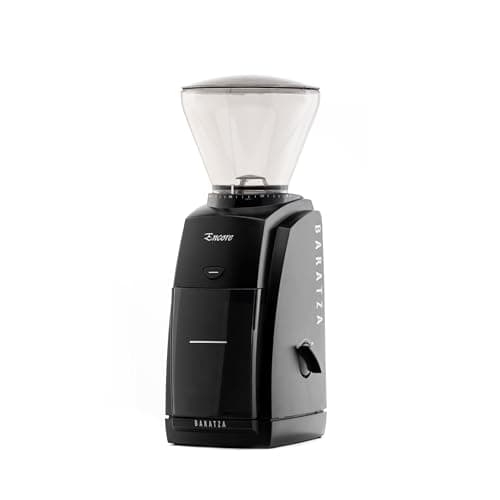
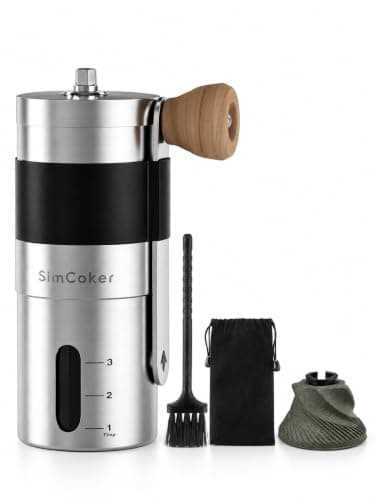
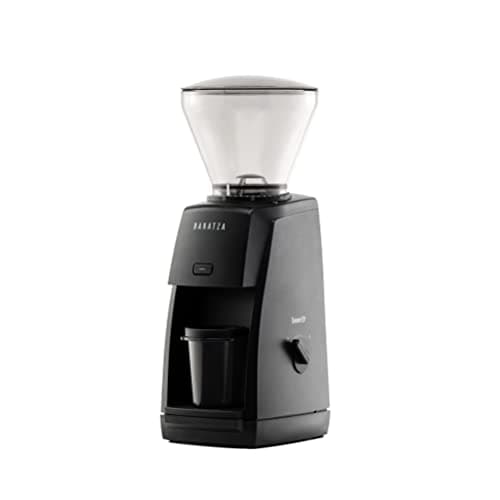
The best beginner coffee grinder is the Baratza Encore ESP — it is for anyone who is not certain yet whether espresso is in their future, because it grinds fine enough for espresso and coarse enough for filter, and Baratza sells every part individually so it stays repaired instead of replaced. The budget pick is the SimCoker Manual Coffee Grinder: a genuine burr grind for pocket money, and an enormous improvement over the blade grinder most people start with — with the honest limitation that it has no numbered settings, so you cannot write a grind down and come back to it.
Everything else on this page follows from one question: will you make espresso? If yes, or maybe, you need a grinder that reaches espresso fineness — the Encore ESP, the Smart Grinder Pro or the TIMEMORE C3. If no, and you are certain, you can buy a filter-only grinder and save real money: the plain Encore or the OXO. Beginners get this wrong in one direction almost every time, buying a filter grinder and then buying an espresso machine three months later, so if you are genuinely unsure, pay the small premium for the range.
The one thing that is not negotiable: burr, not blade
A blade grinder is a propeller in a cup. It chops beans into a mixture of powder and gravel, and because those particles have wildly different surface areas, they extract at wildly different rates in the same brew — the powder over-extracts and tastes bitter, the gravel under-extracts and tastes sour, and you get both at once. A burr grinder mills beans between two abrasive surfaces set a fixed distance apart, so particles come out roughly the same size. That is the entire reason this page exists, and burr vs blade covers the mechanism properly. Any burr grinder on this page beats any blade grinder at any price.
It is also why a cheap burr grinder is a legitimate purchase. The step from blade to burr is much larger than the step from a $100 burr grinder to a $400 one. If your budget is genuinely small, the SimCoker or the TIMEMORE C3 are not compromises in the way a cheap espresso machine is — they are the big upgrade, delivered cheaply.
Who each pick is for
Baratza Encore ESP: the best all-round first grinder. It has the fine range to grind espresso and the coarse range for filter and press, which means one purchase covers whatever you end up brewing. Baratza's parts-and-repair culture makes it a decade-long buy. It is not single-dose, so a few grams of yesterday's coffee linger between beans, and dedicated espresso grinders offer finer adjustment at higher prices.
Baratza Encore: the same grinder without the espresso range, for less. If you brew drip, French press and pour-over and know you always will, this is the honest pick — it has been the default "my first burr grinder" recommendation for over a decade. It does not grind fine enough for good espresso, and that is a hard limitation rather than a soft one.
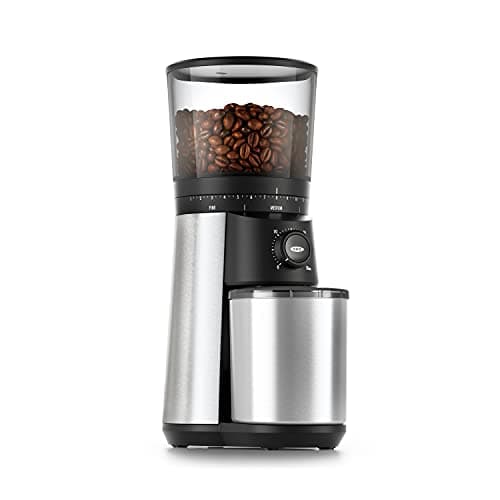
OXO Brew Conical Burr Grinder: the cheapest sensible electric. A real burr grind for less than the Baratza, with a timer that makes daily dosing repeatable and a 12 oz hopper. Filter only, and not repairable the way a Baratza is — it is an appliance. For a drip-coffee household on a budget it is excellent value.
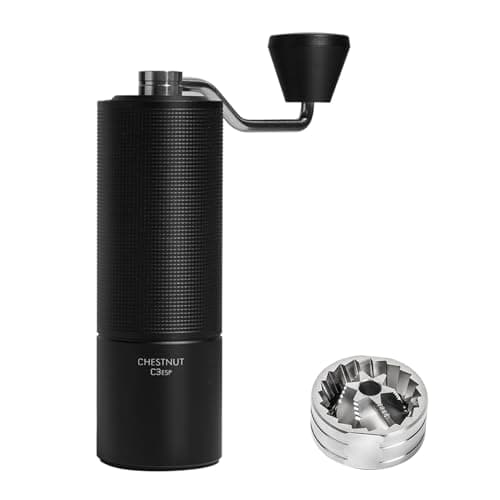
TIMEMORE Chestnut C3 ESP: the best-value manual grinder, and the surprise answer for a lot of beginners. Its stainless burrs give a consistency that embarrasses electrics at the same price, the ESP version adjusts fine enough for real espresso, and it packs for travel. The cost is your arm: hand-grinding a fine espresso dose is genuine work, and capacity is one or two cups at a time.
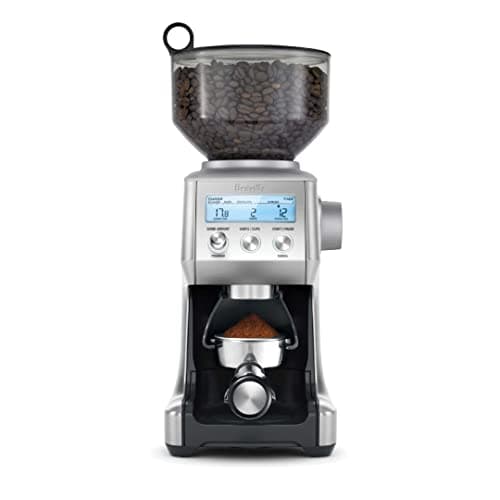
Breville Smart Grinder Pro: the set-and-forget pick, and the natural partner if you have bought a Breville espresso machine. 60 settings from espresso to French press, and a dose timer that grinds a measured amount straight into a portafilter or container. Stepped adjustment is a shade coarser-grained than stepless espresso grinders, and it is not built to be rebuilt.
SimCoker Manual Coffee Grinder: the budget pick — the lowest-cost step up from a blade grinder, with a ceramic conical burr in a 304 stainless body, SimCoker's stated 20 g capacity, and no power needed. Two honest limits: no published numbered settings, so repeating a dialed-in shot is not realistic, and 20 g means a full pot is several rounds of cranking. For testing whether you care about fresh grinding at all, it is the right amount of money to spend.
The verdict
Unsure about espresso: Encore ESP. Certain you are filter-only: plain Encore, or the OXO to spend less. Want the best grind per dollar and do not mind cranking: TIMEMORE C3. Own a Breville machine or want timed dosing: Smart Grinder Pro. Smallest possible outlay: SimCoker. Whatever you pick, spend the money you save on fresher whole beans rather than a better grinder — at the beginner tier, bean freshness moves the cup more than grinder tier does. The next tiers up are in best grinders under $100 and best burr grinders.
Hand grinder or electric: the real decision
Hand grinders spend their entire budget on burrs and alignment — no motor, no housing, no electronics — so at the same price they out-grind electrics. The TIMEMORE C3 is the clearest example on this page. What you pay instead is time and effort: a filter dose is maybe forty seconds of cranking, and a fine espresso dose is harder and longer. The honest test is how awake you are at 6 a.m. and how many cups you make. One or two cups a day: a hand grinder is a genuinely good main grinder. Four milk drinks before work: buy the electric. Hand grinder vs electric runs the comparison properly.
Settings, steps and why numbers matter
A grinder you can return to a known setting is a grinder you can improve with. The Encore has 40 settings, the OXO has 15 plus micro-adjust, the Smart Grinder Pro has 60, and the SimCoker publishes none — which is why we flag it as a tester rather than a long-term espresso grinder. Write your settings down: "drip 18, French press 30" in a note on your phone is the difference between improving and guessing every morning. Our coffee grind size chart gives the reference textures to aim at.
The three accessories that actually matter at the start
A scale, first and by a distance. Scoops measure volume, and volume changes with grind size and roast level, so a scoop is not a repeatable dose — budget coffee scales covers the cheap ones that are accurate enough. An airtight container second, because the grinder you just bought is pointless if the beans going into it have been open to air for a month — see best coffee storage containers. A cleaning brush third; coffee oils change what a given setting produces, and cleaning the grinder is a five-minute monthly job that keeps your notes valid.
What beginners overspend on
Three things, in order of how often we see it. Espresso range they never use — if you genuinely only brew drip, the plain Encore or the OXO is the right grinder and the ESP premium is wasted. Single-dose grinders — a beautiful workflow for someone switching between three bags of coffee, and an extra step every morning for someone who brews the same thing daily; single-dose grinders explains who it suits. And flat burrs — a real improvement in particle distribution that matters most at the specialty filter end, and not something a first grinder needs.
Where to go next
If you know the brew method already, the method-specific pages are more useful than any general ranking: pour-over, French press, drip, cold brew and espresso each rank the same field against one job. And if you have not bought a brewer yet, coffee brewing methods is the page to read first — the grinder follows the method, not the other way around.