The best Ninja coffee maker for most people is the Ninja DualBrew Pro (CFP301) — it is for a household that cannot agree on pods versus a pot, because it takes K-Cup pods and ground coffee and brews anything from a single travel mug to a full carafe. The budget pick is the Ninja Specialty Coffee Maker (CM401), the cheapest machine in the range here and the one that gets you a milk drink without an espresso machine — with the honest caveat that its concentrate is strong coffee, not espresso.
Ninja is unusual among coffee brands in that the four machines on this page are not four sizes of the same idea. One is a pod-and-grounds drip brewer. One is a pump espresso machine with a burr grinder and a scale inside it. One is a Nespresso-compatible capsule machine bolted to a drip brewer. One is a drip machine with a frother that makes a latte-shaped drink out of concentrated coffee. They share a design language and almost nothing else, which is exactly why "which Ninja?" is a harder question than "which Keurig?" — and why the answer is decided by what you drink rather than by price.
The criteria we ranked on
Does it make the drink you actually want? This is the whole page. Two of these machines make espresso and two do not, and Ninja's marketing language does not always make that obvious at a glance. A "specialty" concentrate is not a shot; a Nespresso-compatible capsule is a shot of a kind; a pump group with a portafilter is the real thing. We say which is which on every pick.
Does it replace other appliances? Ninja's genuine strength is consolidation. If a machine removes a second gadget from the counter — a frother, a pod brewer, a cold brew pitcher, a grinder — that is real value, and it is the reason these machines sell against single-purpose brewers that make a better individual cup. We weighted it heavily.
What is the ceiling? A combination machine trades peak quality for coverage, and the honest version of that trade-off is "good at four things, best at none." Where a dedicated machine clearly beats the Ninja at one job, we name it rather than pretend the combo wins everywhere.
Running cost. Pods are the most expensive way to drink coffee, so a machine that also takes grounds has a structurally lower cost per cup than one that does not. Three of these four accept ground coffee, which matters more over a year than the gap in their sticker prices. Compare the live prices in the Quick Picks table above, then think about what the next twelve months of coffee costs on top.
What we did not rank on: hands-on testing we did not do. We have no lab, we did not brew on these machines, and everything below comes from the published specifications on the live listings plus, where it exists, independent reporting that we name. Our method is on how we research.
Who each Ninja is for
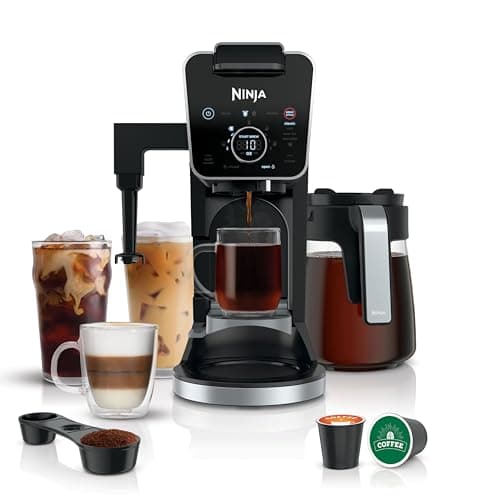
Ninja DualBrew Pro (CFP301) — the one to buy if the household is split. It brews a K-Cup for the person who wants one cup right now and a full carafe from grounds when four people want coffee, with sizes from a travel mug up to a pot. That is a genuinely flexible machine for the money and it is the Ninja we point most people at. Honest cons: it is a drip and pod machine, so there is no espresso in it despite the coffee-bar looks, and it has more parts and a bigger footprint than a single-purpose drip maker. Our full DualBrew Pro review goes deeper, and Keurig alternatives explains why a dual-format brewer is the standard escape route from pod economics.
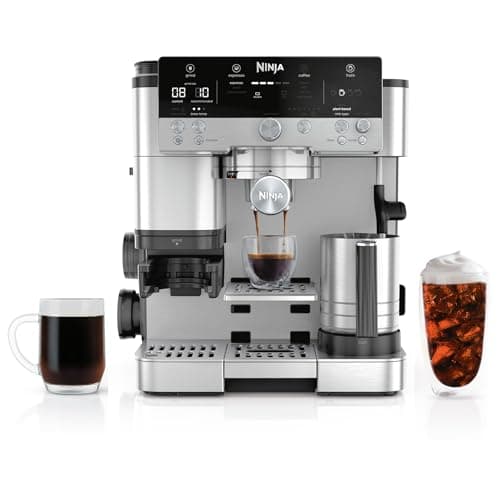
Ninja Luxe Cafe Premier (ES601) — the one to buy if you want espresso and drip and cold brew from one body. It is a pump espresso machine with built-in burrs across 25 settings, a built-in scale, an assisted tamp, and a Dual Froth System that steams and whisks for hot or cold microfoam including plant milks. Nothing else near the price does three genuinely different drinks. Honest cons, and they are real: CoffeeGeek's hands-on review reports no grind micro-adjustment, a dose effectively fixed around 17.5–18 g, and no hot water tap on the US model; temperature is three presets rather than a number you set; and the plastic dosing collar is a part the grinder will not run without. Read our Luxe Cafe Premier review before committing, because the ceiling is the whole argument against it.
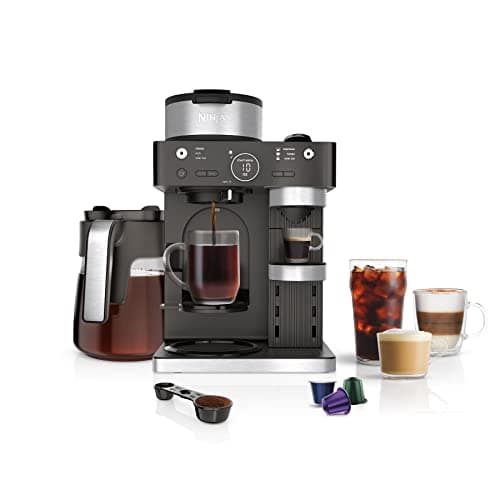
Ninja Espresso & Coffee Barista System (CFN601) — the one to buy if one person in the house drinks capsule espresso and another drinks a pot of regular coffee. It takes Nespresso-compatible capsules, brews drip and ground coffee, and has a built-in frother for lattes and cappuccinos. Honest cons: capsule espresso through Nespresso-compatible pods will not match a real pump machine's shot, and like every combination machine it is a jack of all trades — neither the espresso nor the drip is best in class. If capsules are the appeal, Nespresso alternatives sets this machine against the rest of the field.
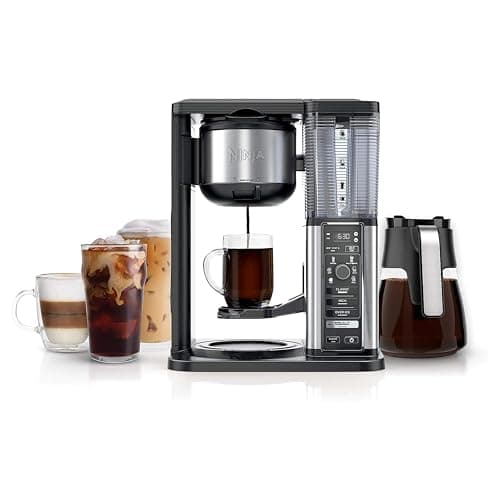
Ninja Specialty Coffee Maker (CM401) — the budget pick. A drip machine with multiple brew sizes, hot and iced modes, a concentrated "specialty" brew and a fold-away frother, which together produce a latte-shaped drink without an espresso machine. For the price it replaces two or three single-purpose gadgets. Honest cons: the concentrate is not espresso and the frother is not a steam wand, so milk drinks are approximations; and there is a lot of plastic, with more moving parts meaning more that can eventually fail.
What Ninja is good at, and what it is not
Ninja is good at putting four jobs in one box at a price where rivals sell you one job. That is a real engineering achievement and it suits a lot of kitchens — particularly households where two people want different drinks and neither wants to learn a steam wand. Nobody who buys a DualBrew Pro is disappointed that it brews both pods and grounds.
What Ninja is not good at is the top of any single category. A certified drip machine brews a better pot than the drip side of any of these; a Bambino Plus plus a real grinder pulls better espresso than the Luxe Cafe for similar money and keeps improving as your technique does; and a dedicated cold brew maker costs a fraction of the difference. Whether that matters depends entirely on whether you want the best cup or the fewest appliances. Both are legitimate answers, and most of the disappointment with combination machines comes from buying one while secretly wanting the other.
The verdict
Pods and a pot, one machine, no espresso: DualBrew Pro. Espresso, drip and cold brew with a grinder in the box: Luxe Cafe Premier, with the grind and dose limitations understood up front. Nespresso-compatible capsules plus a regular pot: Espresso & Coffee Barista System. Smallest outlay, and happy with a strong-coffee latte rather than a real one: Specialty Coffee Maker. And if none of those descriptions is quite you, the honest advice is to leave the brand behind and read best drip coffee makers or best espresso machines for beginners instead — a brand roundup should tell you when the brand is the wrong aisle.
Decode the Ninja model names before you shop
Ninja sells under names that describe a feeling rather than a function, and the model codes do the actual work. CFP is the DualBrew family (pods and grounds, drip only). CFN is the capsule-plus-drip family. ES is the Luxe Cafe pump-espresso family. CM is the plain drip family with specialty brews. If you are buying from a marketplace listing rather than a shelf, match the model code and not the marketing name, because "espresso" appears in the names of machines that brew concentrate and machines that pull a real shot alike.
"Specialty brew" is concentrate, not espresso
The CM401's specialty setting brews a small volume of very strong coffee that stands up to milk. That is genuinely useful — it is how a lot of cafes outside the espresso tradition make milk drinks — but it is brewed at atmospheric pressure through a basket, not forced through a puck at around nine bars, so there is no crema and the texture is different. What is crema explains what you are missing and why it matters more to some people than others. If a milk drink that tastes strongly of coffee is the goal, the concentrate route works. If you want a shot, espresso vs drip coffee sets out the actual difference and best espresso machine under $200 is the cheapest honest entry point.
The grinder question on the Luxe Cafe
A built-in grinder is the headline feature of the ES601 and the single biggest reason to consider it over a separate machine-plus-grinder setup. It is also where the compromises live. CoffeeGeek reports no micro-adjustment between grind settings and an effectively fixed dose, which matters because espresso is dialed in by moving the grind in very small steps — espresso grind size shows how narrow the useful window is. In practice that means the Luxe Cafe will get you to a good shot with the beans it likes, and will not let you chase the last 10% the way a stepless or finely stepped grinder does. For someone who wants good coffee without a hobby, that is a fair trade. For someone who expects to be adjusting things in a year, it is the ceiling they will hit.
Pods: what they actually cost you
Two of these machines take capsules, and capsules are the most expensive way to drink coffee by a wide margin — several times the cost of the same coffee as ground beans. That is the trade for convenience, and it is a reasonable one for a cup a day. It stops being reasonable fast when the household drinks four. The DualBrew Pro and the CFN601 both mitigate it by also accepting grounds, which is the structural advantage they hold over a pod-only machine, and reusable K-Cups cut it further on the K-Cup side. Keurig vs drip coffee runs the arithmetic in full.
Cleaning and descaling, because these machines have more to clean
More functions means more paths for water and milk, and every one of them needs attention. Frother components get rinsed after each use or they sour; pod needles clog; and scale builds up in any machine that heats water, lowering brew temperature before it causes a visible failure. If a Ninja that used to make good coffee has gradually gotten weaker and more sour, descaling is the first thing to try, not the last — how to clean a coffee maker has the routine and descaling supplies covers what to buy. How often depends on your water hardness far more than on the machine.
What to spend on alongside whichever one you pick
A burr grinder, first and by a distance. Three of these four machines take ground coffee, and the gap between pre-ground supermarket coffee and beans ground this morning is larger than the gap between any two machines on this page — best coffee grinders for beginners starts cheap. Then beans bought in small bags and kept in an airtight container, and if you bought the Luxe Cafe, a milk pitcher worth pouring from. Everything after that is refinement.