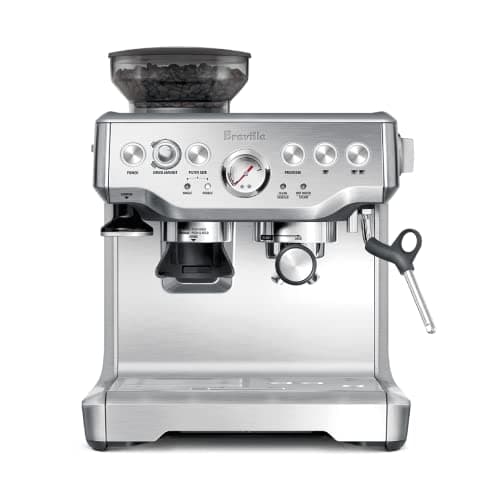
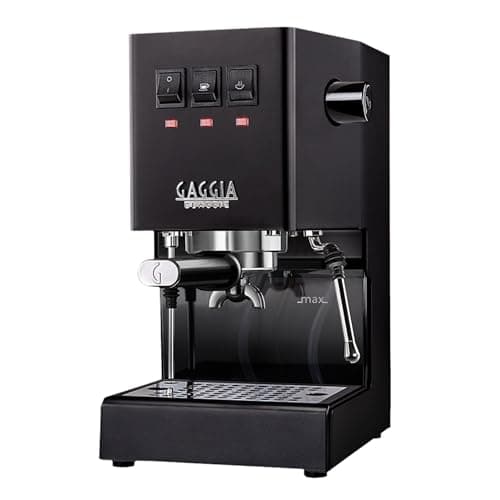
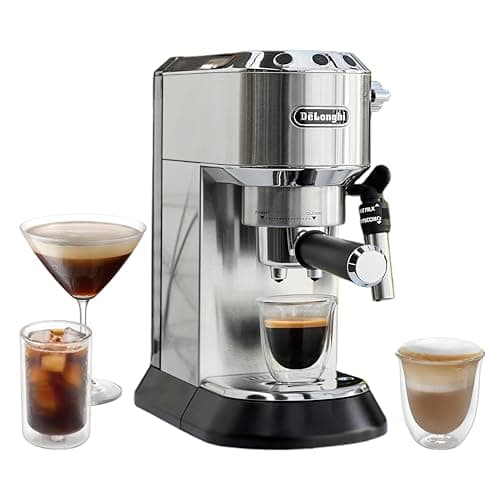
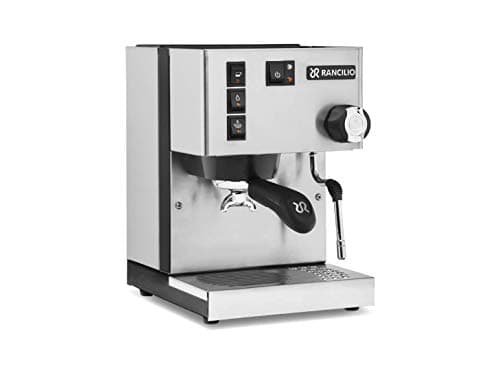
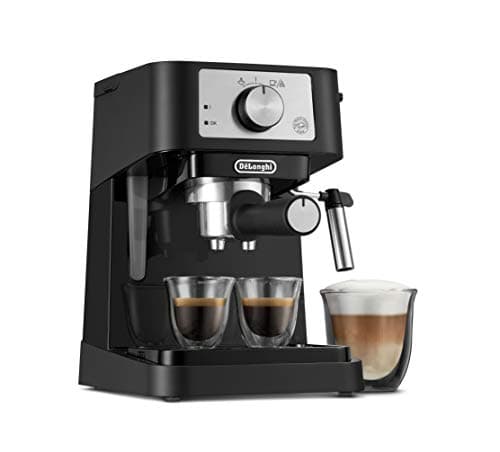
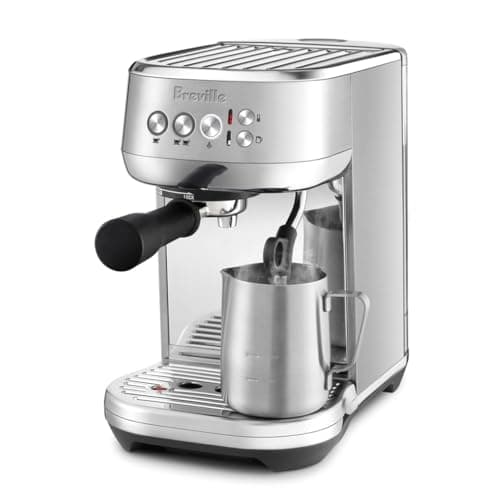
The best semi-automatic espresso machine for most people is the Breville Bambino Plus — it is for anyone who already owns a burr grinder, because it spends none of its budget on one, heats in seconds and textures milk automatically. If you do not own a grinder, buy the Breville Barista Express instead; it has one built in, which is the whole reason it remains the default first machine. The budget pick is the De'Longhi Stilosa, the cheapest machine here that still pulls a real pressurized shot through a real steam wand — the honest way to find out whether this hobby sticks before spending five times as much.
"Semi-automatic" is a category that confuses people because the name sounds like a compromise. It is not. A semi-automatic machine runs the pump and the boiler for you and hands you everything else: the grind, the dose, the tamp, when to stop the shot, and how you steam the milk. That is the opposite of a super-automatic, which grinds, doses, tamps, brews and froths at a button and gives you no variables to change. Semi-auto is the class every cafe uses and the class where your technique is the limiting factor rather than the machine.
The one decision that decides everything: do you own a grinder?
Almost every bad espresso purchase traces back to this. Espresso needs a grind fine enough and even enough to build resistance against 9 bars of pressure, and pre-ground supermarket coffee cannot do it — it channels, the shot runs thin and sour, and no machine on this page can fix that. So the real budget is machine plus grinder, and if you have to split a fixed budget, the grinder deserves more of it than people expect. Best grinders for espresso is the companion page, and best espresso grinder under $200 covers the tier that pairs sensibly with the machines here.
If you already have one, the Bambino Plus is the efficient answer: Breville rates it at a three-second heat-up, the automatic milk wand textures to a set temperature with no technique, and it occupies a footprint the Barista Express cannot. If you do not, the Barista Express bundles a conical burr grinder with adjustable dose and grind size, which is genuinely enough grinder to learn on — and the machine most people on this site end up recommending to a friend. Its own limitation is honest: enthusiasts eventually add a dedicated grinder and the built-in one becomes the backup.
The two that teach you espresso
The Gaggia Classic Evo Pro and the Rancilio Silvia are here for a different buyer: someone who wants the hobby, not just the coffee. Both use a 58 mm commercial portafilter, which means every basket, tamper, puck screen and distribution tool in the aftermarket fits, and the skills transfer straight upward to cafe equipment. Both have real steam wands rather than automatic ones, so you learn to texture microfoam by hand. Both are single boilers, which means waiting between pulling a shot and steaming milk, and both reward a good grinder and punish a bad one.
The difference between them is build and price. The Gaggia is the entry to that world with a vast community of documented mods; the Silvia is heavier, commercial-grade and endlessly repairable, which is why it has been the recommended skill-builder for two decades. Neither has a PID out of the box, so temperature surfing is part of the routine — Gaggia Classic Pro vs Rancilio Silvia sets them against each other properly, and best prosumer espresso machines is the tier above.
Small counters and small budgets
The De'Longhi Dedica Deluxe exists for one reason and solves it better than anything else: De'Longhi lists it at under five inches wide, which is narrower than most kettles. It pulls a respectable shot for the size, has a manual frother, and heats fast. The trade is a small boiler and tank built for one or two drinks at a time, and a pressurized basket that flatters mediocre grinding rather than rewarding good grinding. If counter space is not your constraint, you get more machine for the money elsewhere — best compact espresso machines has the full small-footprint field.
The Stilosa is the budget pick, and we mean it literally: it is the cheapest machine on this page and the cheapest route to a genuine 15-bar pump and a manual steam wand. Plastic-heavy, single-walled basket, modest temperature stability — the shot ceiling is lower than everything above it. But it is small enough to put in a cupboard if the hobby does not stick, and that optionality is worth something. Best espresso machine under $200 covers that tier in full.
The verdict
Own a grinder: Bambino Plus. Don't own a grinder and want one purchase: Barista Express. Want the hobby and a 58 mm platform: Gaggia Classic Evo Pro, or the Silvia if you want the one you will still be repairing in fifteen years. Narrowest possible counter: Dedica. Smallest possible outlay: Stilosa. What none of these do is make coffee at a button — if that is what you want, the semi-automatic class is the wrong class, and super-automatics under $1,000 is the page to read instead.
Portafilter size is a long-term decision, not a spec
The two sizes that matter here are 54 mm (Breville's home machines) and 58 mm (the commercial standard the Gaggia and Silvia use). Both pull excellent espresso. The difference is the aftermarket: 58 mm baskets, tampers, distribution tools and puck screens exist in enormous variety because every cafe machine uses them, while 54 mm accessories are a smaller catalogue aimed at Breville owners. If you expect to buy a bottomless portafilter, puck screens or puck-prep tools, know which size you are buying into before you buy the machine.
Pressurized vs non-pressurized baskets
Cheaper machines often ship a pressurized (dual-wall) basket, which creates artificial back-pressure so even a coarse or uneven grind produces something crema-topped. It is a training wheel, and it works — but it also means the machine is not telling you the truth about your grind, so you cannot improve. Non-pressurized (single-wall) baskets expose every mistake, which is exactly why enthusiast machines use them. What is a portafilter explains the mechanism, and what is crema covers why the pressurized version looks right and tastes flat.
Single boiler means waiting, and that is fine
Every machine on this page is a single boiler or a thermoblock, which means one heating element serving two jobs at two temperatures: around 200°F for brewing, around 250°F for steam. You pull the shot, then wait while the machine climbs to steam temperature, then steam. For one or two drinks that is a few seconds of patience. For four back-to-back cappuccinos it is genuinely annoying, and that is the problem dual boilers and heat exchangers solve — espresso machine boiler types covers the whole picture. Breville's rated three-second heat-up on the Bambino Plus is about getting to the first shot, not about shot-to-steam switching.
Automatic milk texturing vs a real steam wand
The Bambino Plus froths to a set temperature and texture at a button; the Gaggia, Silvia, Dedica and Stilosa hand you a wand and expect you to learn. Automatic wins on consistency and on day one. Manual wins if you want latte art, because pouring a rosetta needs tight, glossy microfoam that you control — a set-and-forget wand produces good foam, not the foam you decided on. If milk drinks are most of what you make, read how to steam milk and best espresso machine for lattes before choosing, and budget for a proper pitcher either way.
What to spend the rest of the budget on
In order, after the machine: a burr grinder that reaches espresso fineness, a scale that weighs to 0.1 g so your dose is repeatable, fresh beans bought in small bags, and a tamper that fits your basket. Everything after that — distribution tools, puck screens, bottomless portafilters — is refinement, not foundation. The espresso gear checklist is the full list in priority order, and how much does an espresso machine cost adds up the real total so the grinder does not come as a surprise.