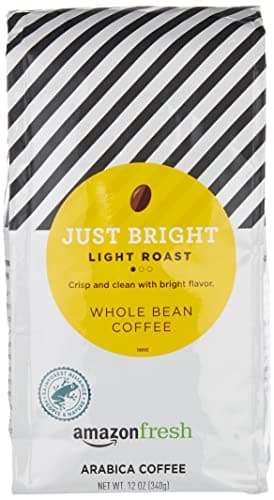
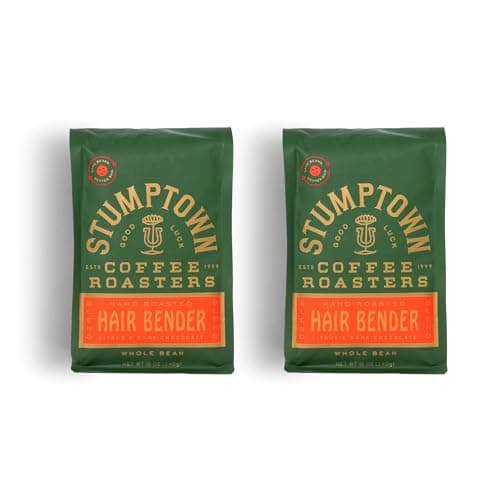
The best whole bean coffee for most people is Stumptown Hair Bender — a medium roast from a specialty roaster that works as espresso and as pour-over, which almost no single bag manages. It is for anyone trading up from supermarket blends and wanting to taste the difference immediately. The budget pick is Amazon Fresh Just Bright, the cheapest whole-bean bag here: it is the lowest-risk way to find out whether you like light roast, and it still beats any pre-ground tub because you are the one grinding it.
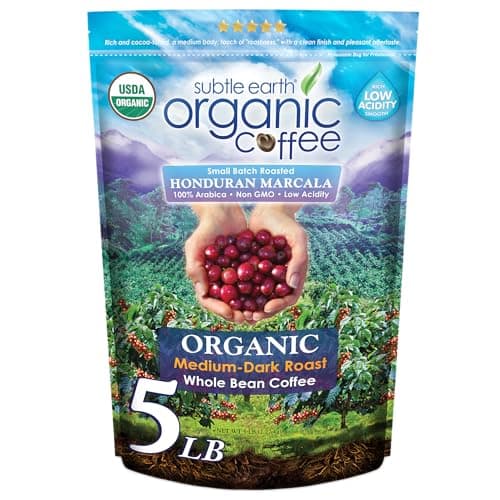
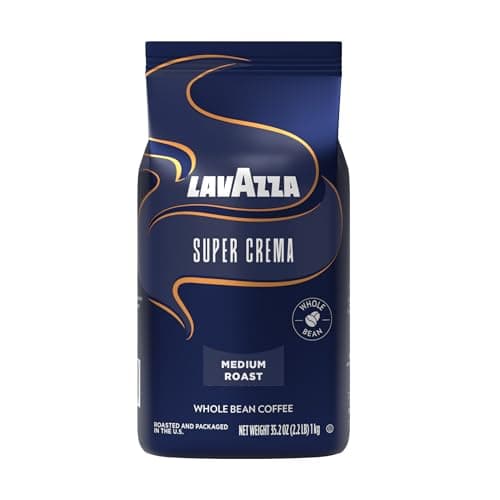
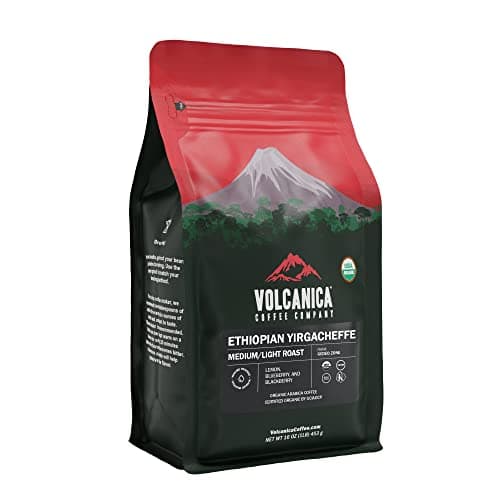
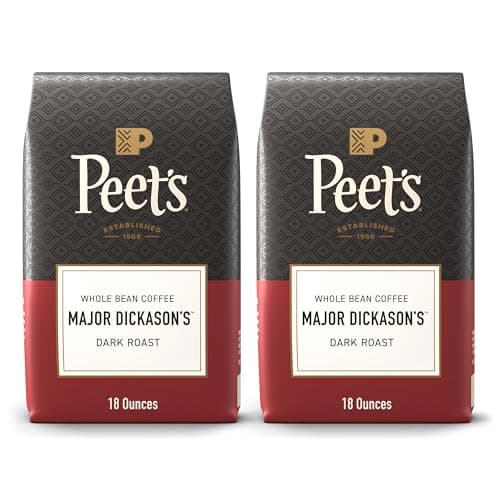
Everything else on this page exists because "best whole bean coffee" is really five questions wearing one coat. If you drink a lot of coffee and care about cost per pound, the answer is Subtle Earth Organic in the five-pound bag. If you pull espresso and are still learning, it is Lavazza Super Crema. If you brew pour-over and want the bag to taste like somewhere, it is Volcanica Ethiopian Yirgacheffe. And if lighter coffee has always tasted thin to you, it is Peet's Major Dickason's. The Quick Picks table below carries each bag's live price with the date of the last price check, so you can compare the ranking against what the bags actually cost today.
Why whole bean is the free upgrade
Ground coffee has roughly a hundred times more surface area exposed to air than the same coffee in bean form, and the aromatic compounds that make coffee taste like coffee are volatile — they leave. That is the whole mechanism, and it is why a mediocre bean ground this morning routinely beats a better bean ground three weeks ago in a factory. Whole bean vs ground walks through what actually changes in the cup, and how long coffee beans last covers the timelines.
The honest caveat: whole bean is only an upgrade if you own a grinder that produces an even grind. A blade grinder chops beans into a mix of powder and gravel, and the powder over-extracts while the gravel under-extracts in the same brew — bitter and sour at once. That is a real problem, not a snobbery problem, and burr vs blade explains the physics. If you do not have a burr grinder yet, start with the best coffee grinders for beginners and buy the beans second. In that order the money works; in the other order it does not.
How to read this ranking
We rank by what a bag is for, not by a single score, because "best" moves with the brewer. A bright Ethiopian is the best bag on this page in a V60 and one of the worst in a 9-bar espresso machine, where its acidity reads as sour. A dark Peet's is the reverse. So the picks are ordered by how many people each one suits, with the specialty all-rounder first and the specialists after it.
We also weight cost per pound rather than cost per bag, which changes the order more than you would expect. A 2.2 lb bag of Lavazza and a 12 oz specialty bag can carry similar sticker prices and differ by a factor of three per pound. The Quick Picks prices are per bag — check the weight in each pick's spec chips before deciding anything is expensive. Our best cheap coffee beans page runs the same field ranked purely on value per pound if that is your only criterion.
Who each pick is for
Stumptown Hair Bender is for the person upgrading from grocery-store coffee who wants one bag that does everything. Citrus brightness over dark chocolate, 100% Arabica, and versatile across espresso and filter — it costs more per ounce than the blends below it and that is the trade. Subtle Earth Organic is for a heavy-drinking household: certified organic, medium-dark, low acid, in a five-pound bag that gives one of the lowest costs-per-pound for organic whole bean on the site. Do not buy five pounds if you drink slowly — it will stale first.
Lavazza Super Crema is for your first espresso machine. The Robusta in the blend builds a thick, stable crema that forgives a grind that is not quite right, which is exactly what you need while dialing in. Volcanica Ethiopian Yirgacheffe is for pour-over and filter drinkers who want floral and citrus character; it is single-origin and USDA Organic, and it turns sour as espresso, which we would rather say than let you find out. Peet's Major Dickason's is for dark-roast drinkers and milk drinks — bold enough to still taste like coffee through steamed milk. And Amazon Fresh Just Bright is the budget pick: the cheapest whole bean here, with no origin and no roast date published, bought to answer one question cheaply.
The verdict
Buy the Hair Bender if you want the clearest single upgrade and will drink it within a few weeks. Buy Subtle Earth if volume and cost per pound matter more than nuance. Buy Super Crema if there is an espresso machine on your counter and you are still learning it. Buy the Yirgacheffe if you own a V60 or a Chemex and want the bag to have a personality. Buy Major Dickason's if bright coffee has never worked for you. And buy the Amazon Fresh bag if you are not sure yet — it costs less than a bag of pre-ground and teaches you more. The roast-level picture is in best medium roast coffee and best dark roast coffee, and the roaster-by-roaster view is in best coffee brands.
Bag size is the decision nobody makes deliberately
Whole beans keep their flavor for a few weeks after roasting, not a few months, so the right bag size is however much you will drink in two to three weeks. Two people brewing a daily pot of drip get through roughly a pound every ten days; one espresso drinker pulling two shots a morning uses about a pound every three weeks. Run that math before buying a five-pound bag because the price per pound looked good — a cheap bag you throw half of away is not cheap. If you do buy in bulk, split it: keep a week in a proper airtight container and leave the rest sealed in the original bag.
Roast date beats everything else on the label
A printed roast date is the single most useful thing on a bag of coffee, and most supermarket bags do not carry one — they carry a best-before date instead, which tells you when it stops being safe rather than when it stops being good. Specialty roasters print the roast date because it is a selling point. When you can see one, buy the most recent bag on the shelf; when you cannot, assume it has been sitting and treat the price accordingly. This is most of the real gap between the specialty picks and the grocery blends on this page, and it is why a cheaper bag bought fresher sometimes wins.
Storage: the part people get wrong after buying well
Air, heat, moisture and light all degrade coffee, in roughly that order of importance. The practical version: keep beans in an opaque, airtight container at room temperature, away from the stove, and do not store them in the fridge — the temperature cycling drives condensation into the beans every time you open the door. How to store coffee beans has the full routine, and can you freeze coffee beans covers the one case where the freezer genuinely helps (long-term storage of a sealed bag you are not opening). A good container costs less than two bags of the specialty coffee on this page and protects every bag after it.
Matching the bean to the brewer
The rough rule is that immersion and pressure brewing favor darker, heavier roasts, and filter brewing favors lighter, brighter ones. Espresso pushes hot water through a dense puck in under 30 seconds, which amplifies acidity — so a light Ethiopian tastes sour as a shot and lovely as a pour-over. A French press holds grounds in water for four minutes, which flatters body and mutes brightness. Our brewer-specific pages do this properly: best coffee beans for espresso, best coffee for pour-over, best beans for French press and best coffee for drip.
What whole bean does not fix
Grinding your own coffee will not rescue a brewer that runs too cool, a ratio that is wrong, or water that tastes of chlorine. If you have switched to whole bean and the cup is still disappointing, the next three things to check are dose (use a scale, not a scoop), water temperature, and coffee-to-water ratio. Those three cost nothing to fix and account for more bad coffee than bean choice ever does — why is my coffee weak and why is my coffee bitter are the two diagnostic pages worth reading before you blame the bag.