If drip coffee is what you brew and you want the best cup, buy the Fellow Ode Gen 2: Fellow states plainly that it is "designed for brewed coffee methods only, including AeroPress, pour over, electric coffee makers, French press, and cold brew," and its 64 mm flat burrs produce a more even filter grind than any conical grinder near its price. For most households the sensible answer is the Baratza Encore— the filter workhorse that has been the default first burr grinder for over a decade, and a machine you repair rather than replace. The OXO Brew Conical is the cheapest electric we would put next to a drip machine, and the Breville Smart Grinder Pro is the one to buy if you want a timed dose at the press of a button and might pull espresso later.
Here is why this is a real question and not a shopping list. A drip machine has no pressure and no agitation to fall back on. The National Coffee Association's own drip guidance puts contact time at "5 minutes, approximately, of contact between coffee and water" — five minutes of hot water sitting on a flat bed of grounds, finding the path of least resistance. Everything about how that extraction goes is decided by the bed, and the bed is decided by your grinder. Espresso hides a mediocre grind behind nine bar of pressure. Drip hides nothing.
What grind size a drip machine wants
The NCA's instruction for automatic drip is to "start with a medium grind," which it describes as "Medium (like kosher salt)", and adjust from there if the cup tastes off. That is coarser than espresso and finer than a French press. Our coffee grind size chart has the reference textures for every brewer side by side.
Your basket shape shifts that target slightly, and the NCA spells out why. Flat-bottom baskets: "Water flows through more quickly, which can result in a smoother, milder flavor." Cone baskets: the cone "concentrates the water flow over a smaller surface area, slowing it down." Faster flow wants slightly finer grounds to hold the water up; a cone that already slows the water can go a touch coarser before it over-extracts. This is also why the same bag of coffee tastes different in two drip machines you think are identical.
Why a burr grinder, and not a $20 blade
The NCA is unusually direct about this. Burr grinders "do a better job of creating a consistent grind," and of blade grinders it says: "You can't ensure a consistent grind, which impacts taste." The mechanism matters because it explains a taste problem most people misdiagnose as bad coffee. A blade chops rather than mills, so it produces dust and boulders at the same time. Over five minutes of drip contact, the dust over-extracts into bitterness while the boulders barely give anything up — so the pot tastes simultaneously harsh and weak, and no amount of adding more scoops fixes it. Burr vs blade is the full argument, and it is why every pick here is a burr grinder.
The picks
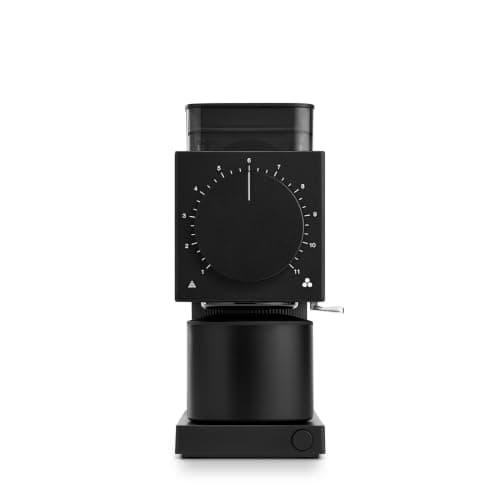
1. Fellow Ode Gen 2 — the best cup.Fellow lists 64 mm stainless steel flat burrs, "11 settings with 31 total steps" and a 100 g single-dose capacity, and it names electric coffee makers among the methods the grinder is built for. Flat burrs cut a tighter particle distribution than the conical burrs in entry grinders, which on a flat drip bed means fewer fines to clog the bottom and fewer boulders to sit there contributing nothing. Near-zero retention means the 30 g you weigh in is the 30 g you brew, with no stale carry-over from yesterday. The honest cons: Fellow states outright that "Ode is not intended for espresso," so this is a one-job grinder, it is the most expensive pick here, and single-dose loading is a little slower each morning than tipping beans into a hopper. Our Fellow Ode Gen 2 review goes deeper, and Ode vs Encore is the head-to-head.
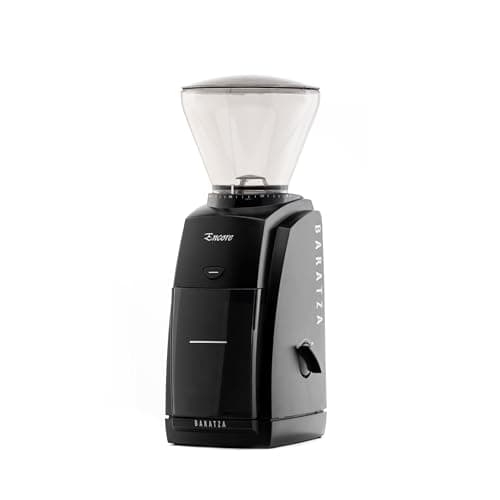
2. Baratza Encore — the one most people should buy.Retail listings of Baratza's own specification give 40 stepped grind settings, 40 mm conical stainless burrs and roughly 450 RPM, with burrs that come out without tools. In the drip range those 40 steps give you enough resolution to move in small increments instead of jumping over your target, and the real argument is lifespan: Baratza built its reputation on selling parts, so this is a grinder you rebuild rather than bin. The cons are honest ones. The plain Encore is a filter grinder — the fine end of its range exists but it is not the machine to buy if espresso is coming, which is what the Encore ESPis for — and the plastic body feels its price. See the Baratza Encore review and Encore vs Encore ESP.
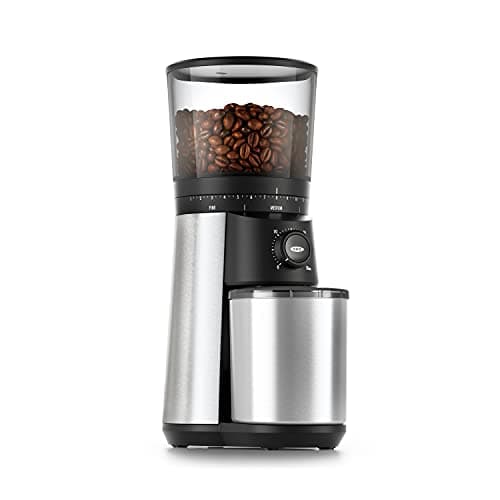
3. OXO Brew Conical Burr — the cheapest sensible electric. Fifteen settings plus a micro-adjust, a built-in timer for repeatable dosing and a 12 oz hopper, as listed. For a drip drinker this is the single highest-value upgrade on the page, because it is the point where you stop grinding with blades: the step from a blade grinder to this is far larger than the step from this to the Fellow. Two real limitations: it is an appliance rather than a repairable platform, and it does not grind finely or evenly enough for espresso, which OXO does not pretend otherwise. Drip is squarely its sweet spot. Full review here.
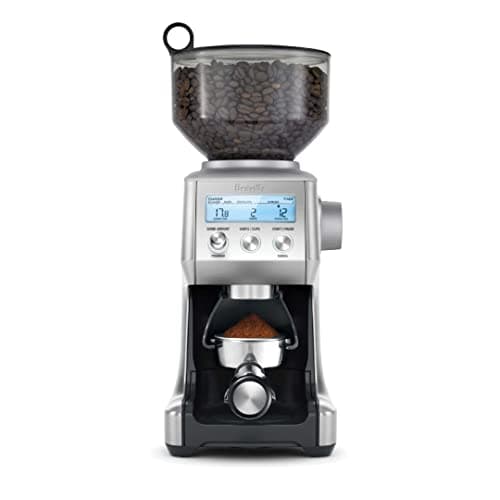
4. Breville Smart Grinder Pro — the best dosing workflow.Breville lists "60 unique settings," stainless steel conical burrs, grind time programmable "in 0.2 second increments," and the ability to grind straight into a portafilter, an airtight container, a gold-tone filter basket or a paper filter. That last detail is the one drip drinkers underrate: grinding directly into the basket or filter, dosed by a timer you set once, removes a container and a transfer from every morning. The cons: stepped adjustment is slightly coarser-grained than stepless espresso grinders, and it is not built to be rebuilt the way a Baratza is. See the Smart Grinder Pro review and Encore vs Smart Grinder Pro.
The one-line answer by situation
Best drip cup, money no object: Fellow Ode Gen 2. One grinder for a filter household, for a decade: Baratza Encore. Cheapest real upgrade from pre-ground: OXO Brew Conical. Timed dosing, and espresso might happen: Breville Smart Grinder Pro. For the wider field see best burr grinders and best grinders under $100; if you also brew by hand, the pour-over and French press pages cover those windows.
Dialing in a drip machine, in order
Set the grinder to medium — kosher-salt texture — and start from the NCA's Golden Ratio: "1 to 2 tablespoons of ground coffee for every 6 ounces of water." Weigh it if you have a scale; our budget scale roundup covers the cheap ones that are good enough, and coffee-to-water ratio converts the ratio into grams. Brew, taste, then change one thing.
Bitter, harsh, drying: you are over-extracting — go coarser. Thin, sour, watery:you are under-extracting — go finer, or add coffee. The reason to move the grind rather than the dose first is that grind changes extraction speed, which is the actual variable; why is my coffee bitter and why is my coffee weak walk through each direction. If the bed looks dry and channeled when you lift the lid, that is usually too fine plus a fast-flowing flat basket.
Your filter changes the target too
The NCA notes that paper filters "absorb more of the oils in coffee, which can contribute to a cleaner, lighter taste," while metal filters "allow more oil and sediments to flow into the brewed coffee." A permanent metal filter therefore passes more fines into the pot, which is where that muddy, slightly gritty cup comes from on a grind that tastes clean through paper. If you brew through metal, lean a notch coarser than you would with paper — or switch to paper and keep the grind.
Hopper or single dose, for a daily pot
A hopper is more convenient for a full carafe: fill it once, grind a dose a day, done. The cost is that beans sit in the hopper losing freshness, and that most hopper grinders retain grounds between uses. Single-dosing — weighing exactly what you are about to brew, which is how the Fellow Ode is designed to work — gives you the freshest possible grind and zero carry-over, at the price of a weighing step every morning. For a one-pot household either is fine. For a household that brews twice a day with different beans, single-dosing wins.
Can you hand grind for drip?
Yes, but be realistic about the dose. A drip pot is 30 to 60 g of coffee rather than the 18 g of an espresso shot, so a crank that takes 40 seconds for espresso becomes a genuine arm workout at carafe scale — which is why a hand grinder makes much more sense for an AeroPress or a moka pot than for a 10-cup machine. If it is a budget decision rather than a counter-space one, compare the live price of the OXO above against a good hand grinder before you commit to cranking. Hand grinder vs electric covers where the trade flips, and hand grinders has the field.
Do you need 40 or 60 settings?
Not for drip alone. The whole drip window sits inside a few steps of any of these grinders, and more settings mainly buy you resolution at the fine end, which is an espresso concern. What you do want is repeatability: numbered, detented settings you can return to exactly, so that when a new bag of beans needs a slightly different grind you can move one step and move back. Stepless dials look premium and are harder to return to on a brewer this forgiving.
Keep it clean, or your setting drifts
Coffee oils build up on burrs and old grounds sit in the chute, and both change what a given setting actually produces — which is why a grinder that was dialed in last month tastes wrong today. Brush the burrs out regularly and do a proper clean every few months; how to clean a coffee grinder has the routine. The machine needs the same attention: scale inside a drip brewer drops brew temperature, which under-extracts no matter how good your grind is. See how to clean a coffee maker.
What not to spend money on
You do not need an espresso grinder for drip coffee. What espresso grinders cost money for is fine, repeatable adjustment at the very fine end and the burr geometry to support it — a drip machine never visits that range. If filter is all you brew, cap the grinder budget and put the difference into fresher beans, which will change your cup more: see best coffee for drip and best coffee brands. The one exception is a grind-and-brew machine with a sealed burr: convenient, but you are buying a mediocre grinder you cannot replace, bolted to a brewer — see grind-and-brew machines for when that trade makes sense.