Skip to content
Bean & Burr

HUB 02 · Coffee Makers

AeroPress Alternatives

The AeroPress is excellent at one thing and poor at three others. Here is what it is genuinely good at, then six brewers sorted by whichever of its limits sent you looking.

By Stephen V.Updated How we research
#ad

We earn a commission when you buy through our Amazon links, at no extra cost to you. It never affects our rankings, and we say so when the cheaper product is the better buy. How this works.

The best AeroPress alternative is the Hario Switch — it is for the AeroPress owner who liked the immersion brew and the clean cup but wants both without plunging, and with a brewer that scales past two cups. The budget pick is the Hario V60 Dripper (02), the cheapest brewer here and the one that keeps the paper-filtered clarity while abandoning the press entirely. Prices come from the live price layer (as of November 22, 2026).

Start with what the AeroPress genuinely does well, because it is a lot and the alternatives have to be judged against it. It combines full immersion with hand pressure through a paper micro-filter, which gives you a clean, low-bitterness cup in about two minutes. It is the most forgiving brewer in common use — grind, dose and temperature can all be meaningfully off and the result is still drinkable. Cleanup is ten seconds: eject the puck, rinse. It is nearly unbreakable, it weighs nothing, and it costs less than most of what people replace it with. Our AeroPress roundup covers the model range in full.

People leave it for four reasons, and which one applies decides your answer entirely.

Reason 1: you want more than one or two cups

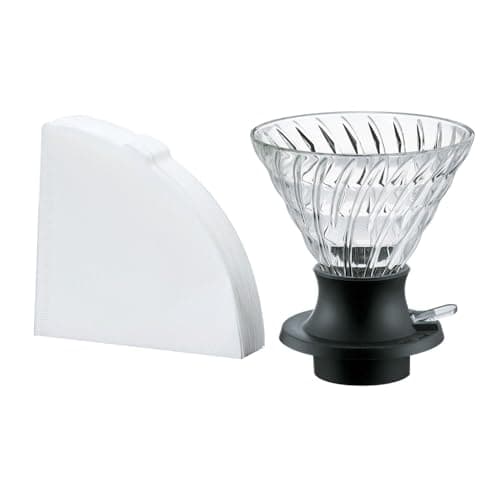
This is the most common complaint and the AeroPress cannot fix it. The chamber holds one to three small cups and the brew is concentrated, so serving two people a full mug each means brewing twice or diluting heavily. Note that the simplest answer may be staying in the family: the AeroPress XL doubles the chamber. If you would rather change brewer, the Hario Switch is the closest thing in spirit — a V60 cone with a ball valve in the base, so it does immersion and percolation from one device. Steep like a press, flick the switch, and it drains through a paper V60 filter into the cup. You get the AeroPress's immersion consistency and its clean paper-filtered body, with no plunge and a larger batch. Honest cons: it is glass and silicone rather than indestructible plastic, and it needs V60 filters. Our Hario Switch review has the detail.

Reason 2: you are tired of the plunge, or of standing there

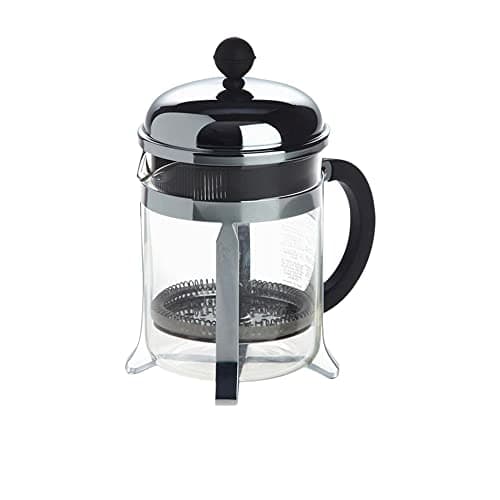
Pressing an AeroPress takes real hand strength if your grind is on the fine side, and it is genuinely awkward for anyone with wrist or grip problems. The Bodum Chambord French Press is the answer: coarse grounds, hot water, four minutes, one gentle press of a mesh plunger that meets almost no resistance. It asks less of you than any brewer on this page and it makes a heavier, oilier, rounder cup because the metal mesh lets the oils through. Honest cons: sediment in the last sip, and glass that breaks if you knock it off a counter — though replacement beakers are on every shelf. AeroPress vs French press is the direct comparison if this is your reason.

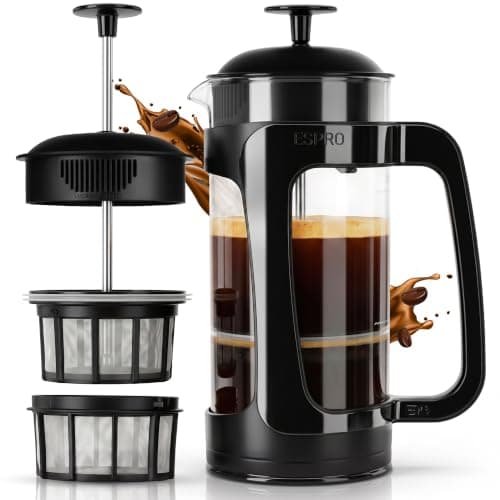
If the sediment is what has always put you off a press, the ESPRO P3 is the version that fixes it: a double micro-filter that catches far more of the fines a standard mesh lets through, so there is no gritty last sip. It is the press for someone who wants AeroPress-level clarity without paper. Honest cons: the double filter is more to rinse out, and it is still glass.

Reason 3: you wanted espresso and the AeroPress is not that

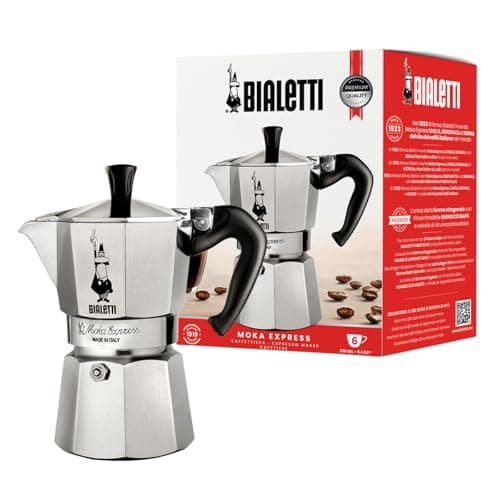
The AeroPress builds a few bars of pressure by hand; espresso is defined by roughly nine. If you bought one hoping for a shot, nothing about the AeroPress will get you there and this is the honest fork in the road. The Bialetti Moka Express is the cheap answer: it brews at roughly one to two bar on a stovetop and produces a genuinely rich, concentrated coffee that satisfies most of what people want from espresso at home, for very little money. Honest cons: no true crema, a bolder and more bitter profile, and the aluminum body is not induction-compatible.

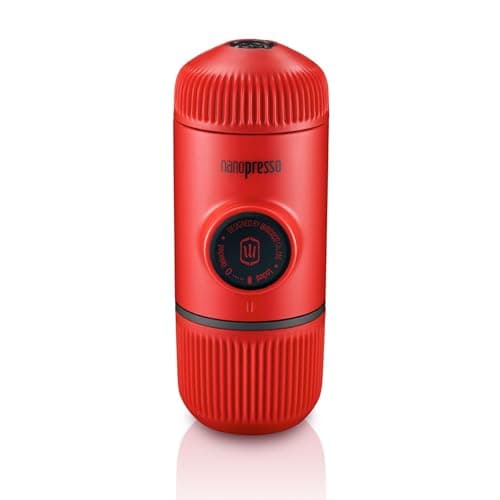
If you want actual pressure, the WACACO Nanopresso is the one brewer here that delivers it: WACACO rates it at 18 bar, hand-pumped, with no battery and no power of any kind, and it makes a legitimate crema-topped shot from ground coffee. Honest cons: small capacity and hand pumping make it a single-shot device, and consistency depends entirely on your grind and technique because it flatters nothing. Our Nanopresso review covers the workflow, and moka pot vs espresso machine sets expectations for the cheaper route.

Reason 4: you are done buying paper filters

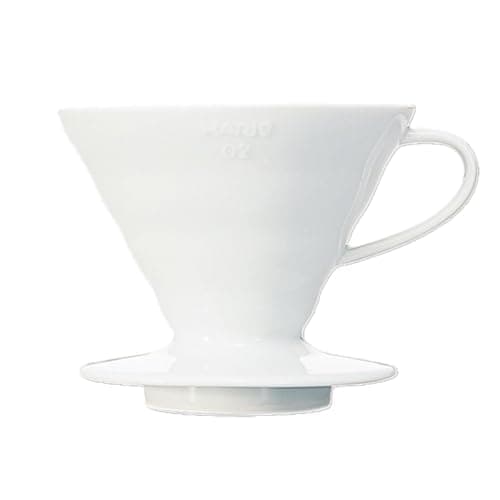
The AeroPress needs a paper micro-filter per brew. It is a small cost that you notice mainly when you run out. The French press and the ESPRO solve it with permanent metal filtration. The Hario V60 Dripper (02) does not — it is the budget pick for a different reason: it is the cheapest brewer here, and it keeps the thing the AeroPress is loved for, which is a clean paper-filtered cup, while giving you far more control over the brew. Honest cons: it genuinely wants a gooseneck kettle and a consistent grind, and it is unforgiving in a way the AeroPress never is — a sloppy pour gives a sour, thin cup. This is a step up in involvement, not a step sideways. Our V60 review is the detail, and how to make pour over coffee is the technique.

The verdict

Same cup, no plunge, bigger batch: Hario Switch. Least effort and a heavier body: Bodum Chambord. A press with no grit: ESPRO P3. Espresso-style strength, cheaply: Bialetti Moka Express. Actual pressure and real crema: WACACO Nanopresso. The cheapest clean cup, if you will learn to pour: Hario V60. And if your only complaint is volume, keep the AeroPress and buy the XL — nothing on this page is better at what the AeroPress is good at.

The short answer

Quick picks

#ProductBest forScorePrice
01
Hario Hario Switch Immersion Dripper (03)
Hario Switch Immersion Dripper (03)

A V60 with a valve — so it does both immersion and pour-over from one device. Clever.

People who can't decide between press and pour-over
8.0
$34.25Amazon
02
Bodum Bodum Chambord French Press (17oz)
Bodum Chambord French Press (17oz)

The French press. The one everyone pictures, and still the one to buy.

The default French press
7.4
$29.99Amazon
03
ESPRO ESPRO P3 French Press
ESPRO P3 French Press

A French press with a double micro-filter — the fix for the gritty last sip.

French press body without the sediment
7.4
$29.90Amazon
04
Bialetti Bialetti Moka Express (6-Cup)
Bialetti Moka Express (6-Cup)

The stovetop icon. Not true espresso, but a rich, strong shot for the price of lunch.

Strong stovetop coffee on any budget
7.0
$48.00Amazon
05
WACACO WACACO Nanopresso
WACACO Nanopresso

The pocket espresso maker. Not machine-grade, but a real shot anywhere you can heat water.

Backpacks, offices, and hotel rooms
5.6
$51.92Amazon
06
Hario Hario V60 Dripper (02)
Hario V60 Dripper (02)

The world's default pour-over cone. Cheap, brilliant, and endlessly rewarding to learn.

The classic pour-over starting point
8.2
$25.00Amazon

#ad · Live prices from the Amazon Product API, as of November 22, 2026. Where we have no verified live price, we show none — we would rather leave a gap than print a number that has rotted.

In detail

The picks, in full

01
Hario Hario Switch Immersion Dripper (03)

People who can't decide between press and pour-over

Hario Switch Immersion Dripper (03)

Immersion + percolationBall-valve baseV60 filtersSwitch to release
8.0/10

A V60 with a valve — so it does both immersion and pour-over from one device. Clever.

Brew quality
9
Ease of use
6
Build quality
9
Versatility
8
Value
8

Pros

  • The valve lets you steep like a French press then drain through a paper filter — you get body AND a clean cup
  • Far more forgiving than an open V60 because the steep does the work, not your pour technique
  • Uses standard V60 filters, so no proprietary-consumable lock-in

Cons

  • More expensive than a plain V60, and the valve is one more part to keep clean
  • It's a jack-of-two-trades — a dedicated press or a dedicated V60 each edge it at their own job

Don't buy this if…

…you already know you're a pour-over person or a press person. The Switch's whole value is flexibility — if you don't need both, the single-purpose tool is cheaper and slightly better.

$34.25View on Amazon

$50.0032% off

Price as of November 22, 2026. Prices change — Amazon's is the one that counts.

#ad · we may earn a commission from this link to Hario Switch Immersion Dripper (03)

02
Bodum Bodum Chambord French Press (17oz)

The default French press

Bodum Chambord French Press (17oz)

17 ozBorosilicate glassStainless frameMade in Portugal
7.4/10

The French press. The one everyone pictures, and still the one to buy.

Brew quality
8
Ease of use
8
Build quality
8
Versatility
6
Value
7

Pros

  • Full-immersion brewing with a metal filter gives you the heavy, full body that paper filters strip out
  • The classic design is classic for a reason — replacement parts and glass are cheap and everywhere
  • No paper filters to buy, ever — the running cost is zero

Cons

  • The metal mesh lets fine sediment through, so the last sip has grit
  • Glass carafe — it will eventually meet a hard floor
  • At 17 oz it is a two-mug pot — brewing for a table means going again, and it costs more than the 34 oz Bean

Don't buy this if…

…you hate any sediment in your cup or you're clumsy near a tile floor. A grit-reducing Espro or a paper-filtered pour-over is the cleaner-cup answer.

$29.99View on Amazon

$49.5039% off

Price as of November 22, 2026. Prices change — Amazon's is the one that counts.

#ad · we may earn a commission from this link to Bodum Chambord French Press (17oz)

03
ESPRO ESPRO P3 French Press

French press body without the sediment

ESPRO P3 French Press

Double micro-filterBorosilicate glass32 ozGrit-free brew
7.4/10

A French press with a double micro-filter — the fix for the gritty last sip.

Brew quality
8
Ease of use
7
Build quality
8
Versatility
6
Value
8

Pros

  • The patented double filter catches far more fines than a standard mesh, so the cup is clean to the bottom
  • The filter also stops the brew when you plunge, reducing the over-extraction that makes press coffee bitter as it sits
  • Same full-immersion body as any press, minus the trademark grit

Cons

  • The double filter is more to rinse and clean than a plain mesh
  • Costs more than a basic Bodum for a difference only sediment-sensitive drinkers will prize

Don't buy this if…

…a little grit doesn't bother you. Then you're paying extra to solve a problem you don't have — the Bodum Chambord is the cheaper, simpler press.

$29.90View on Amazon

$39.9425% off

Price as of November 22, 2026. Prices change — Amazon's is the one that counts.

#ad · we may earn a commission from this link to ESPRO P3 French Press

04
Bialetti Bialetti Moka Express (6-Cup)

Strong stovetop coffee on any budget

Bialetti Moka Express (6-Cup)

AluminumStovetop6-cup (moka)No electricity
7.0/10

The stovetop icon. Not true espresso, but a rich, strong shot for the price of lunch.

Brew quality
7
Ease of use
5
Build quality
7
Versatility
6
Value
10

Pros

  • Makes a genuinely rich, concentrated coffee for a tiny price, with nothing to plug in
  • Nearly indestructible aluminum and a design unchanged since 1933 — parts and gaskets are everywhere
  • The ritual and the smell are half the appeal, and it's fun to learn

Cons

  • It brews around 1-2 bar, not the 9 of real espresso — no true crema, and the profile is bolder and more bitter
  • Aluminum isn't induction-compatible, and it needs care not to boil dry

Don't buy this if…

…you have an induction cooktop or you want actual espresso with crema. Get the stainless Induction Venus for the former, or an espresso machine for the latter.

$48.00View on Amazon

$59.9920% off

Price as of November 22, 2026. Prices change — Amazon's is the one that counts.

#ad · we may earn a commission from this link to Bialetti Moka Express (6-Cup)

05
WACACO WACACO Nanopresso

Backpacks, offices, and hotel rooms

WACACO Nanopresso

WACACO rates it 18 barHand-pumpedNo batteryFits in a bag
5.6/10

The pocket espresso maker. Not machine-grade, but a real shot anywhere you can heat water.

Shot quality
6
Steam & milk
2
Ease of use
6
Build quality
6
Value
8

Pros

  • Genuinely pocketable and needs no power — pump it by hand and it pushes a surprising amount of pressure
  • Cheap enough to be a second, travel-only setup rather than a compromise on your main one
  • Makes a legitimate crema-topped shot, which no other device this size does

Cons

  • Small capacity and hand-pumping mean it's a single-shot, one-at-a-time device
  • Consistency depends heavily on your grind and technique — it's forgiving of nothing

Don't buy this if…

…it's meant to be your kitchen espresso machine. It's a travel tool; at home a Stilosa or Bambino Plus will out-perform it every morning without the hand cramp.

$51.92View on Amazon

$64.9020% off

Price as of November 22, 2026. Prices change — Amazon's is the one that counts.

#ad · we may earn a commission from this link to WACACO Nanopresso

06
Hario Hario V60 Dripper (02)

The classic pour-over starting point

Hario V60 Dripper (02)

60° coneSpiral ribsSingle large holeCeramic
8.2/10

The world's default pour-over cone. Cheap, brilliant, and endlessly rewarding to learn.

Brew quality
9
Ease of use
6
Build quality
9
Versatility
7
Value
10

Pros

  • The cone shape and single big hole give you total control over flow and extraction — the reason it's the enthusiast default
  • Costs almost nothing and pairs with cheap filters
  • Produces a clean, bright, articulate cup that shows off good beans

Cons

  • The control is a double edge — a sloppy pour makes a mediocre cup, so it rewards a kettle and a bit of practice
  • You'll want a scale and ideally a gooseneck kettle to get the most from it

Don't buy this if…

…you want to walk away while it brews. Pour-over is hands-on for two to three minutes — if that's a chore, a French press or a drip machine is the set-and-forget option.

$25.00View on Amazon

$30.5018% off

Price as of November 22, 2026. Prices change — Amazon's is the one that counts.

#ad · we may earn a commission from this link to Hario V60 Dripper (02)

The thing you will miss is forgiveness

Every alternative here asks more of you than the AeroPress does, and it is worth knowing that before you switch. Immersion plus pressure through paper is an unusually tolerant combination: it mutes a stale bean, hides an uneven grind and shrugs off water that is too hot. A V60 does none of that — it reports every mistake faithfully. A moka pot punishes a grind that is too fine with a bitter, scorched cup. The Nanopresso needs an espresso-fine grind to do anything at all. If your grinder is a supermarket blade chopper, switching brewers will make your coffee worse, not better, and the real upgrade is a burr grinder under $100.

Paper versus metal is a flavor decision, not a convenience one

Paper adsorbs coffee oils and traps nearly all the fines, which is why AeroPress and V60 coffee tastes clean and light-bodied. Metal mesh passes both, which is why French press coffee tastes heavy and round, and why it has sediment. Neither is better; they are different drinks, and the choice should be deliberate. If you liked the AeroPress specifically because the cup was clean, a French press will feel like a downgrade no matter how convenient it is — go to the Switch or the V60 instead. The French press vs pour-over comparison lays the two styles side by side.

Grind size changes for every brewer on this page

AeroPress recipes run anywhere from fine to medium because the paper filter and the short contact time tolerate it. The alternatives are far narrower. A French press needs a coarse grind or it clogs the mesh and over-extracts; a V60 wants a medium grind and an even one; a moka pot wants something between fine and medium but never espresso-fine, which scorches it; the Nanopresso wants a true espresso grind. Switching brewer without switching grind setting is the single most common reason a new brewer disappoints on day one. The grind size chart has each target.

If you travel, think twice

The AeroPress's real moat is durability. It is a plastic cylinder that survives being packed badly, dropped on tile and left in a car. Every alternative here except the Nanopresso is glass, ceramic or aluminum, and the two Harios are the sort of thing you replace once a year if you live out of a bag. For travel specifically, the honest answer is to stay in the family — the travel brewer roundup explains why the AeroPress Go keeps winning that category.

Keep the AeroPress even if you buy something else

It is the cheapest brewer in this comparison and it does a job none of the others do: a fast, good, concentrated cup with no setup and no cleanup, which makes it permanently useful as the second brewer in a kitchen. Most people who buy a Switch or a press end up using both — the new one for the morning pot, the AeroPress for the afternoon cup they cannot be bothered to make properly.
How we picked

We do not run a testing lab

We compiled published manufacturer specifications, computed what each option costs to run where relevant, and cross-referenced aggregated owner reviews, then scored each product against a published rubric. The scores are judgments from documented research — they are not measurements we took, because we do not have a lab and we are not going to pretend we do. Where a number came from a manufacturer or a standard, we name it in Sources.

Questions

Frequently asked

What is the best AeroPress alternative?
The Hario Switch. It is the only brewer that keeps both of the AeroPress's defining properties — a full immersion steep and a clean paper-filtered cup — while removing the plunge and scaling past two cups. The Hario V60 is the cheapest alternative and keeps the clarity, at the cost of needing real pour technique.
Is a French press better than an AeroPress?
It is different. A press gives a heavier, oilier cup with sediment and no paper filters to buy, and it asks almost nothing of your technique. An AeroPress gives a cleaner, brighter cup in a third of the time, is far more forgiving of a bad grind, and cleans in ten seconds. Pick on which cup you want, not on which is "better".
Can anything replace an AeroPress for espresso?
The AeroPress never made espresso — it builds a few bars of pressure by hand against the nine that define a shot. If that was the goal, the WACACO Nanopresso is the honest upgrade: WACACO rates it at 18 bar and it produces a real crema-topped shot. A Bialetti Moka Express is the cheaper route to espresso-style intensity without true crema.
What is the best alternative for more than two cups?
The Hario Switch or a French press. Both scale to a proper batch; the Switch keeps the paper-filtered clarity, the press does not. If you are happy with the AeroPress cup and only want more of it, the AeroPress XL doubles the chamber and is the simplest fix.
Do any AeroPress alternatives avoid paper filters?
Yes — the Bodum Chambord and the ESPRO P3 both use permanent metal filtration, and the ESPRO's double micro-filter catches most of the fines that cause press-coffee sediment. A reusable metal filter for the AeroPress itself is also an option if the filters are your only complaint.

Keep reading

Receipts

Sources

We do not run a testing lab, and we do not pretend to. Where a measured number came from a manufacturer spec sheet or a published standard, we name it and link it. Where we could not verify something, we say so on the page rather than quietly leaving it out. Read our full method.