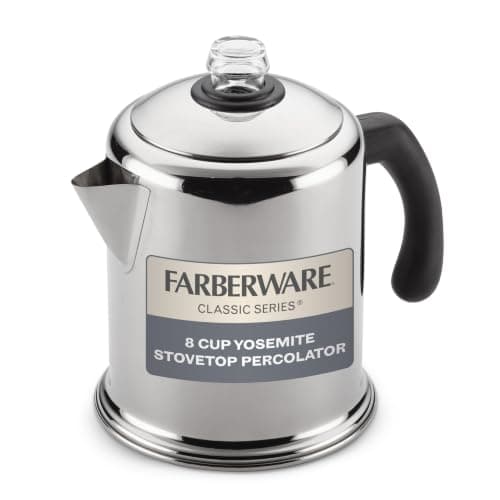
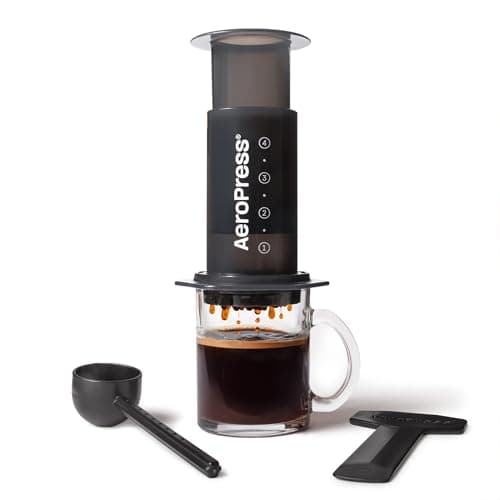
The best coffee maker under $50 is the AeroPress Original — it is for the one-or-two-cup drinker who wants the cleanest, least bitter cup available at any price in this band, in about two minutes, with a ten-second cleanup. The budget pick is the Farberware Classic Yosemite 8-Cup Stovetop Percolator, the cheapest brewer on the page and the one with nothing in it that can break. Every pick sat under $50 at the last price check (as of November 22, 2026) — trust the Quick Picks table over this sentence if a number has moved.
Here is the part that surprises people. The $50 line is not a compromise in this category — it is arguably the sweet spot. Under $50 there is no electric drip machine worth buying, so every pick here is manual, and manual brewing sidesteps the two things that actually ruin cheap coffee: a water temperature the machine cannot hold, and a glass carafe sitting on a hot plate quietly stewing the pot. A kettle and a $30 brewer will out-taste a $90 drip machine, reliably, which is the uncomfortable fact underneath the under-$100 band as well.
What you give up is automation. Nothing here has a timer, nothing brews while you are in the shower, and every pick needs hot water from somewhere else. If coffee waiting for you at 6 a.m. is non-negotiable, this is the wrong page and you should spend more.
The criteria: what we ranked on
1. The cup, first. At this price nothing has features worth weighing against flavor, so flavor decides the order.
2. How much it asks of you. A brewer that needs a gooseneck kettle, a scale and a technique is a different proposition from one you fill and walk away from. We say which is which rather than pretending they are equivalent.
3. What it costs to keep running. Paper filters are cheap but recurring; metal mesh is free forever. Over a year this is a bigger number than the gap between any two prices on this page.
4. Whether it survives a kitchen. Glass brewers break. That is not a dealbreaker, but it belongs in the price.
The picks, and who each one is for
AeroPress Original — the winner, and it is for one or two people who want the best-tasting cup in the band. Immersion plus hand pressure through a paper micro-filter gives a clean, low-bitterness cup in about two minutes, cleanup is ten seconds, and the body shrugs off drops that would destroy a glass brewer. It is also the most forgiving brewer here: grind, dose and temperature can all be some way off and the result is still good. Honest cons: one or two cups at a time, paper filters are a small recurring cost, and it makes a concentrated cup rather than a mug of drip unless you dilute it. Best AeroPress covers the model differences if you want the bigger XL or the travel kit.
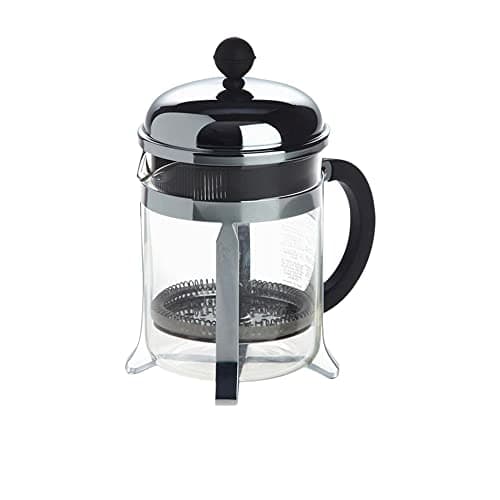
Bodum Chambord French Press (17 oz) — for the person who wants good coffee with no technique at all. Coarse grounds, hot water, four minutes, press. Because the mesh filters rather than paper, the oils stay in the cup, which is what gives press coffee its heavy, round body. Borosilicate glass, a stainless frame, and replacement beakers on every shelf for the day you knock it off the counter. Honest cons: the mesh lets fines through, so there is sediment in the last sip; and 17 oz is two small cups rather than a pot. If the grit bothers you, the ESPRO P3 solves it with a double micro-filter at the same money. Our Chambord review has the detail and how to use a French press is the method.
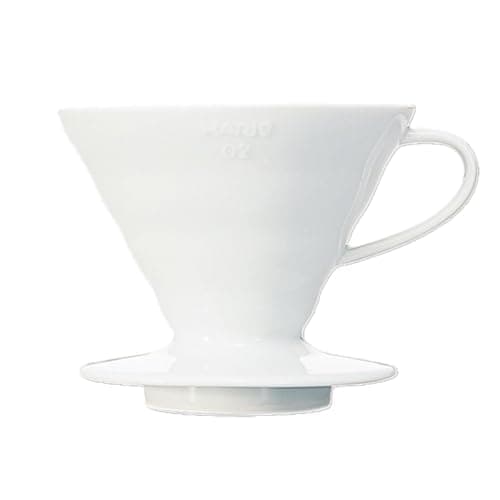
Hario V60 Dripper (02) — for the drinker who wants the brightest, cleanest cup and enjoys the ritual. A 60-degree cone, spiral ribs and a single large hole mean you control the brew entirely through your pour, which is both the appeal and the catch. At its best it is the most transparent coffee on this page by a distance. Honest cons: it genuinely wants a gooseneck kettle and a consistent grind, and it is unforgiving — a sloppy pour gives you a sour, thin cup and tells you nothing about why. How to make pour over coffee is the technique, and Chemex vs V60 is the comparison if you are brewing for more than one.
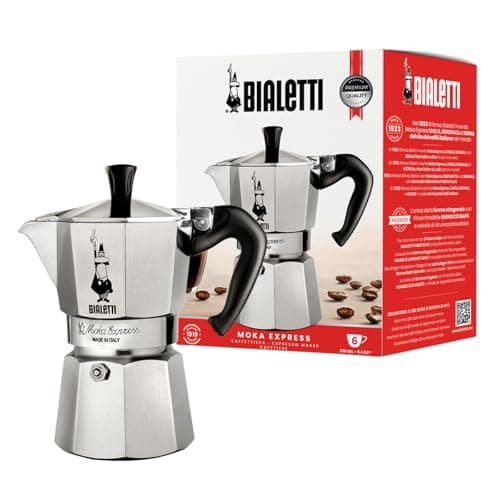
Bialetti Moka Express (6-Cup) — for the person who wants strong, concentrated coffee and does not want to plug anything in. Essentially unchanged since 1933, it makes a genuinely rich cup with gaskets available in every hardware store, and for a fraction of any espresso machine it delivers most of the intensity people actually want from one. Honest cons: it brews at roughly one to two bar rather than nine, so there is no true crema and the profile is bolder and more bitter than drip; and the aluminum body is not induction-compatible, so induction cooktops need the stainless Induction Venus instead. Moka pot vs espresso machine sets expectations properly.
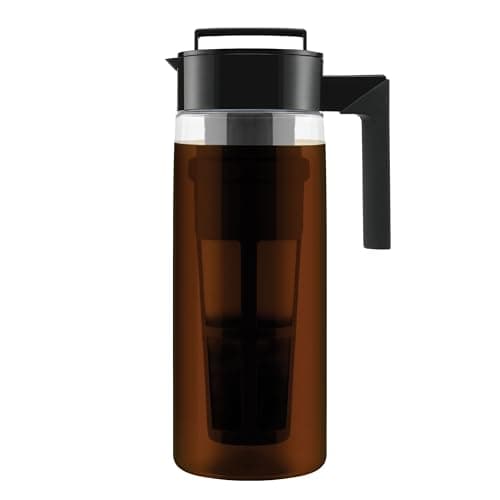
Takeya Deluxe Cold Brew Coffee Maker — for the iced-coffee drinker, and the only pick here that makes coffee you can keep for days. Brew, cap and pour from the same airtight two-quart bottle; the fine mesh filter means no paper and no mess, and the leakproof lid lets it sit on its side in a fridge door. Honest cons: cold brew takes twelve to twenty-four hours, so it is a planning brewer rather than a morning one, and it makes concentrate that you dilute, which catches first-timers out. How to make cold brew has the ratio, and the cold brew roundup ranks the rest of the category.
Farberware Classic Yosemite 8-Cup Stovetop Percolator — the budget pick, and the right answer for a cabin, a camp stove or a power cut. 18/10 stainless steel, a permanent filter basket, no electronics and no consumables: there is nothing in it that can fail. Eight cups also makes it the only pick here that serves a group. Honest cons: percolation cycles boiling water through the grounds repeatedly, so the cup is bolder and more bitter than drip and over-extracts easily if you walk away; and you need a coarse grind to keep it in check. Our percolator roundup ranks it against the electric options.
The verdict
Best cup, one or two people: AeroPress Original. Good coffee with no technique: Bodum Chambord. The brightest, most transparent cup: Hario V60. Strong and stovetop: Bialetti Moka Express. Iced coffee by the jug: Takeya Deluxe. Cheapest, toughest, serves a group: Farberware Yosemite. And if an automatic machine is the actual requirement, go straight to best coffee makers under $100 — but read what it says about the hot plate first.
Spend the next $40 on a grinder, not a better brewer
This is the highest-leverage decision on the page. Every brewer here is bottlenecked by grind consistency, and none of them can compensate for pre-ground supermarket coffee that has been sitting open for a month. A cheap hand mill plus the AeroPress makes better coffee than any $90 electric drip machine fed pre-ground, every morning, and it is not a close call. The hand grinder roundup starts well under the price of most picks here, and burr vs blade explains why the cheap electric chopper in the supermarket is not the same thing.
You need hot water, and the kettle you own is probably fine
Four of these six brewers need you to supply hot water. For the French press, the moka pot and the percolator any kettle works. The V60 is the one that genuinely benefits from a gooseneck spout, because the pour rate is the main variable you control — and that accessory often costs more than the dripper. The gooseneck kettle roundup has the options, and water temperature for coffee explains the target: just off the boil, not boiling.
Running costs, honestly compared
The AeroPress uses a paper micro-filter per brew; the V60 uses a paper cone filter. Both are cheap, but they are recurring, and the V60's 02-size filters are the kind of thing you run out of on a Sunday. The French press, the moka pot, the Takeya and the percolator have no consumables at all — permanent metal filtration, forever. Over a couple of years that is a real difference, and it is the strongest practical argument for the Chambord or the Yosemite if you brew twice a day.
Get the ratio right and everything on this page improves
The single most common fault in cheap-brewer coffee is too little coffee, not bad equipment. A starting point of about 1 gram of coffee to 16 grams of water fixes more complaints than any purchase: it is roughly 60 g of coffee per litre. Weak, watery coffee is almost always a dose problem, and bitter coffee is usually over-extraction from a grind that is too fine for the brewer. The coffee-to-water ratio page has the numbers per brewer, and why is my coffee weak walks the diagnosis.
What under $50 cannot buy
Three things, and it is worth naming them before you spend. It cannot buy automation— no timer, no wake-up pot, no walking away. It cannot buy a controlled brew temperature, because you are the temperature control. And it cannot buy volume with quality: the Yosemite serves eight cups, but a percolator's cup is a specific, bolder taste rather than a scaled-up version of the AeroPress's. If you need four good mugs at once on a schedule, drip coffee makers under $200 is the band where that becomes possible.