Skip to content
Bean & Burr

HUB 01 · Espresso Machines

Best Super-Automatic Espresso Machines Under $500

Under $500, every bean-to-cup machine grinds, doses, tamps and brews for you - and every single one makes you froth the milk yourself. Four picks, and the one feature the band cannot buy.

By Stephen V.Updated How we research
#ad

We earn a commission when you buy through our Amazon links, at no extra cost to you. It never affects our rankings, and we say so when the cheaper product is the better buy. How this works.

The best super-automatic espresso machine under $500 is the De'Longhi Magnifica Evo — it is for the household that wants one-touch coffee with a real drink menu and does not mind texturing milk by hand. The budget pick is the Philips 1200 Series (EP1220), the cheapest bean-to-cup machine worth owning and the one to buy if the only goal is fresh-ground espresso at the push of a button. Every pick sat under $500 at the last price check (as of November 22, 2026) — trust the Quick Picks table over this sentence if a number has moved.

Before the picks, the one thing that defines this band. A super-automatic grinds, doses, tamps, brews and ejects the puck for you — that is the deal, and all four machines here honour it. What none of them does under $500 is handle the milk. Every machine on this page has a manual frothing wand of some kind, which means you steam and pour the milk yourself. The one-touch latte machines that do the whole drink unattended start above this band, which is exactly what the under $1,000 page is about: under a grand, milk automation is the only real variable.

If you drink straight espresso or americanos, that limitation costs you nothing and this band is excellent value. If you drink lattes every morning and the appeal of a super-automatic was never touching a steam wand, read the last section before you buy anything here.

The criteria: what we ranked on

1. The grinder, because you cannot change it. In a bean-to-cup machine the grinder is welded into the purchase. Burr material and the number of settings decide how much of the bean you actually taste, and a ceramic or steel conical with a dozen-plus settings is the floor worth accepting.

2. How the milk system works. All four are manual here, but there is a real difference between a proper steam wand you can texture microfoam with and a panarello-style frother that aerates rather than textures.

3. Daily friction. A super-automatic is bought for convenience, so the things that erode it matter: how often you empty the puck drawer, how the drip tray comes out, whether the brew unit is removable and rinseable.

4. What the band genuinely cannot do. We say it plainly rather than implying more. No machine here does one-touch milk drinks, and none reaches the shot quality of a semi-automatic at the same price.

The picks, and who each one is for

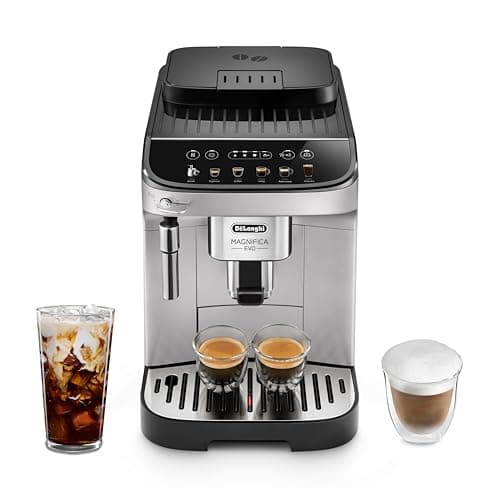
De'Longhi Magnifica Evo — the winner, and it is for the household that wants variety from one button. It is the updated Magnifica: steel burrs with thirteen settings, a wider one-touch drink menu than the Start, and a cleaner interface that makes the extra drinks actually discoverable rather than buried. De'Longhi effectively owns this category and the Magnifica platform is the reason. Honest cons: the milk is still a manual wand, so the one-touch drink menu stops at the point milk is involved; and at the top of the band you are close enough to the machines that do automate milk that it is worth checking the price gap before you commit. Our Magnifica review covers the platform, and the De'Longhi range puts it in order.

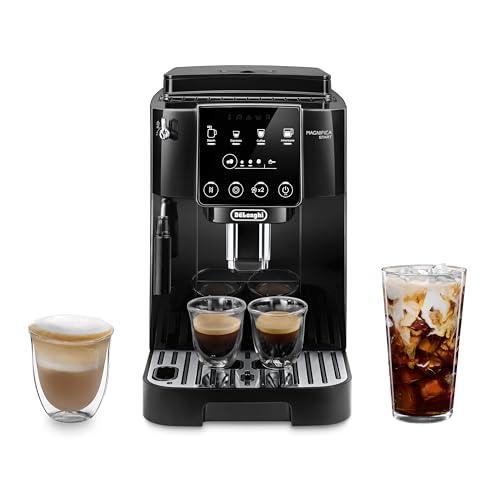
De'Longhi Magnifica Start — for the person who wants the simplest, most dependable way into bean-to-cup and nothing else. Conical burrs with thirteen settings, a manual milk frother wand, a compact width, and an interface with few enough buttons that nobody in the house needs instructions. It is the Evo with the variety removed and some money back, which for a two-drink household is the right trade. Honest cons: the drink menu is genuinely basic, and the manual wand is the same proposition as the Evo's — you are not buying your way out of steaming milk at this price.

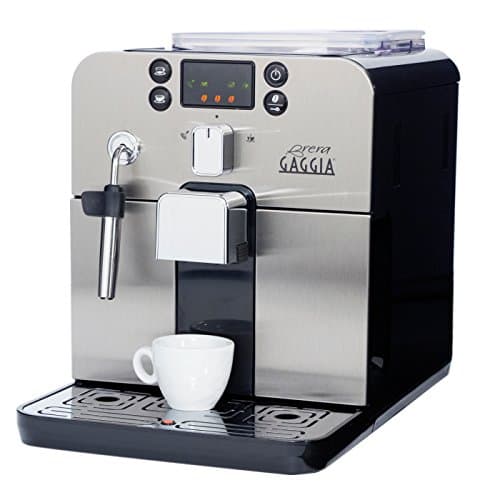
Gaggia Brera — for the small kitchen, and for the drinker who actively wants hands-on milk control. It is a compact super-automatic with ceramic burrs and a pannarello steam wand, which is a more capable milk tool than the simplest frothers here if you are willing to learn it. The footprint is the real selling point: it fits where the De'Longhis are awkward. Honest cons: a pannarello aerates milk more than it textures it, so latte-art-grade microfoam is not on the menu; and Gaggia's interface is dated next to the Magnifica Evo's. How to steam milk is the skill, and it is learnable in a weekend on any of these.

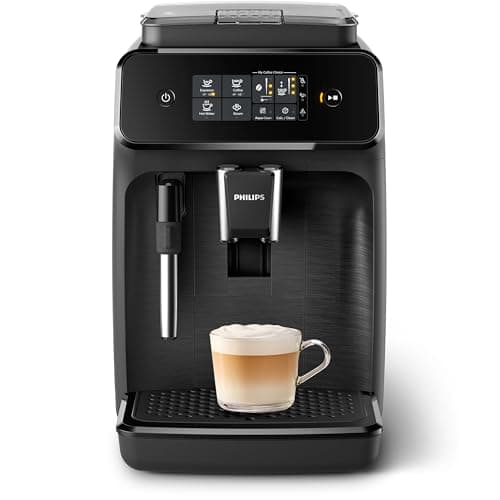
Philips 1200 Series (EP1220) — the budget pick, and the cheapest bean-to-cup machine on this site that we think is worth owning. A 100% ceramic grinder — ceramic burrs do not heat the coffee the way steel can and they wear slowly — a classic milk frother, and two drink presets. It does the core job, fresh-ground espresso at one button, for meaningfully less than everything else here. Honest cons: two presets is the whole menu, the frother is the most basic of the four, and the build is plainly the cheapest in the band. If the goal is espresso and americanos rather than a drinks list, this is the sensible buy and the rest is upsell. Our Philips 3200 review shows what the next tier up adds, and Philips 3200 vs Magnifica is the cross-brand comparison.

The verdict

Most drinks from one button: Magnifica Evo. Simplest and most dependable: Magnifica Start. Smallest footprint, most milk control: Gaggia Brera. Cheapest machine that still does the job properly: Philips 1200 Series. And if a latte at the push of one button was the whole reason you wanted a super-automatic, the honest answer is that this band cannot do it — super-automatics under $1,000 is where milk automation starts.

The short answer

Quick picks

#ProductBest forScorePrice
01
De'Longhi De'Longhi Magnifica Evo
De'Longhi Magnifica Evo

The updated Magnifica — bigger drink menu, cleaner interface — and a strong middle pick.

A refined mid-range De'Longhi
7.8
$499.95Amazon
02
De'Longhi De'Longhi Magnifica Start (ECAM22022B)
De'Longhi Magnifica Start (ECAM22022B)

The simplest, most reliable way into bean-to-cup, from the brand that owns the category.

Simple, dependable one-touch coffee
8.0
$449.95Amazon
03
Gaggia Gaggia Brera Super-Automatic
Gaggia Brera Super-Automatic

A compact super-automatic with a real steam wand — bean-to-cup convenience, hands-on milk.

Compact bean-to-cup with milk control
7.4
$499.00Amazon
04
Philips Philips 1200 Series (EP1220)
Philips 1200 Series (EP1220)

The cheapest real bean-to-cup machine worth owning. Fresh-ground espresso at one button.

The budget bean-to-cup entry
7.4
$328.99Amazon

#ad · Live prices from the Amazon Product API, as of November 22, 2026. Where we have no verified live price, we show none — we would rather leave a gap than print a number that has rotted.

In detail

The picks, in full

01
De'Longhi De'Longhi Magnifica Evo

A refined mid-range De'Longhi

De'Longhi Magnifica Evo

Bean-to-cupMilk frother wandSteel burrs, 13 settingsMultiple one-touch drinks
7.8/10

The updated Magnifica — bigger drink menu, cleaner interface — and a strong middle pick.

Shot quality
7
Steam & milk
7
Ease of use
9
Build quality
8
Value
8

Pros

  • More drink options and a cleaner soft-touch interface than the Start
  • The well-proven Magnifica brewing unit, which is the reason De'Longhi's automatics are so reliable
  • The frother steams milk for cappuccinos, and it comes in manual and automatic-frother configurations

Cons

  • Milk frothing on the base configuration is manual, so hands-on (and latte-art-free) milk
  • Costs more than the Start for mostly interface and menu gains rather than a better shot

Don't buy this if…

…budget is the priority and you're happy frothing by hand — the cheaper Magnifica Start pulls the same shots.

$499.95View on Amazon

$749.9533% off

Price as of November 22, 2026. Prices change — Amazon's is the one that counts.

#ad · we may earn a commission from this link to De'Longhi Magnifica Evo

02
De'Longhi De'Longhi Magnifica Start (ECAM22022B)

Simple, dependable one-touch coffee

De'Longhi Magnifica Start (ECAM22022B)

Bean-to-cupManual milk frother wandConical burrs, 13 settingsCompact width
8.0/10

The simplest, most reliable way into bean-to-cup, from the brand that owns the category.

Shot quality
7
Steam & milk
7
Ease of use
9
Build quality
8
Value
9

Pros

  • De'Longhi's automatic platform is the most widely owned and serviced in the US, so parts and help are everywhere
  • Genuinely simple controls — it makes espresso and coffee without a menu to learn
  • The steam wand froths milk with a little technique, so you keep some control, and the body is narrower than most bean-to-cup machines

Cons

  • The frother is manual, so you steam milk yourself — a plus for control, a minus if you wanted pure hands-off
  • Fewer preset drinks and no touch screen next to the Philips

Don't buy this if…

…you want milk drinks made entirely hands-off. The Start's wand is manual — for one-touch cappuccino, the Philips 3200 LatteGo is the fit.

$449.95View on Amazon

$599.9525% off

Price as of November 22, 2026. Prices change — Amazon's is the one that counts.

#ad · we may earn a commission from this link to De'Longhi Magnifica Start (ECAM22022B)

03
Gaggia Gaggia Brera Super-Automatic

Compact bean-to-cup with milk control

Gaggia Brera Super-Automatic

Super-automaticPannarello steam wandCeramic burrsCompact footprint
7.4/10

A compact super-automatic with a real steam wand — bean-to-cup convenience, hands-on milk.

Shot quality
7
Steam & milk
7
Ease of use
8
Build quality
7
Value
8

Pros

  • Genuinely small for a bean-to-cup machine, so it fits where the wide ones don't
  • A real steam wand lets you texture milk yourself, which the one-touch machines take away
  • Gaggia's espresso pedigree, front-loading maintenance, and easy access to the brew group

Cons

  • An older design with a smaller drink menu and no touch screen
  • The Pannarello wand aerates milk rather than making true microfoam

Don't buy this if…

…you want one-touch milk drinks. The Brera's wand is manual by design — the Philips 3200 LatteGo is the hands-off choice.

$499.00View on Amazon

Price as of November 22, 2026. Prices change — Amazon's is the one that counts.

#ad · we may earn a commission from this link to Gaggia Brera Super-Automatic

04
Philips Philips 1200 Series (EP1220)

The budget bean-to-cup entry

Philips 1200 Series (EP1220)

Bean-to-cupClassic milk frother100% ceramic grinder2 drink presets
7.4/10

The cheapest real bean-to-cup machine worth owning. Fresh-ground espresso at one button.

Shot quality
6
Steam & milk
6
Ease of use
9
Build quality
7
Value
9

Pros

  • The lowest price for a genuine grind-brew-froth automatic, so it undercuts every other machine here
  • Same 100% ceramic grinder as the pricier Philips models
  • Froths milk through a simple classic wand for cappuccinos

Cons

  • Only two presets and no touch screen — it makes espresso and coffee, not a menu of drinks
  • The classic frother aerates foam rather than making microfoam, and there's no iced mode

Don't buy this if…

…you want iced drinks, several milk drinks at a touch, or a display. This is the stripped-back entry — the 3200 LatteGo adds all of that.

$328.99View on Amazon

Price as of November 22, 2026. Prices change — Amazon's is the one that counts.

#ad · we may earn a commission from this link to Philips 1200 Series (EP1220)

The milk question decides this purchase, not the shot

Every machine in this band pulls a comparable shot: fresh-ground, correctly dosed, brewed at a sensible pressure, with no skill required. The differences between them in the cup are small. The difference in the milk is not, and it is the thing people regret. A manual wand means you heat and texture the milk yourself for every single drink — about forty seconds of work and a jug to wash. For an espresso drinker that is irrelevant. For a two-latte-a-morning household it is the entire experience, and the machine you wanted costs more than $500. Best espresso machine for lattes ranks the field on that axis specifically.

A super-automatic trades shot ceiling for consistency

This is the trade at the heart of the category and it is worth understanding before you spend. A super-automatic doses and tamps identically every time, which means it never makes a terrible shot — and it also means it never makes a great one, because you cannot adjust dose, tamp pressure or basket, and the brew group is built for reliability rather than extraction control. A semi-automatic at the same price has a far higher ceiling and a far lower floor: you can pull something genuinely excellent, and you can pull something undrinkable. If tinkering appeals, the semi-automatic roundup is the other road, and the pod comparison is the road below.

Maintenance is the hidden running cost

Super-automatics have more internal plumbing than any other kind of home espresso machine and they are strict about upkeep. Expect to empty a puck drawer every dozen-odd drinks, rinse the brew unit weekly, and descale on the schedule the machine asks for — it will ask. Skipping descaling is the single most common cause of a dead super-automatic, because scale blocks narrow internal passages that are not user-serviceable. Budget for descaler as a consumable, not a one-off. The descaling roundup covers the products, and how to clean an espresso machine is the routine.

You still choose the beans, and that is where the cup is won

The grinder is fixed, the dose is fixed and the pressure is fixed, which leaves beans as the one variable you fully control — so they matter more here than on a machine where you can adjust everything. Two practical notes. Avoid very oily dark roasts, because oils clog the chute and the hopper on a bean-to-cup machine faster than on a standalone grinder. And avoid flavored beans entirely for the same reason. A medium espresso roast is the safe lane; best coffee beans for espresso ranks them.

What under $500 does not buy

Four things, named plainly. It does not buy automatic milk— no carafe system, no one-touch cappuccino. It does not buy a heat exchanger or dual boiler, so brewing and steaming happen in sequence rather than simultaneously. It does not buy adjustable dose and tamp, which is the ceiling on shot quality. And it does not buy a repairable platform: these are sealed appliances, and a failure outside warranty is usually a replacement. If any of those four matters to you, spend more or buy a different category.
How we picked

We do not run a testing lab

We compiled published manufacturer specifications, computed what each option costs to run where relevant, and cross-referenced aggregated owner reviews, then scored each product against a published rubric. The scores are judgments from documented research — they are not measurements we took, because we do not have a lab and we are not going to pretend we do. Where a number came from a manufacturer or a standard, we name it in Sources.

Questions

Frequently asked

What is the best super-automatic espresso machine under $500?
The De'Longhi Magnifica Evo. It has the widest one-touch drink menu in the band, steel burrs with thirteen grind settings, and the cleanest interface of the four. The Philips 1200 Series is the cheapest machine here worth owning if you only want espresso and americanos.
Can you get a bean-to-cup machine that makes lattes automatically under $500?
No. Every super-automatic in this band has a manual frothing wand, so you heat and texture the milk yourself. One-touch milk drinks start above this band — that is essentially the only thing the extra money buys between $500 and $1,000.
Is a super-automatic better than a semi-automatic at this price?
It is more consistent and far less work; it is not better in the cup. A super-automatic never makes a bad shot and never makes a great one, because dose, tamp and basket are fixed. A semi-automatic at the same money has a much higher ceiling if you are willing to learn and to own a grinder.
Do cheap super-automatics break?
The common failure is scale, not wear. These machines have narrow internal passages that are not user-serviceable, and skipping the descaling cycle the machine asks for is the single most common cause of death. Treat descaler as a running cost and the machines in this band last well.
What beans should I use in a bean-to-cup machine?
A medium espresso roast, and specifically not a very oily dark roast or anything flavored — oils and flavoring clog the hopper and grinder chute on a bean-to-cup machine much faster than on a standalone grinder. Beans are the one variable you fully control here, so they matter more than usual.

Keep reading

Receipts

Sources

We do not run a testing lab, and we do not pretend to. Where a measured number came from a manufacturer spec sheet or a published standard, we name it and link it. Where we could not verify something, we say so on the page rather than quietly leaving it out. Read our full method.