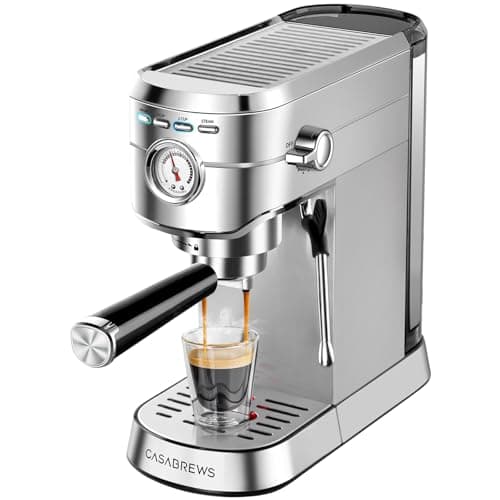
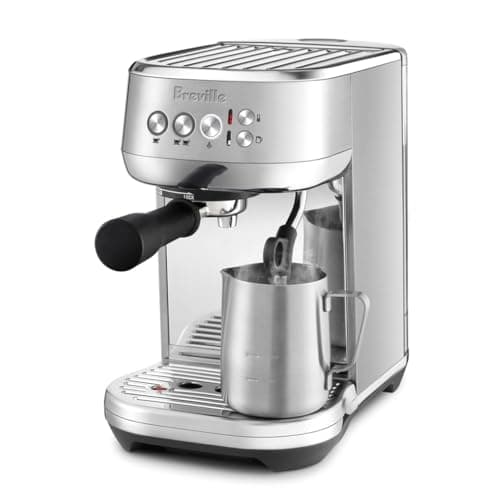
The best Gaggia Classic Pro alternative is the Breville Bambino Plus — it costs about the same, heats in seconds instead of minutes, and textures milk for you, which is the part of espresso that defeats most people in their first month. The budget pick is the CASABREWS CM5418: a fraction of the money, with clearly stated compromises. And if what you actually want is the Gaggia's commercial-parts philosophy taken further, the Rancilio Silvia is the machine the Classic Pro is a cheaper version of.
First, what the Gaggia Classic Evo Pro is genuinely good at, because an alternatives page that opens by running down the original is not worth reading. The Classic Pro earned its reputation on three things. It has a 58 mm commercial portafilter — the same size professional machines use, which means every basket, tamper, puck screen and bottomless portafilter in the world fits it and every skill you learn transfers upward. It has a metal body and a real steam wand, so you learn to texture milk by hand rather than pressing a button. And it sits on top of the deepest modification community in home espresso: PID kits, OPV adjustments, flow-control devices, replacement wands. Nothing else at the price has that ecosystem. Our Gaggia Classic Pro review is the case for buying one.
People look for an alternative for four reasons, and they point at different machines.
Reason one: it is a learner's machine, and you did not sign up for a hobby
This is the big one. The Classic Pro has no grinder, no dose guidance, no automatic milk, no shot timer and a single boiler with a temperature-stability quirk the community has spent years documenting workarounds for. It rewards a good grinder and good technique and it punishes neither gently. For a lot of buyers that is the appeal. For a lot of others it is three weeks of sour shots followed by a machine on a shelf. If you want espresso rather than a project, the Bambino Plus automates the two hardest variables — temperature and milk — and the Barista Express adds a grinder so the dose is in the same box as the machine.
Reason two: the total cost, not the machine price
A Classic Pro is only half a purchase. It has no grinder, and it is specifically a machine that needs a good one — its unpressurized baskets reward precise grinding and expose imprecise grinding mercilessly. Realistically you are adding a grinder at somewhere north of $150, which puts the real entry cost well past the sticker. The Barista Express bundles a conical burr grinder into one purchase for less than Gaggia-plus-grinder usually comes to, and at the other end the CASABREWS and the Dedica leave enough budget for a real grinder with money left over. Our best espresso grinder under $200 page is the shortlist for whichever machine you land on.
Reason three: you want more machine, not a different one
The Classic Pro is a commercially-minded single boiler at a domestic price, and the obvious question is what the next rung looks like. It is the Rancilio Silvia: a heavier build with far more thermal mass, so it holds temperature more steadily across back-to-back shots, and a steam wand that most people consider the best in home espresso. It is also substantially more money and no easier to use. We have the direct comparison in Gaggia Classic Pro vs Rancilio Silvia.
Reason four: counter space, or a tighter budget
The Classic Pro is compact but not slim, and it is not cheap. If the constraint is width, the De'Longhi Dedica is barely wider than a cereal box. If the constraint is money, the Breville Bambino is the Bambino Plus with manual steam at a lower price, and the CASABREWS CM5418 is the cheapest machine on this page by a wide margin.
What each alternative matches it on
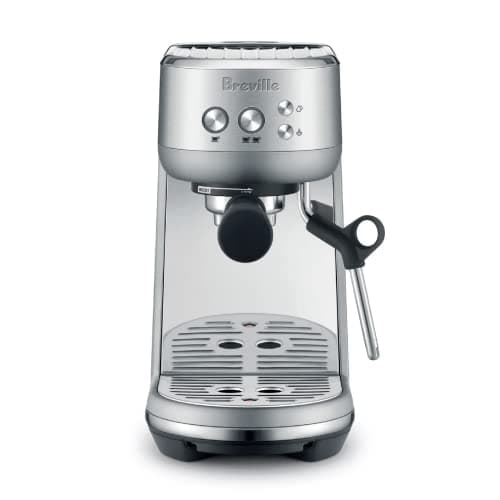
Breville Bambino Plus — matches on price, beats it on everything about the daily experience. Breville rates its ThermoJet heater at a 3-second heat-up, so it is ready before a kettle boils rather than after the several minutes a Gaggia wants, and the automatic milk-texturing wand hits a set temperature and foam level without you learning to steam. For most people buying a first real machine, this is simply the better purchase. Honest cons: it uses a 54 mm portafilter rather than the commercial 58 mm, so the accessory world is smaller and skills transfer less cleanly; and it is a light plastic-bodied machine with nothing like the Gaggia's modding community, so what you see is what you keep. Full detail in our Bambino Plus review, and Bambino Plus vs Gaggia Classic Pro is the head-to-head.
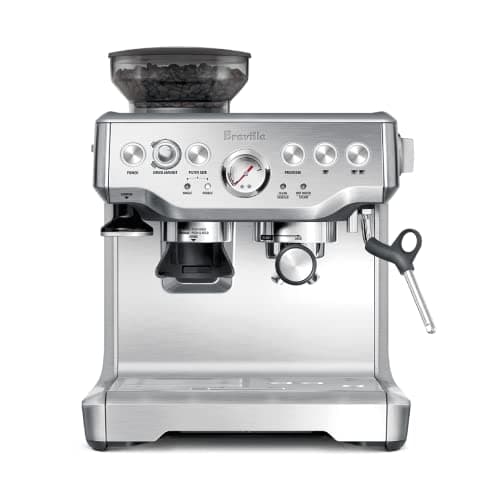
Breville Barista Express (BES870XL) — matches on ambition and solves the grinder problem in the box. A built-in conical burr grinder, adjustable dose and grind size, and a 54 mm portafilter make this the one-purchase answer: grind to shot, nothing else to buy. Honest cons: the integrated grinder is good rather than great, and serious espresso drinkers eventually add a dedicated one and demote it to backup; and the single-boiler ThermoCoil means a short wait between pulling a shot and steaming milk. See Gaggia Classic Pro vs Barista Express for the direct comparison, and our Barista Express review for the rest.
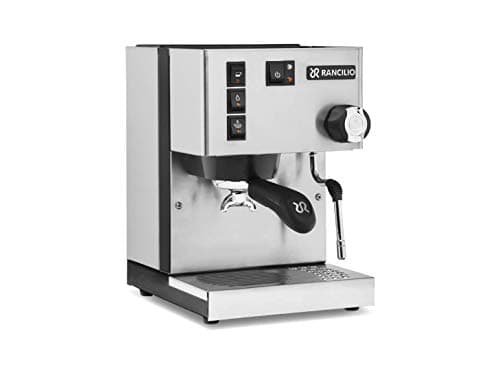
Rancilio Silvia — matches on philosophy and beats it on build. This is the machine the Classic Pro is the affordable cousin of: a commercial 58 mm group and portafilter, a steam wand widely considered one of the best in the category, and enough thermal mass to pull shot after shot in a row. Honest cons: temperature management is still hands-on out of the box, which is the same quirk as the Gaggia with more metal around it; and it is considerably more expensive while being no friendlier to a beginner. Our Rancilio Silvia review covers it, and best prosumer espresso machines is the tier it belongs to.
Breville Bambino (BES450) — matches on shot quality for less, and asks you to steam by hand. Same ThermoJet near-instant heat-up and the same 3-second-to-ready espresso as the Plus, with a manual steam wand instead of the automatic one and a lower price to match. If you want to learn milk the way a Gaggia makes you but you do not want the Gaggia's warm-up wait or temperature quirk, this is a neat fit. Honest cons: the manual wand is less powerful than the Gaggia's and the small body means a small water tank, so it is built for one or two drinks at a time; and like the Plus it is 54 mm and not modifiable. Bambino vs Bambino Plus is the in-family choice.
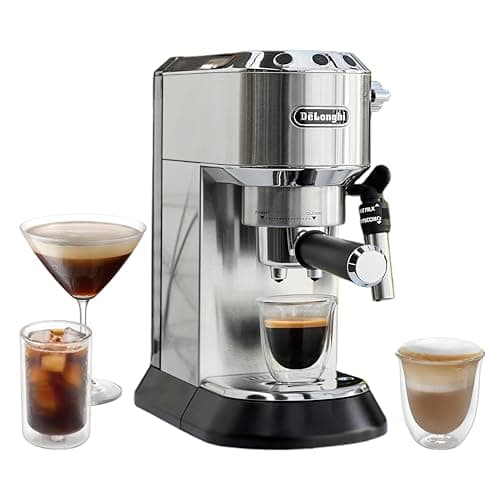
De'Longhi Dedica Deluxe (EC685) — matches on nothing except making espresso, and wins on footprint. De'Longhi lists it at under five inches wide, it heats fast, and it costs well under the Gaggia, which makes it the answer when counter space is the actual constraint rather than the budget. Honest cons: the small body means a small boiler and tank, so back-to-back drinks are a stretch; and the pressurized basket flatters mediocre grinding instead of rewarding good grinding, which is the opposite of the Gaggia's whole design intent and caps how far you can take it. Our Dedica review has the detail.
CASABREWS CM5418 — the budget pick, and the honest cheapest way in. A stainless-skinned compact machine with a steam wand, which CASABREWS rates at 20 bar, for a small fraction of a Gaggia's price. If the real question is "can I make espresso at home without spending Gaggia money," the answer is yes, and this is it. Honest cons: there is no temperature control to speak of and consistency between shots is the first thing you give up; and the pressurized basket and budget wand mean a ceiling you will hit quickly if you get serious. Our CASABREWS CM5418 review is clear about where that ceiling is.
The verdict
Want espresso rather than a project, at the same money: Breville Bambino Plus. Want one box that includes the grinder: Barista Express. Want the Gaggia's philosophy with more metal and a better wand: Rancilio Silvia. Want fast heat-up and hand-steaming for less: Breville Bambino. Counter space is the constraint: Dedica. Spending the minimum: CASABREWS CM5418. And the case for the Classic Pro still stands: if you want a 58 mm commercial group, a metal machine you can modify for a decade, and the satisfaction of learning to steam milk properly, nothing here replaces it — everything on this page trades some of that away for convenience, a grinder, or a lower price.
Decide whether you want a hobby or a coffee before you compare specs
Every choice on this page follows from that one answer. A Classic Pro, and the Silvia above it, are machines that give you control and expect you to use it: you choose the dose, the grind, the timing and the milk texture, and the machine does exactly what you tell it including when you tell it wrong. A Bambino Plus takes two of those decisions away and makes a good drink on week one. Neither is the better machine in the abstract; they are different products. The failure mode we see most often is someone who wanted espresso buying a machine built for people who wanted a hobby, and concluding they are bad at coffee. Read how to dial in espresso and ask honestly whether that sounds like a pleasant Saturday or a chore.
58 mm versus 54 mm is about the ecosystem, not the shot
The Gaggia's 58 mm portafilter is the commercial standard, and that matters for one concrete reason: everything fits. Precision baskets, bottomless portafilters, puck screens, distribution tools and tampers are all made in 58 mm first and in volume, so they are cheaper and better. Breville's 54 mm has a real accessory market now but a smaller one. What 58 mm does not do is make better espresso by itself — a 54 mm machine with good temperature control will out-shoot a 58 mm machine without it. Treat basket size as a question about how much you intend to tinker.
Budget for the grinder in the same breath as the machine
This is the single most expensive mistake in the category. An espresso machine does not make espresso out of pre-ground coffee in any satisfying way: pre-ground is too coarse and too stale, so water finds channels instead of building resistance and the shot runs fast, thin and sour. Worse, the Gaggia is specifically the kind of machine that exposes bad grinding, because its unpressurized baskets have nothing to hide behind. On a fixed total budget, the grinder deserves a bigger share than most people give it. If you are shopping both at once, read best espresso grinder under $200 alongside this page, and consider the Barista Express precisely because it removes the question.
Heat-up time is a feature you will feel every single morning
Specs sheets bury this and owners care about it enormously. A Classic Pro or a Silvia wants several minutes to come up to temperature, and the enthusiast advice is to give the group head longer still so the metal stabilizes. Breville's ThermoJet machines are ready in seconds. Over a year of weekday mornings, that difference decides whether you use the machine on a Tuesday or reach for the drip brewer. It is also the main reason people who love their Gaggia on weekends resent it on weekdays.
Automatic milk is not a gimmick, and it is not a ceiling either
The Bambino Plus steams to a temperature and foam level you set. It is genuinely good microfoam and it is genuinely easier than learning by hand — and it also stops improving, because you are not developing the skill. A Gaggia or a Silvia wand will, once you can use it, produce better and more controllable milk than any automatic system at this price. So the question is not which is better but whether you want to spend a month getting there. How to steam milk is the method if you do, and best milk frothers is the side-door option if your machine's wand disappoints.
Modding is a real feature of the Gaggia, and a real cost
The Classic Pro's community is its hidden asset: PID kits, pressure adjustments, flow control, better wands, silvia-style upgrades, and a decade of forum threads. If you enjoy that, nothing on this page substitutes for it. But price the destination, not the starting point — a Classic Pro plus a PID kit plus a grinder lands in the same territory as a far more capable machine bought complete, and every mod is time plus the risk of a machine in pieces on a Sunday. Buy the Gaggia because you want to do that, not because you intend to.
Where the pressurized basket question bites
Cheaper machines, including the Dedica and the CASABREWS, ship pressurized ("dual-wall") baskets that create artificial resistance so almost any grind produces something crema-topped. That is genuinely useful if you are brewing supermarket pre-ground, and it is a hard ceiling if you are not, because the machine stops responding to improvements in your grind and technique. The Gaggia goes the other way: standard unpressurized baskets, no safety net, full reward for getting it right. Know which side of that trade you are buying, because it is the difference between a machine that is easy now and a machine that gets better for years. Our espresso grind size page explains how narrow the real target is.
If none of these is it
Two neighbors to this page. Best semi-automatic espresso machines ranks the whole class the Gaggia belongs to rather than just the way out of it, and best espresso machines under $500 is the price band the Classic Pro sits in, with everything else that competes there.