Skip to content
Bean & Burr

HUB 02 · Coffee Makers

Best Coffee Makers for an Office

An office machine is judged on different things than a kitchen one: nobody descales it, everybody wants something different, and a pot can sit for an hour. Six picks chosen for that reality.

By Stephen V.Updated How we research
#ad

We earn a commission when you buy through our Amazon links, at no extra cost to you. It never affects our rankings, and we say so when the cheaper product is the better buy. How this works.

The best coffee maker for an office is the BUNN Speed Brew Platinum Thermal (CSB3T) — it is for a team that drinks a pot over an hour rather than in one go, because it brews ten cups in about four minutes into a vacuum carafe with no hot plate to stew what is left. The budget pick is the Cuisinart PerfecTemp 14-Cup (DCC-3200), which costs a fraction of everything else here and still puts fourteen cups on a 24-hour timer. Prices are from the live price layer (as of November 22, 2026).

An office is a genuinely different brief from a kitchen, and the machines that win at home often fail at work. Four things change. Nobody owns the machine, so nobody descales it or washes the carafe. Everybody wants something different — decaf, strong, a latte, tea. A brewed pot can sit for an hour before anyone finishes it. And someone has to pay for the consumables, which turns cost per cup from a footnote into the dominant number.

The criteria: what we ranked on

1. Does the coffee survive sitting? This is the single biggest difference between a good office machine and a bad one. A glass carafe on a heated plate turns bitter within half an hour, which is exactly the window an office pot sits in. A thermal or vacuum carafe does not.

2. Can it serve mixed preferences? A single pot of medium roast is the cheapest way to caffeinate a team and the most likely to annoy half of it. Pod machines solve the preference problem and create a cost problem.

3. Throughput at 9 a.m. Six people arriving at once is the real load test. A machine that takes twelve minutes per pot creates a queue; one that brews in four, or serves one cup at a time, does not.

4. Cost per cup, and who pays it. Ground coffee costs a few cents a cup. Pods cost several times that. Across a year and a team, that difference dwarfs every purchase price on this page.

The picks, and who each one is for

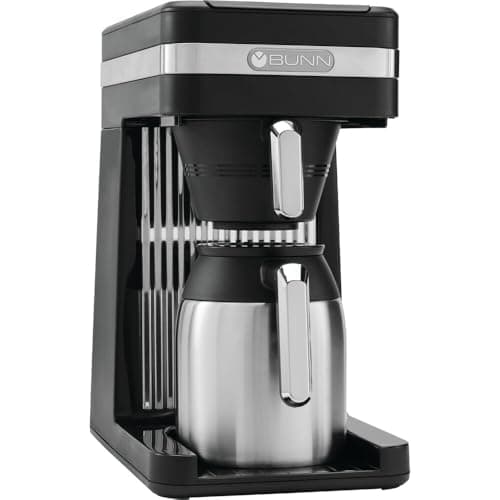
BUNN Speed Brew Platinum Thermal (CSB3T) — the winner, and it is for a team of four to ten who drink ground coffee. It holds a 70 oz tank at roughly 200F so it brews ten cups in about four minutes, straight into a vacuum thermal carafe, which means the last cup at 10 a.m. tastes like the first at 9. BUNN backs it with a three-year warranty, which is the longest cover on this page and the right question to ask about a machine six people will use. Honest cons: holding a tank hot all day uses standby power and the tank needs periodic deliming or the brew slows; and no BUNN appears on the SCA certified list. Our BUNN roundup covers the range, and the thermal carafe roundup explains why the carafe matters more than the brand.

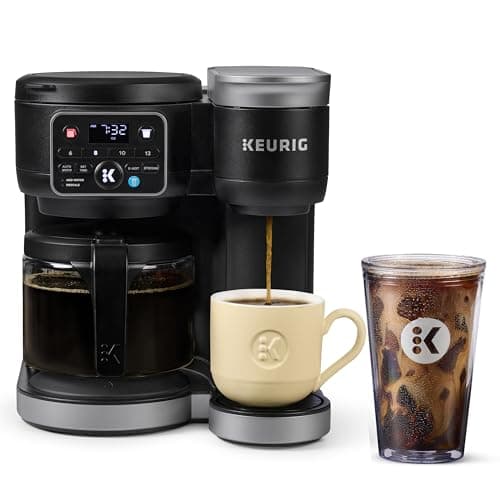
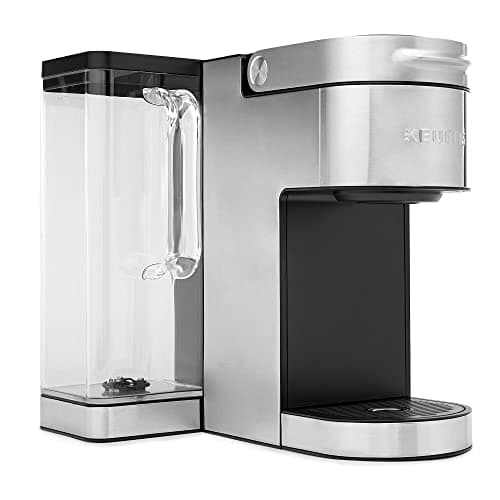
Keurig K-Supreme Plus — for an office where everybody wants something different and nobody wants to agree. It is the best cup Keurig sells: MultiStream brewing plus strength and temperature control, with a 78 oz removable reservoir so it is not refilled every third cup. One person has decaf, the next has a dark roast, nobody waits more than a minute. Honest cons: the cost per cup is several times ground coffee and someone has to keep buying boxes; and a pod has a fixed small dose, so a large mug is a weak mug. The Keurig roundup ranks the range, and reusable K-Cups are the usual fix for the running cost.

Hamilton Beach FlexBrew Trio — for a small office that cannot decide, on a budget. It brews a K-Cup or ground coffee, single cup or full carafe, from one body — which covers the morning pot and the 3 p.m. single cup without buying two machines. Honest cons: it is a budget build doing three jobs, so it does none of them as well as a dedicated machine, and the carafe side sits on a hot plate. For four people or fewer it is the most sensible money on this page.

Keurig K-Duo — for the same split need with more capacity and a better pod side. Pods and a full carafe share one 72 oz reservoir, it is programmable up to 24 hours ahead, and it has strong and over-ice settings. It is the only Keurig that can actually serve a table. Honest cons: the carafe side is a conventional drip brewer on a hot plate rather than anything special, and it costs meaningfully more than the FlexBrew for a similar idea. Keurig vs drip coffee works through the cost arithmetic if that is the decision.

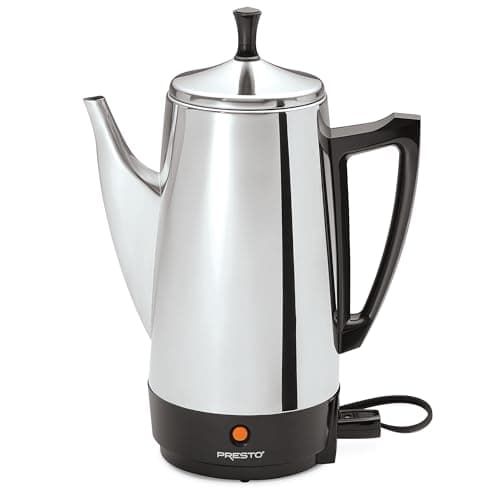
Presto 02811 Stainless Steel 12-Cup Percolator — for a break room with no plumbing, a training day, or an office that just wants a big pot and one switch. It brews two to twelve cups at about a cup a minute, with a stainless basket and perk tube and no carafe to break. There is very little on it to go wrong, which in a shared environment is a real feature. Honest cons: percolator coffee is bolder and more bitter than drip and over-extracts if it is left cycling, and it keeps the pot hot on its own element, so it is best emptied rather than left. The percolator roundup ranks the field.

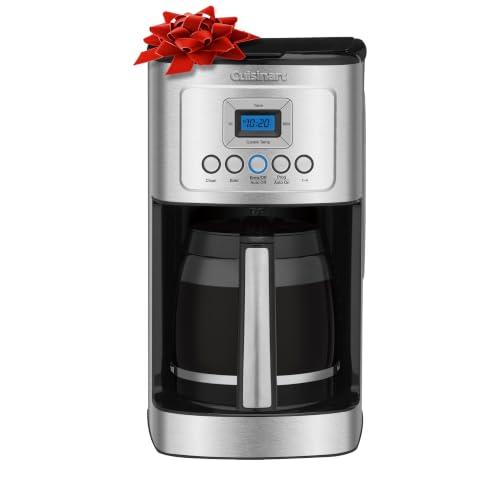
Cuisinart PerfecTemp 14-Cup (DCC-3200) — the budget pick, and the most coffee per dollar anywhere on this page. Fourteen cups on a 24-hour timer means the pot is waiting before anyone arrives, brew-strength control covers the people who want it stronger, and it is cheap enough to replace rather than repair — which, for a machine nobody owns, is a legitimate strategy. Honest cons, and they are the reason it is last: the glass carafe sits on a hot plate and will stew a pot that nobody finishes, and it does not reach the brew temperatures the certified machines do. If your team drinks the pot fast, none of that matters; if it sits, buy the BUNN.

The verdict

Four to ten people, ground coffee, pot sits: BUNN Speed Brew Platinum Thermal. Everyone wants something different: Keurig K-Supreme Plus. Small office, both formats, tight budget: Hamilton Beach FlexBrew Trio. Both formats with real carafe capacity: Keurig K-Duo. A big pot and nothing to break: Presto 02811. Lowest purchase price, highest volume: Cuisinart PerfecTemp 14-Cup.

The short answer

Quick picks

#ProductBest forScorePrice
01
BUNN BUNN Speed Brew Platinum Thermal (CSB3T)
BUNN Speed Brew Platinum Thermal (CSB3T)

The Speed Brew to buy: the same four-minute brew, into a vacuum carafe instead of onto a hotplate.

A household that drinks the pot over an hour, not in one go
7.6
$184.79Amazon
02
Keurig Keurig K-Supreme Plus
Keurig K-Supreme Plus

The best cup Keurig sells. MultiStream brewing plus strength and temperature control, which is about as far as pods go.

Getting the most out of a pod, with controls
7.2
$169.00Amazon
03
Hamilton Beach Hamilton Beach FlexBrew Trio
Hamilton Beach FlexBrew Trio

A budget do-both brewer: K-Cup or grounds, single-serve or a full pot — versatile, if not fancy.

The lowest-cost way to brew both pods and grounds
7.2
$79.95Amazon
04
Keurig Keurig K-Duo
Keurig K-Duo

A pod machine and a drip brewer in one body, sharing a tank. The only Keurig that can serve a table.

Households split between one cup and a full pot
7.4
$124.49Amazon
05
Presto Presto 02811 Stainless Steel 12-Cup Percolator
Presto 02811 Stainless Steel 12-Cup Percolator

The electric percolator to buy if you want one pot, one switch, and coffee that tastes the same every morning.

The best all-round electric percolator
7.2
$73.19Amazon
06
Cuisinart Cuisinart PerfecTemp 14-Cup (DCC-3200)
Cuisinart PerfecTemp 14-Cup (DCC-3200)

The big programmable workhorse. Not boutique coffee — reliable coffee, a lot of it, on a timer.

Big households and offices
7.4
$56.95Amazon

#ad · Live prices from the Amazon Product API, as of November 22, 2026. Where we have no verified live price, we show none — we would rather leave a gap than print a number that has rotted.

In detail

The picks, in full

01
BUNN BUNN Speed Brew Platinum Thermal (CSB3T)

A household that drinks the pot over an hour, not in one go

BUNN Speed Brew Platinum Thermal (CSB3T)

10 cups in about 4 minutes70 oz tank held at ~200FVacuum thermal carafe3-year BUNN warranty
7.6/10

The Speed Brew to buy: the same four-minute brew, into a vacuum carafe instead of onto a hotplate.

Brew quality
8
Ease of use
9
Build quality
8
Versatility
6
Value
7

Pros

  • BUNN's own figure for the Speed Brew family is 10 cups in about four minutes and 20 oz in about two, because the 70 oz tank is already hot when you pour water in
  • A thermal carafe means no hotplate, and a hotplate is what stews the second cup into something bitter
  • BUNN states the family uses a multi-stream sprayhead to wet the whole bed rather than drilling one channel through the middle

Cons

  • Not on the SCA's Certified Home Brewer list - no BUNN is, so you are trusting BUNN's own temperature claim rather than an independent certification
  • You cannot program it, because the tank has to stay hot for the speed to mean anything - the machine is effectively always on standby

Don't buy this if…

…you want to wake up to coffee already made. No Speed Brew has a timer; the BUNN Heat N Brew is the programmable one, and it is much slower.

$184.79View on Amazon

Price as of November 22, 2026. Prices change — Amazon's is the one that counts.

#ad · we may earn a commission from this link to BUNN Speed Brew Platinum Thermal (CSB3T)

02
Keurig Keurig K-Supreme Plus

Getting the most out of a pod, with controls

Keurig K-Supreme Plus

MultiStream Technology78 oz removable reservoirStrength & temp settingsProgrammable favorites
7.2/10

The best cup Keurig sells. MultiStream brewing plus strength and temperature control, which is about as far as pods go.

Brew quality
6
Ease of use
10
Build quality
7
Versatility
7
Value
6

Pros

  • MultiStream's multi-needle head wets the grounds from several points instead of one, which is the only real brewing change Keurig has made in years
  • Strength and temperature settings plus saved favorites mean two people can share it without re-setting anything
  • The 78 oz reservoir is the largest in the line - several days of one-cup drinking between refills

Cons

  • It is still a pod machine: the flavor ceiling is whatever the capsule was packed with, and it costs multiples of brewed coffee per cup
  • The most expensive brewer in the range, for a difference most drinkers describe as modest rather than transformative

Don't buy this if…

…the price gap to a K-Supreme or K-Elite matters to you. The MultiStream brew head is shared across those models - here you are paying for the reservoir, the presets and the finish.

$169.00View on Amazon

Price as of November 22, 2026. Prices change — Amazon's is the one that counts.

#ad · we may earn a commission from this link to Keurig K-Supreme Plus

03
Hamilton Beach Hamilton Beach FlexBrew Trio

The lowest-cost way to brew both pods and grounds

Hamilton Beach FlexBrew Trio

K-Cup pods & ground coffeeSingle-serve & full carafeDrip (not espresso)Dual-brew
7.2/10

A budget do-both brewer: K-Cup or grounds, single-serve or a full pot — versatile, if not fancy.

Brew quality
6
Ease of use
7
Build quality
6
Versatility
9
Value
8

Pros

  • Handles pods and ground coffee, single cup or full carafe, for a very low price
  • Great for a household that can't agree on pods versus a pot
  • Simple controls and easy to live with

Cons

  • Build and materials are basic — it feels its budget price
  • Strictly drip and pods; there's no espresso capability

Don't buy this if…

…you want espresso or a premium build. This is a value drip-and-pod maker — for shots, look at an espresso machine instead.

$79.95View on Amazon

$119.9533% off

Price as of November 22, 2026. Prices change — Amazon's is the one that counts.

#ad · we may earn a commission from this link to Hamilton Beach FlexBrew Trio

04
Keurig Keurig K-Duo

Households split between one cup and a full pot

Keurig K-Duo

Pods + carafe72 oz reservoir, as listedProgrammable up to 24hStrong & over-ice settings
7.4/10

A pod machine and a drip brewer in one body, sharing a tank. The only Keurig that can serve a table.

Brew quality
6
Ease of use
9
Build quality
6
Versatility
9
Value
7

Pros

  • Brews ground coffee into a carafe as well as pods, so you are not paying pod prices when four people want coffee
  • The programmable timer means a pot can be waiting when you get up - something no single-serve Keurig does
  • One machine instead of two on the counter, with one reservoir to fill

Cons

  • The carafe side is an ordinary basket brewer with no published brew-temperature claim and no SCA certification, so treat it as convenience rather than the best pot you can make
  • Bigger and deeper than a single-serve Keurig, and carafe coffee sits on a heating plate, which flattens the flavor over an hour

Don't buy this if…

…the pot is what you actually care about. A dedicated drip machine brews a better carafe for less, and a reusable pod filter covers the one-cup job.

$124.49View on Amazon

Price as of November 22, 2026. Prices change — Amazon's is the one that counts.

#ad · we may earn a commission from this link to Keurig K-Duo

05
Presto Presto 02811 Stainless Steel 12-Cup Percolator

The best all-round electric percolator

Presto 02811 Stainless Steel 12-Cup Percolator

Brews 2-12 cupsAbout a cup a minute800 wattsStainless basket and perk tube
7.2/10

The electric percolator to buy if you want one pot, one switch, and coffee that tastes the same every morning.

Brew quality
7
Ease of use
9
Build quality
7
Versatility
6
Value
7

Pros

  • Presto publishes the two numbers that matter on a percolator — a 2 to 12 cup range and roughly a cup a minute — so a full pot is done in about twelve minutes and a half pot still brews correctly rather than running weak
  • The filter basket and perk tube are stainless, not plastic, which is the part of a percolator that lives in near-boiling water and the part that fails first on cheap pots
  • It switches itself to keeping the coffee hot when the signal light comes on, so there is no timer to set and nothing to judge — the single biggest reason an electric beats a stovetop for daily use

Cons

  • It is a percolator, so it recirculates very hot water through the grounds repeatedly — expect a heavier, more bitter cup than a drip machine brewing in the 195-205°F window
  • One year of warranty is thin next to Cuisinart's three on a comparable pot, and there is no brew-strength control at all: the only lever you have is how much coffee you put in the basket

Don't buy this if…

…you actually want clean, bright coffee rather than strong diner coffee. A percolator cannot produce it by design — the OXO Brew 8-Cup or a Technivorm Moccamaster is the machine for that cup.

$73.19View on Amazon

Price as of November 22, 2026. Prices change — Amazon's is the one that counts.

#ad · we may earn a commission from this link to Presto 02811 Stainless Steel 12-Cup Percolator

06
Cuisinart Cuisinart PerfecTemp 14-Cup (DCC-3200)

Big households and offices

Cuisinart PerfecTemp 14-Cup (DCC-3200)

14-cup glass carafeProgrammable 24hBrew-strength controlSelf-clean
7.4/10

The big programmable workhorse. Not boutique coffee — reliable coffee, a lot of it, on a timer.

Brew quality
6
Ease of use
9
Build quality
6
Versatility
7
Value
9

Pros

  • Fourteen cups on a wake-up timer — the practical choice when a household or office needs volume
  • Brew-strength control and a self-clean cycle cover the daily basics well
  • Cheap, everywhere, and a known quantity that just works

Cons

  • A glass carafe on a hot plate slowly stews the coffee — it's convenience, not cup quality
  • Doesn't hit the same brew temperatures as the SCA-certified machines

Don't buy this if…

…cup quality is the priority. This is a volume-and-schedule machine — for the best-tasting drip at a similar or slightly higher price, the OXO is the upgrade.

$56.95View on Amazon

$119.9553% off

Price as of November 22, 2026. Prices change — Amazon's is the one that counts.

#ad · we may earn a commission from this link to Cuisinart PerfecTemp 14-Cup (DCC-3200)

Run the cost-per-cup number before you choose pods

This is the calculation that decides most office coffee arguments, and it is worth doing properly on your own numbers rather than taking anyone's word for it. Count the cups your team drinks in a week. Then compare the per-cup cost of a pod against roughly 10 grams of ground coffee per cup from a bag. The gap is usually several times over, and across a year and a team of eight it typically exceeds the entire purchase price of every machine on this page combined. That does not make pods wrong — the preference problem they solve is real, and so is the zero cleanup — but it should be a decision somebody made on purpose. Reusable K-Cups cut the number substantially if you want the format without the bill, and the pod roundup ranks what to buy if you keep them.

Nobody will descale it, so plan for that

Shared machines die of limescale, not of use. On hard water a drip machine or a pod brewer starts brewing slowly and weakly within months, and because no single person owns it, no single person fixes it. Two practical answers: put a recurring calendar reminder on one named person, and buy descaler at the same time as the machine so it is already in the cupboard when the reminder fires. A thermal-tank machine like the BUNN needs deliming specifically. The descaling roundup has the products, and how to clean a coffee maker is the routine.

Match the pot size to who is actually in the room

A 14-cup machine brewing four cups brews badly — a large basket with a small dose lets water channel through a shallow bed, so the coffee comes out thin however much you add. Offices get this wrong in both directions: a 12-cup machine for a team of three, or a single-serve pod machine for fifteen people who all arrive at 9 a.m. Count heads, assume roughly two cups each over a morning, and buy for that. If the honest answer is one or two drinkers, this is the wrong page — the one-person roundup is better suited.

The thermal carafe is the upgrade that people actually notice

If you change one thing about an office setup, change this. A glass carafe on a heated plate continues cooking the coffee, which is why the 10 a.m. cup from a 9 a.m. pot tastes burnt and why half an office quietly switches to the pod machine. A vacuum carafe holds brewed coffee hot without heating it further, and the difference over an hour is not subtle. It is also the cheapest way to make a cheap machine acceptable: brew into a glass carafe and decant immediately into an insulated server. The thermal carafe roundup covers the machines built that way.

What an office machine cannot fix

Two things. It cannot fix bad coffee: a good machine fed cheap stale pre-ground produces exactly that, and the cheapest real improvement in any office is buying better coffee in bulk rather than a better brewer — the bulk beans roundup is the sensible lane. And it cannot fix milk drinks: nothing on this page steams milk properly, so a team that wants lattes needs either a separate frother or a machine from a different category entirely. The frother roundup is the cheap answer.
How we picked

We do not run a testing lab

We compiled published manufacturer specifications, computed what each option costs to run where relevant, and cross-referenced aggregated owner reviews, then scored each product against a published rubric. The scores are judgments from documented research — they are not measurements we took, because we do not have a lab and we are not going to pretend we do. Where a number came from a manufacturer or a standard, we name it in Sources.

Questions

Frequently asked

What is the best coffee maker for an office?
The BUNN Speed Brew Platinum Thermal (CSB3T), for a team of roughly four to ten that drinks ground coffee. It brews ten cups in about four minutes from a hot-held 70 oz tank into a vacuum carafe, so a pot that sits for an hour does not turn bitter, and BUNN covers it for three years.
Are pods or ground coffee better for an office?
Pods win on preference and cleanup; ground coffee wins on cost by several times over, and the gap across a year and a team is larger than the price of any machine here. The usual compromise is a ground-coffee brewer as the main machine plus a pod machine for decaf and afternoon one-offs.
How many cups do I need for my office?
Count heads and assume roughly two cups each over a morning. Eight people means about sixteen cups, which is two pots from a 10-cup brewer or one from a 14-cup. Buying far bigger than you need is a real mistake: a large basket run with a small dose brews thin coffee.
Why does office coffee always taste burnt?
Almost always the hot plate. A glass carafe sitting on a heated plate keeps cooking the coffee, and an office pot typically sits for half an hour or more. A thermal or vacuum carafe fixes it, and decanting immediately into an insulated server fixes it for free.
Who maintains an office coffee maker?
In practice, nobody — which is why shared machines die of limescale rather than wear. Put a recurring descaling reminder on one named person and buy the descaler at the same time as the machine. A thermal-tank brewer needs deliming specifically, and the carafe and basket need washing by hand regardless of any self-clean cycle.

Keep reading

Receipts

Sources

We do not run a testing lab, and we do not pretend to. Where a measured number came from a manufacturer spec sheet or a published standard, we name it and link it. Where we could not verify something, we say so on the page rather than quietly leaving it out. Read our full method.