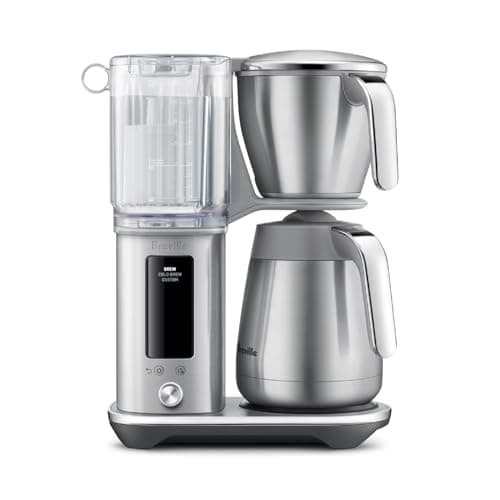
The best programmable coffee maker is the Breville Luxe Brewer Thermal (BDC465) — it is for the person who wants coffee waiting at 6 a.m. and refuses to compromise on how it tastes, because it is on the SCA's certified list, brews into a double-wall thermal carafe rather than onto a hotplate, and carries a 24-hour timer. The budget pick is the Cuisinart PerfecTemp 14-Cup (DCC-3200): the cheapest machine here with a real 24-hour program, brew-strength control and enough capacity for a household or an office.
This page exists because a timer is weirdly hard to shop for. Plenty of the best-reviewed drip machines have no clock at all — the OXO Brew 8-Cup and the Bonavita 8-Cup One-Touch are both excellent brewers with no programmability whatsoever, and the whole BUNN Speed Brew range is deliberately unprogrammable because the tank has to stay hot for the speed to mean anything. So "best drip machine" and "best programmable drip machine" are genuinely different lists, and every pick below has a start time specified on its own listing.
What a timer costs you, and what it doesn't
A programmable machine grinds nothing overnight — the coffee sits in the basket from whenever you loaded it until the water hits it. Ground coffee stales fast, so a pot programmed the night before is brewed from twelve-hour-old grounds no matter how good the machine is. That is the one real cost, and it is not a reason to skip the feature; it is a reason to load it last thing rather than after dinner. The whole-bean advantage shrinks overnight but does not vanish.
What a timer does not cost you is cup quality, as long as the machine keeps the coffee somewhere sensible after brewing. This is where thermal carafes matter more than usual: a glass carafe sitting on a hotplate from 6 a.m. until you get up at 7 is slowly stewing, and that is a bitterness you can taste. The Breville holds coffee in an insulated carafe with no hotplate at all; the BUNN Heat N Brew shuts its warmer off after two hours. On a programmable machine, that detail is worth more than it would be on one you start by hand.
Who each pick is for
Breville Luxe Brewer Thermal: the one to buy if the coffee matters as much as the convenience. It appears on the SCA's current certified home brewer list, holds the carafe above 150°F for up to four hours by Breville's rating, and its Custom mode still exposes bloom volume, bloom time, brew temperature and flow rate for anyone who wants to tinker. It is the most expensive machine here, and the Custom menu is a learning curve you may never open.
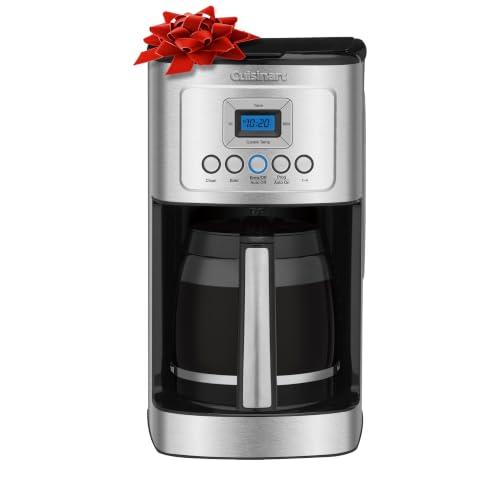
Cuisinart PerfecTemp 14-Cup: the budget pick and the volume pick. Fourteen cups on a wake-up timer, brew-strength control, a self-clean cycle, and it is cheap and available everywhere. The honest limitation is the glass carafe on a hotplate, which stews the pot as the morning goes on, and it does not hit the brew temperatures the certified machines do. For an office or a large household that drinks the pot quickly, those caveats matter less than the capacity.
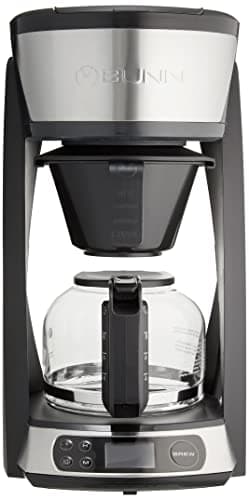
BUNN Heat N Brew Programmable: the only programmable BUNN, and the one that publishes the number that matters. BUNN states its Heat & Release system holds water until it reaches the 197.6–204.8°F window before brewing, which is inside the range the SCA specifies, and the warmer shuts off after two hours. The trade is speed: BUNN's own figures put it at about ten minutes for ten cups, against roughly four for a Speed Brew. If you came to BUNN for speed, this is the wrong BUNN.
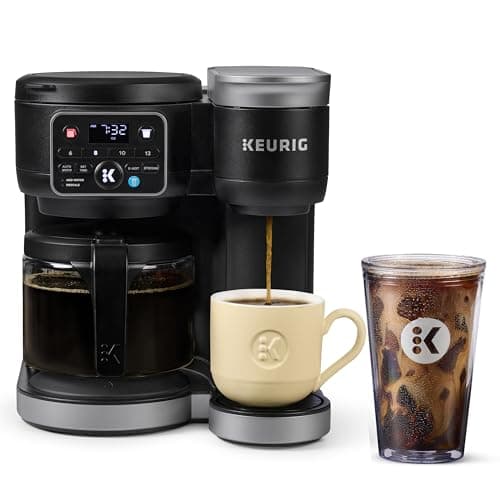
Keurig K-Duo: the pick for a household split between one cup and a full pot. It brews pods or ground coffee into a carafe from a shared 72 oz reservoir, and the programmable timer means the pot can be ready before you are — which no single-serve Keurig does. The carafe side is an ordinary basket brewer with no published brew temperature, so treat it as convenience rather than the best pot you can make.
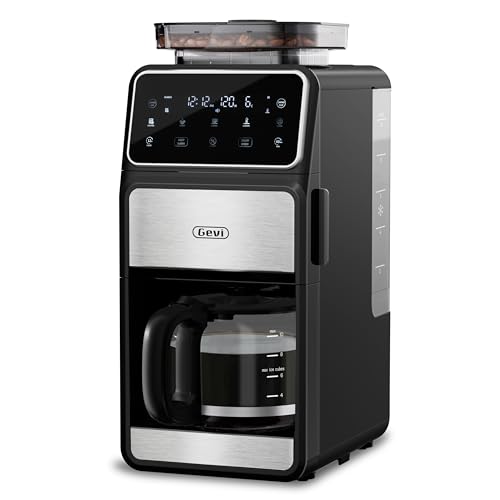
Gevi 10-Cup Grind-And-Brew: the pick if you want the beans ground at brew time and the pot on a timer. Gevi lists a built-in burr grinder, a brew size you set anywhere from 4 to 10 cups and a 24-hour programmable timer, at a fraction of what the big-name grind-and-brews cost. No SCA certification and no published brew temperature, so the spec that decides taste is simply unknown, and it is a glass carafe on a keep-warm plate. Best grind-and-brew coffee makers covers that category properly.
The verdict
Breville Luxe Brewer if you want certified coffee on a timer in a thermal carafe. Cuisinart DCC-3200 if you want volume and a timer for the least money. BUNN Heat N Brew if a published brew temperature matters more to you than speed. Keurig K-Duo if your household cannot agree on pods versus a pot. Gevi if you want grinding and programming in one cheap box. And if you are willing to press a button yourself in the morning, read best SCA-certified coffee makers — dropping the timer requirement opens up genuinely better brewers. If the timer is for a shared break room rather than a kitchen, best coffee makers for an office ranks the same machines against a different brief.
Hotplate vs thermal carafe matters more on a timer
A glass carafe on a warming plate is held at around 175°F, which continues to cook the coffee — the second cup tastes flatter than the first and the fourth tastes burnt. On a machine you start manually and pour immediately, that is a minor issue. On a programmable machine that finished brewing forty minutes before you walk into the kitchen, it is the main variable. Either buy a thermal carafe (the Breville here, or the picks in best thermal carafe coffee makers), or set the timer closer to when you actually get up.
What the SCA certification actually tells you
The Specialty Coffee Association tests brewers against a protocol covering brew temperature, contact time and extraction, and publishes a list of the machines that pass. It is the only independent signal in this category, and it is also narrow: it certifies a test pot under test conditions, not every pot you will ever brew. BUNN is not on the list at all, which is why we quote BUNN's own temperature claim as a claim rather than as a certification. Treat the certification as meaningful evidence rather than a guarantee, and read our SCA-certified roundup for the full certified field.
Set the program for when you drink, not when you wake
The most common mistake with a programmable machine is setting it an hour before you need it "to be safe." All that does is give the coffee an hour to degrade. Most machines here brew a full pot in four to ten minutes, so set the start fifteen minutes before you want the first cup. If the household drinks the pot over an hour, that is what the thermal carafe is for — not the hotplate.
Grind the night before, or grind in the machine?
Two legitimate approaches. Grind fresh into the basket last thing at night: simpler, and the coffee is only hours old rather than weeks, which is still far better than pre-ground. Or buy a grind-and-brew like the Gevi and have the machine grind at brew time: fresher, but you are using the machine's grinder rather than a standalone one, and at this price class the built-in grinders are modest. Our honest ranking is that a decent standalone grinder plus a plain programmable machine beats a cheap grind-and-brew — best grinder for drip coffee covers that side, and it is also the cheaper route if you already own a grinder.
Descaling keeps the timer honest
Scale lowers brew temperature before it breaks anything, which means a programmable machine can quietly stop brewing at the right temperature months before it visibly fails. If your morning pot has gradually gotten weaker and more sour, descale before you blame the beans — cleaning routines differ by brewer, and how to clean a coffee maker has the drip-machine version. The descaling supplies page covers what to buy; how often depends on your water hardness more than on the machine.