The best Cuisinart coffee maker is the PerfecTemp 14-Cup (DCC-3200) — it is for the household or office that needs a lot of coffee waiting on a timer, and it happens to be the cheapest machine on this page as well, so it is the budget pick too. The Classic 12-Cup Percolator (PRC-12N) is the one to buy if the pot has to leave the kitchen, and the Burr Grind & Brew 12-Cup (DGB-800C) is the only machine here that grinds to order. Prices are from the live price layer (as of November 22, 2026) — the Quick Picks table carries each one with the same stamp.
It is worth being clear about what Cuisinart is for, because the brand gets judged against the wrong yardstick constantly. Cuisinart does not compete on brew temperature, certification or cup quality. It competes on capacity, programmability, availability and price, and in that lane it is genuinely hard to beat — a 14-cup machine with a 24-hour timer for less than the cost of a decent kettle is not something the specialty brands offer at all. If what you want is coffee ready at 6 a.m. for four people, this is the right aisle.
The criteria: what we ranked on
1. Capacity against household size. A 12- or 14-cup machine run at a quarter of its capacity brews badly, because the shower head and the basket are sized for a full batch. Matching the pot to the number of drinkers matters more here than any other spec.
2. Carafe type. This is the spec that decides whether your second cup tastes like your first. A glass carafe sitting on a hot plate slowly stews the coffee; a thermal or vacuum carafe does not. It is the single biggest quality variable in the category and it costs nothing to understand.
3. Published brew temperature. None of these machines publishes one, and none appears on the Specialty Coffee Association's certified list. We say so rather than filling the gap with a guess — if brew temperature is your priority, the SCA-certified roundup is the page you want.
4. What breaks, and what the warranty covers. Across this category the failure points are the hot plate, the carafe and the water valve. The percolator here is the pick with the longest stated cover.
The picks, and who each one is for
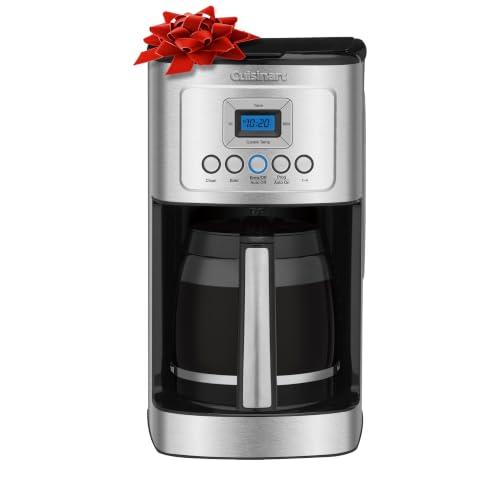
Cuisinart PerfecTemp 14-Cup (DCC-3200) — the winner, and it is for big households and offices that want volume on a schedule. Fourteen cups on a 24-hour timer is the practical core of it; brew-strength control and a self-clean cycle cover the daily basics; and it is cheap, everywhere and a known quantity. Honest cons, and they matter: the glass carafe on a hot plate slowly stews the coffee, so this is convenience rather than cup quality, and it does not reach the brew temperatures the certified machines do. Our Cuisinart coffee maker review goes through it in detail.
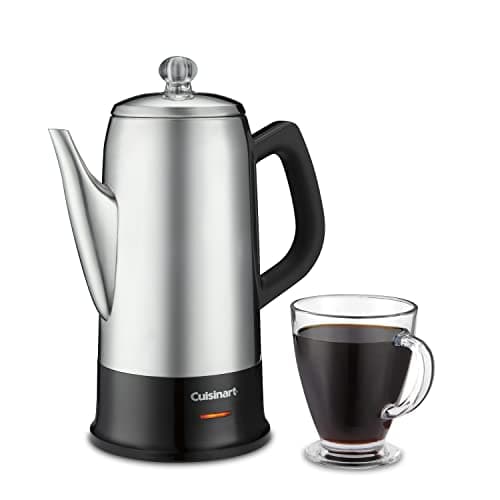
Cuisinart Classic 12-Cup Percolator (PRC-12N) — for serving a crowd away from an outlet. The cord detaches and the bottom is built to sit on any surface without scarring it, so the pot carries to a table, a potluck or a meeting room and keeps serving — that specific job is what it does better than anything else here. Cuisinart backs it with a limited three-year warranty, three times the cover on the Presto, which is the clearest signal on this page about expected service life, and a transparent knob plus a ready light let you watch the brew without lifting the lid. Honest cons: it is the most expensive percolator we rank and the cup is not meaningfully better than the Presto's — you are paying for portability, finish and warranty — and four cups is the published minimum, so it suits a crowd rather than one mug. The percolator roundup ranks it against the field.
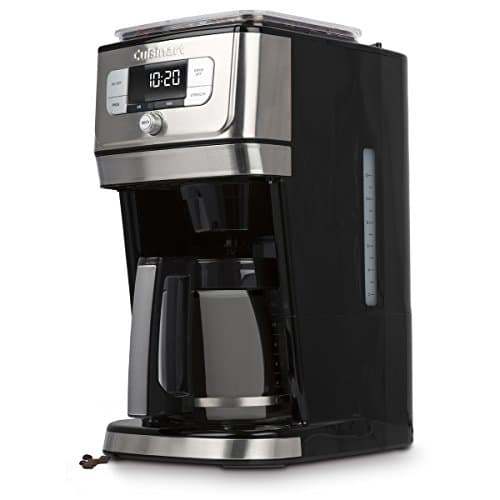
Cuisinart Burr Grind & Brew 12-Cup (DGB-800C) — for the household that wants a full 12-cup pot ground to order. The listing describes an integrated burr mill that grinds whole beans immediately before brewing and drops the dose in hands-free — a burr, not the propeller chopper most machines in the category hide inside — with strong, medium and mild settings. Twelve cups is more than anything else we rank in grind-and-brew reaches. Honest cons, and they are the reason it is third: the listing contradicts itself on the carafe, with the feature text describing beans dropping "right into the thermal carafe" while the same listing's size attribute reads "12-Cup Glass", so we cannot confirm which carafe ships — and on a machine like this the carafe is the spec that decides whether your second cup tastes like your first. There is also no published brew temperature and no SCA certification, and it costs more than the Café Specialty Grind and Brew, which publishes both. The grind-and-brew roundup has that comparison.
The verdict
Volume, a timer and the lowest price: PerfecTemp 14-Cup. The pot has to travel: Classic 12-Cup Percolator. You want beans ground into a full pot and will accept the carafe uncertainty: Burr Grind & Brew 12-Cup. And if cup quality is the actual priority rather than capacity, Cuisinart is the wrong brand rather than the wrong model — best drip coffee makers ranks the machines that brew hotter, and the thermal-carafe roundup solves the stewing problem outright.
The hot plate is the problem, not the brand
Every complaint about cheap drip coffee turning bitter after twenty minutes describes the same mechanism: a glass carafe sitting on a heated plate continues to cook the coffee, driving off aromatics and developing bitter compounds. It is not the brand, the beans or the water. Two fixes work. Decant the pot into an insulated vessel the moment it finishes brewing, which costs nothing and works well — an insulated carafe or mug will hold it. Or buy a machine with a thermal carafe and no hot plate at all. On this page the percolator sidesteps the issue differently, by having no hot plate in the first place.
Match the pot to the people, not to the ambition
A 14-cup machine brewing four cups is a worse machine than an 8-cup machine brewing four cups. The reason is the basket: a large basket with a small dose means the water channels through a shallow bed, contact time drops, and the coffee comes out thin no matter how much you add. If you are one or two drinkers, the right Cuisinart is not on this page — the one-person roundup is where to look, and the honest answer there is usually a manual brewer.
What a self-clean cycle does and does not do
The self-clean function on the PerfecTemp runs descaling solution or vinegar through the water path on a longer, hotter cycle. It genuinely helps with limescale, which is the main cause of slow brewing and under-extraction over time. What it does not touch is coffee oil residue in the basket, the carafe and the shower head, which is what makes old machines taste rancid. Those need washing by hand. How to clean a coffee maker separates the two jobs, and the descaling roundup ranks what to put through it.
A grind-and-brew is a convenience machine, not a grinder upgrade
The DGB-800C's burr mill is a real burr rather than a blade, which puts it ahead of most of the category. It is still not the equal of a standalone grinder at the same money, and it adds the one maintenance job people forget: the grinder chute and the burr chamber hold stale grounds and oils, and they need regular attention or the coffee tastes old regardless of how fresh the beans are. If you already own a grinder, a plain drip machine plus that grinder beats any grind-and-brew we rank. The drip grinder roundup covers the standalone route.
Percolator coffee is a different drink, and that is fine
A percolator cycles boiling water through the grounds repeatedly, which is why percolator coffee tastes bolder, heavier and more bitter than drip. Specialty coffee has spent forty years calling this a flaw; plenty of people simply prefer it, and it is the right brewer for a crowd because it scales and stays hot. Just do not buy one expecting the clean, bright cup a pour-over gives you — use a coarser grind than you would for drip and it will behave. The grind size chart has the target.