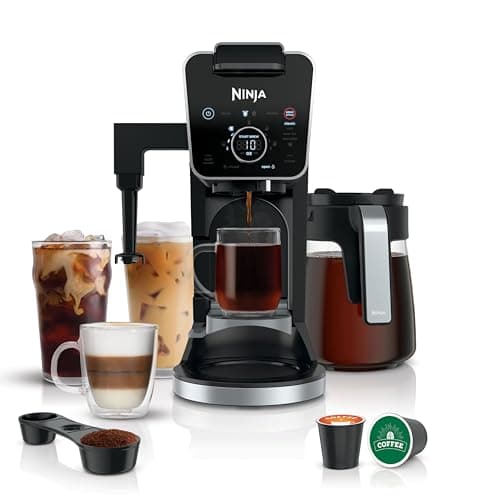
The best dual coffee maker is the Ninja DualBrew Pro (CFP301) — it takes K-Cup pods or ground coffee, brews anything from a single cup to a full carafe, and gives you more brew sizes and styles than anything else at the money. The budget pick is the Hamilton Beach FlexBrew Trio, which does the same core job for well under half the price. If the pot is going to sit for an hour, buy the Hamilton Beach FlexBrew Advanced instead: it is the only pick here with a thermal carafe, which is the difference between coffee that stays drinkable and coffee that stews on a hotplate.
A dual coffee maker solves one specific household problem: two people who want coffee differently at the same time of day. One wants a mug and is already late; the other wants a pot and will drink it over an hour. Buying two machines costs more counter space than most kitchens have. So these machines bolt a pod brewer and a drip brewer together — and how well they do that varies enormously, in ways the product pages do not mention.
How we picked, in order of weight
1. Both halves have to be real. The failure mode of this category is a competent machine on one side and a token gesture on the other — a four-cup "carafe" on a pod brewer, or a single-serve mode that is really just the drip basket brewing into a mug. We only ranked machines where each side would be worth owning on its own.
2. What holds the coffee after it is brewed. This is the most underrated spec in all of drip coffee and the one we weighted hardest after capability. A glass carafe on a warming plate keeps reheating the coffee from below, and continuing to cook brewed coffee is what turns a good pot bitter and flat within about half an hour. A thermal carafe simply insulates it. If you drink the pot fast, the warming plate never bites; if you nurse it, thermal is a bigger upgrade than any feature on the control panel. Our best thermal carafe coffee makers page is the full field for that one decision.
3. Can the pod side brew loose grounds? Every machine here takes K-Cup pods. The ones that also take a scoop of ground coffee on the single-serve side are meaningfully cheaper to run, because pods cost several times as much per cup as the same coffee in a bag. Where a reusable filter or ground-coffee basket is included, we say so — and best reusable K-Cups covers retrofitting one where it is not.
4. Reservoir and footprint. Two brewers in one body is a wide appliance, and a shared water tank means refilling more often than either machine alone would. Removable reservoirs matter more here than on a normal drip machine, because a fixed tank behind a wide body is awkward to fill.
5. Live price. Every pick had a live Amazon price and returned In Stock when we built this page, and prices here are pulled from the listing rather than typed in, so what you see is current rather than what was true the day we wrote it.
One thing we did not weight: brew temperature. Almost nobody in this category publishes it, including the manufacturers whose spec sheets we read for this page. The right window is 195–205°F, and where a machine does not publish a number we will not invent one — water temperature for coffee explains why it matters so much, and SCA certified coffee makers is where to look if that number is your priority. No dual brewer we know of holds a certification.
1. Ninja DualBrew Pro (CFP301) — best overall
The DualBrew Pro is the most capable machine in the category and the one we would buy. It takes K-Cup pods or ground coffee on the single-serve side and brews across a single cup up to a full carafe, with multiple brew sizes and styles rather than one setting per side. In practice that flexibility is the thing you use daily: a travel mug on the way out, a small pot at the weekend, a full carafe when people are over.
Honest cons: it is drip, not espresso — the "specialty" concentrate setting makes a strong coffee concentrate for milk drinks, not a real shot, and expecting espresso from it is the most common disappointment with the machine; and all that capability lives behind a busy control panel on a physically large body, so it takes real counter space and a read of the manual. Our Ninja DualBrew Pro review goes through it properly, and best Ninja coffee makers puts it in the context of the rest of the range.
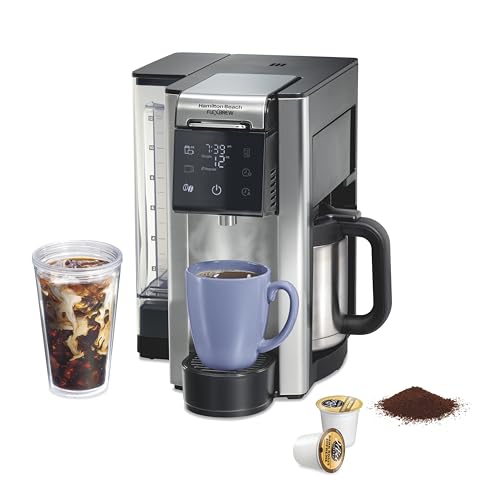
2. Hamilton Beach FlexBrew Advanced 5-in-1 (49929) — best thermal carafe
This is the pick for anyone whose pot sits. Hamilton Beach lists a 12-cup stainless thermal carafe with an insulated design that works without a heating plate, which is the single most valuable thing on this page if you drink a pot over an hour rather than in twenty minutes. The 60 oz reservoir is removable and mounts on the back or the side, which is a genuinely thoughtful touch on a wide appliance, and Auto Brew will have either a single cup or up to 12 cups ready for a set time. The single-serve side takes a K-Cup pod or loose grounds in the included brew basket.
Honest cons: Hamilton Beach does not list a permanent or reusable drip filter in the box — the included parts are a pod holder and a ground-coffee brew basket — so paper filters are an ongoing cost; and brew strength is regular or bold and nothing else, with no published brew temperature and no named iced setting, so there is less control here than the five-in-one name suggests.
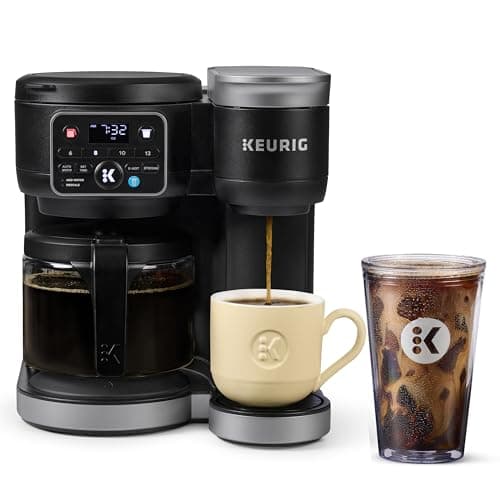
3. Keurig K-Duo — best if the pod side is the main event
If most of the coffee in your house comes out of a pod and the carafe is for weekends, buy the Keurig. The K-Duo is a proper Keurig — the pod handling, the pod compatibility and the reservoir behavior are all the real thing rather than a drip machine with a pod slot added — and it brews a full carafe of ground coffee as well, from a listed 72 oz reservoir, with programming up to 24 hours ahead and Strong and Over Ice settings.
Honest cons: it is a Keurig, so the drip half is competent rather than enthusiast-grade and there is no brew-temperature control to speak of; and the pod economics are what they are — a K-Cup costs several times what the same coffee costs in a bag, which is why a reusable filter is worth buying on day one. Our best Keurig coffee makers page ranks the whole lineup, and Keurig alternatives is the page to read if the pod cost is what is bothering you.
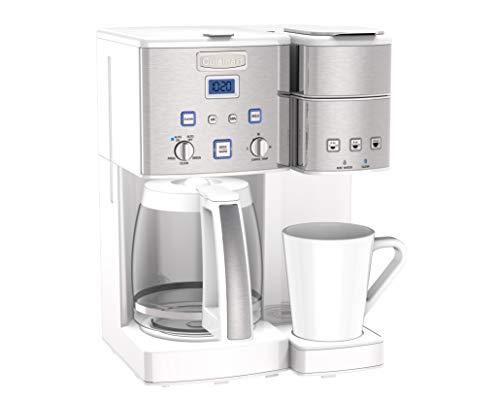
4. Cuisinart Coffee Center SS-15 — best separation of the two halves
The SS-15 is the most expensive machine here by a wide margin, and what the money buys is genuine separation: a real 12-cup Cuisinart drip machine with brew-strength control and a charcoal water filter on one side, and a single-serve brewer with its own 40 oz removable reservoir on the other, each with its own controls. One person can start a pot while another pulls a cup. Retailer listings include a reusable filter cup, so the single-serve side can brew loose grounds instead of pods.
Honest cons: the premium buys capacity and separation rather than a better-tasting cup — the drip coffee here is good Cuisinart drip, not a step above the category; and two brewers in one body means a large footprint and two things to descale, with the carafe being glass on a warming plate rather than thermal. Cuisinart's own product page for the SS-15 now 404s, so the specs on this page come from retailer spec tables, which we cite below. Our best Cuisinart coffee makers page covers the brand's single-purpose machines, which cost a fraction of this.
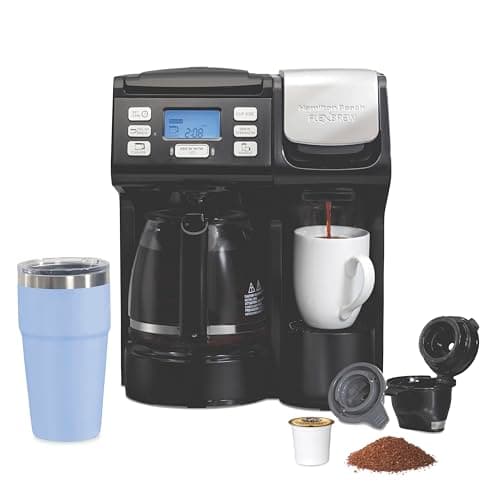
5. Hamilton Beach FlexBrew Trio — the budget pick
The Trio does the core job — K-Cup pods or ground coffee on the single-serve side, ground coffee into a full carafe on the other — for well under half what the Ninja costs, and it is the machine we would point at if the dual-brew idea appeals but the budget does not stretch. For a lot of households this is simply enough.
Honest cons: build quality is visibly budget, with light plastics and a basic control panel; and the carafe is glass on a warming plate, so this is the pick where the pot really does need drinking promptly. It is the budget pick on this page rather than the value pick — the Ninja is better at nearly everything, and whether that is worth the gap depends on how much you will use the extra brew styles.
The verdict
Most brew styles and the best machine overall: Ninja DualBrew Pro. Coffee that has to stay drinkable for an hour: Hamilton Beach FlexBrew Advanced, for the thermal carafe. Pods are the main event: Keurig K-Duo. You want two genuinely separate brewers and will pay for it: Cuisinart Coffee Center SS-15. Spending the minimum: Hamilton Beach FlexBrew Trio. And the honest counter-argument: if only one half of the machine will actually get used, a dedicated drip coffee maker or a plain pod brewer costs less, takes less counter space and does its one job better. A dual brewer is a compromise bought on purpose.
Be honest about the 80/20 before you buy a two-in-one
The question that decides this purchase is not which dual brewer is best. It is what share of your coffee comes out of each half. If it is genuinely close to even — a household where someone takes a mug and runs while someone else works through a pot — a dual brewer is the right appliance and the compromises are worth it. If one side will get 90% of the use, you are paying for a second machine you will not use, giving up counter space to it, and accepting that the half you do use is slightly worse than a single-purpose machine at the same price. In that case buy the dedicated machine. The one-machine-for-everything instinct is how people end up with a wide appliance whose left half has not been touched in a year.
Thermal versus glass is the decision that changes the coffee
Everything else on the spec sheet is a convenience. This one changes the taste. A glass carafe sits on a hotplate that keeps applying heat to already-brewed coffee, which continues to cook it — driving off aromatics and developing bitterness, noticeably within about half an hour and badly within an hour. A thermal carafe is a vacuum flask: it loses heat slowly and adds none. If your pot is gone in fifteen minutes, the hotplate never gets a chance to do damage and glass is fine (and cheaper, and you can see how much is left). If anyone in your house pours a second cup forty minutes later, thermal is the upgrade to spend on. On this page that points at the FlexBrew Advanced, and the wider field is in best thermal carafe coffee makers.
Price out a year of pods before you commit to the pod half
A K-Cup holds a modest amount of coffee and costs several times what that coffee costs loose. The arithmetic gets attention-grabbing fast: two pods a day is roughly 700 pods a year, and the gap between pod and bag pricing over that volume is usually larger than the price of the machine. That is not an argument against pods — convenience is a real thing to buy, and pods genuinely deliver it — but it is an argument for buying a machine whose single-serve side also takes loose grounds, which three of the five picks here do. Where it does not, a reusable K-Cup costs a few dollars and pays for itself in a fortnight. Best coffee pods covers which pods are worth it when you do buy them.
Measure the counter, including above it
Dual brewers are wide, and several are also tall, with a lid that hinges upward to load the pod. The specification that catches people out is the clearance above the machine, not its footprint — a brewer that fits perfectly under a wall cabinet may not open. Check the published height, add the lid swing, and check whether the water reservoir fills in place or has to come out. Removable reservoirs are worth real money on an appliance this wide, which is why we called out the FlexBrew Advanced's dual-position tank.
Two brewers means two descaling jobs
Both halves share a water system in most of these machines, but they have separate brew paths, and in the Cuisinart they have separate reservoirs too. Scale builds in both. A dual brewer that is never descaled slows down and brews cooler on both sides, and cooler water makes weak, sour coffee no matter what you paid. How to clean a coffee maker has the routine for the drip side and how to descale a Keurig covers the pod side. Put it on a calendar; nobody does it from memory.
Do not buy one of these expecting espresso
Every machine on this page is a drip brewer with a pod attachment. Several advertise a "specialty," "concentrate" or "rich" setting, and those produce a strong, small drip brew that works acceptably as the coffee base in a latte. None of them pulls espresso: espresso needs around nine bars of pressure through a compacted puck of finely ground coffee, and there is no pump here doing that. If you want both a pot of coffee and a real shot from one appliance, that is a different category — best coffee and espresso combo machines is the page for it, and it costs more.
The grounds you put in matter more than the machine you put them in
Worth saying plainly on a page about appliances: at this price level the gap between the best and worst machine here is smaller than the gap between stale supermarket pre-ground and fresh whole beans ground that morning. A dual brewer with good beans beats a better dual brewer with bad ones, every time. Best coffee for drip is the shortlist, and if you are not grinding yet, the single best upgrade available to you costs less than any machine on this page — best coffee grinders under $50 is where that starts.
If a dual brewer is not the answer
Three neighbors to this page. Best drip coffee makers if the pot is all you really need. Best Keurig coffee makers if it turns out the pod side is the whole point. Best programmable coffee makers if waking up to coffee already made is the actual goal, which it often is.